
Prepare Mentally for Golf Tournament: Focus and Routine Tips
Learn how to prepare mentally for golf tournament with focus routines, breathing exercises, and warm-up strategies for better performance.
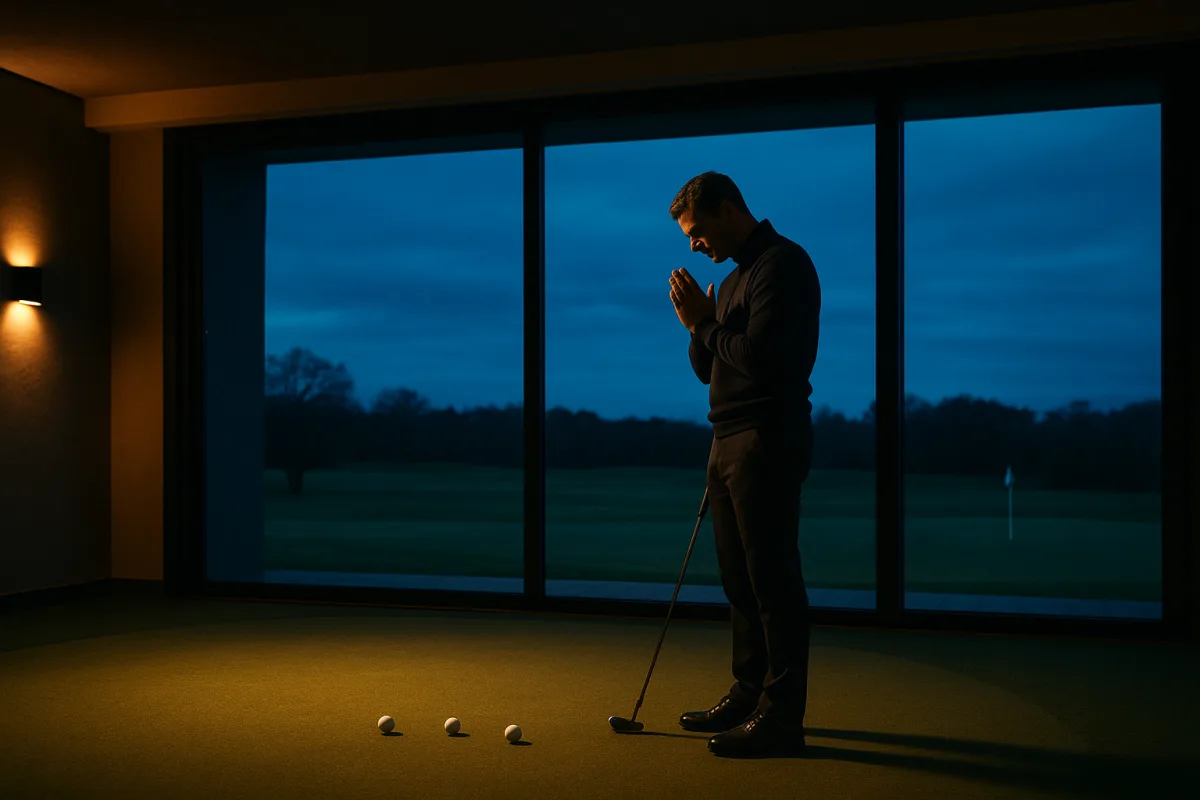
Preparing Mentally for a Golf Tournament: A Focus Plan That Holds Up on the Course
The days before: stop trying to prepare by predicting every bad outcome
The first problem usually arrives before tournament day. You start mentally playing the course, then turn every possible hazard, awkward lie and missed putt into evidence that you are not ready.
Visualization helps, but it needs a job. Golf Mag recommends seeing positive shot outcomes before playing, while Golfeaser also supports daily visualization to build confidence and readiness. [1][4] Picture a specific shot shape, landing area and response.
Do not make the exercise a highlight reel of perfect drives. Include the situations you are likely to face: a conservative tee shot into wind, a recovery after a poor lie, or a six-foot putt with people watching.
That is not negative thinking. It is rehearsing the useful decision, then seeing yourself commit to it. Golfpsych.com advises mental preparation that accounts for difficult conditions, and sportspsychologygolf.com similarly stresses acceptance and adaptation rather than fighting the situation. [6][10]
There is no evidence-based rule saying you must begin a mental routine exactly seven, 10 or 14 days before a tournament. The available guidance supports consistent practice and visualization in the days leading up, but not a magic countdown. [4][5][6]
For a mid-handicap player, that is probably a relief. You do not need a new pre-tournament personality. Use the same routine at ordinary practice and casual rounds, then tournament golf is simply the place you ask it to work.
At practice: make your routine short enough to use under pressure
A pre-shot routine is not standing behind the ball until the group behind starts sighing. Golf Mag puts the useful window at eight to 12 seconds and suggests practicing that routine 200 to 300 times on the range. [1]
Keep the routine to actions that produce a decision. For example: stand behind the ball, pick a precise target, make one rehearsal that matches the intended shot, step in, settle the face, look once and swing.
The details are personal. A player who slices may need a different swing thought from a player who hooks it, and a tip that fixed one slice will not fix every slice. The routine’s value is that it limits choices.
Practice it with changing targets, clubs and shot shapes. Do not hit 20 seven-irons to the same flag while repeating a routine that only works when the answer is obvious. Tournament focus has to survive uncertainty.
Golf Monthly’s reporting on performance coach Karl Morris makes an important correction to the usual advice about consistency. Perfect focus through a four- or five-hour round is unrealistic, so mental flexibility matters more than trying to be locked in continuously. [3]
That means your objective is not, “Never lose concentration.” It is, “Notice the drift and return to my process before the next shot.” That is a target you can actually execute after a poor bounce or a three-putt.
Before leaving home: give nerves somewhere physical to go
Pressure often feels like mental noise, but it also shows up physically: faster breathing, a tight grip and the urge to rush. Breathing exercises give you a repeatable interruption before those symptoms become a hurried swing.
Golf Mag reports that 4-7-8 breathing can reduce heart rate by 10 to 15 beats per minute. [1] In practical terms, inhale for four counts, hold for seven, then exhale slowly for eight.
Use that before the round, in the car park or while waiting near the first tee. Do not make it a complicated performance. Complete a few controlled cycles, then move on to your normal preparation and let your body settle.
PGA.com and Breathletics both identify box breathing, diaphragmatic breathing, heart-centered breathing and alternate-nostril breathing as methods used to improve calm, concentration and focus. [7][8] Pick one approach and practice it when nothing is at stake.
Box breathing is particularly simple when your head is busy: inhale for four, hold for four, exhale for four, hold for four. The benefit is not the precise count alone, it is redirecting attention from imagined consequences to a controllable task.
When you arrive: warm up your attention, not just your body
The next trap is arriving early but preparing randomly. Many amateurs spend 30 minutes smashing drivers, then walk to the tee knowing neither their pace nor their intended shot shape for the day.
GolScore recommends a 15 to 25 minute pre-round warm-up: three to five minutes of physical activation, five to seven minutes of golf-specific swings, five to seven minutes of short-game work, and three to five minutes of mental preparation. [2]
Start with simple movement and a few easy swings. The aim is not to chase speed or rebuild mechanics before a medal. It is to arrive at the first tee moving normally, breathing steadily and aware of your tempo.
Then hit a small number of purposeful shots. Golf Monthly quotes professional golfer Grant Forrest on treating warm-up as practice and concentrating on the shot shapes that feel right that day. [3] That is a better standard than demanding perfect contact.
Finish with short game, because it gives you immediate feedback on pace and strike without requiring a full swing. During the final mental segment, choose one playing intention such as “commit to targets” or “reset after every shot.”
Avoid intentions that depend on the score, such as “shoot 78” or “do not make doubles.” You can control your target selection, routine and response. You cannot control every lie, gust or putt that catches an edge.
On the first tee: narrow the job to one shot
The first tee is where fear of failure tends to turn into overthinking. Golf.com identifies overthinking, poor focus and fear of failure among common mental errors for amateur golfers. [11]
Your job is not to prove you deserve to be in the tournament. It is to select a sensible target, make the same eight-to-12-second routine you practiced, and hit one shot with your available swing.
That phrase, “available swing,” is useful because it stops you chasing the swing you had during a great range session. Golf Monthly’s coverage of Karl Morris argues against the fantasy of permanent consistency. [3]
If the driver feels loose, use it with a committed target. If it does not, a conservative club is not timid, it is course management. The mental work is accepting the choice rather than second-guessing it over the ball.
After the first bad shot: do not let emotion choose the next one
Every tournament includes a point where the plan gets interrupted. You hit a weak tee shot, find a plugged lie, miss a short putt or watch a good strike finish in the wrong place.
GolScore’s guidance is to manage post-shot emotion by returning attention to process rather than outcome. [2] Give yourself a brief, honest reaction, then ask a question that produces the next action: “What is the best target from here?”
Do not replay the swing while walking to the ball unless you have a clear reason to do so. An idle mind creates room for negative visualization, which Golfergy and Golf.com identify as part of the amateur mental problem. [11][12]
Use the walk as a reset period. Feel your breathing, assess the lie and yardage when you reach the ball, then begin the decision process. You are not pretending the mistake did not happen, you are refusing to carry it into the next swing.
This is where a modest post-shot routine helps. After contact, watch the ball, acknowledge the result, take one slow breath and put attention on the next relevant task. Keep the response brief enough to use after good shots too.
When the weather changes: adapt the plan, not your mood
Weather can make a player feel cheated because it disrupts the numbers and visuals they expected. The correct response is not to demand your normal carry distance or normal ball flight from abnormal conditions.
GolScore reports that wind above 20 mph can add three to six strokes, while a 10-degree Fahrenheit temperature drop can reduce distance by roughly 1.5 to two yards. [2] Longwood Golf Club also notes weather’s effect on physical performance and scoring. [9]
Those are useful reminders, not universal personal numbers. Just as a launch-monitor result belongs to the swing that produced it, a weather adjustment depends on your speed, strike, ball flight and the actual conditions on your course.
Mentally, accept the condition before you select the club. Visualize the lower flight, larger target or more conservative line required, then make the same routine. Golfpsych.com recommends adapting through acceptance and visualization in adverse conditions. [6]
There is no documented evidence that golfers need entirely different mental-preparation systems for humid versus dry climates. The mental tools remain routine, breathing, visualization and adaptation, while the physical conditions change the shot you choose. [2][13]
Late in the round: reset focus instead of chasing a perfect scorecard
The final problem is score awareness. By the back nine, you may start calculating what a par here or birdie there would mean. That calculation can pull attention away from the lie in front of you.
Use natural breaks to reset: after recording the score, while walking to the next tee, or before selecting a club. Take one controlled breath and repeat your playing intention, then return to the immediate target.
If you notice fatigue, do not interpret it as a mental failure. Karl Morris’s central point, as reported by Golf Monthly, is that focus fluctuates. [3] The recovery skill is recognizing that fluctuation without adding frustration.
Tournament focus is therefore not a permanent trance. It is a series of short, repeatable decisions: breathe, assess, choose, visualize, commit, accept and reset. Build those decisions in practice, and pressure has fewer opportunities to invent new ones.
Frequently Asked Questions
How do I prepare mentally for a golf tournament?
Mental preparation involves consistent practice of your routine and daily visualization of positive shot outcomes, including challenging situations you expect to face. Avoid trying to predict every bad outcome; instead, rehearse useful decisions and commit to them. Mental flexibility and acceptance of lapses in focus are important, as perfect concentration for the entire round is unrealistic.
What is a good pre-shot routine for golf tournaments?
A good pre-shot routine lasts about 8 to 12 seconds and includes actions that lead to a clear decision, such as standing behind the ball, picking a target, rehearsing the shot, stepping in, settling the clubface, and swinging. Practice this routine 200 to 300 times on the range with varying targets and clubs to ensure it works under pressure and uncertainty.
How can breathing exercises help in golf tournament pressure?
Breathing exercises help reduce physical symptoms of pressure like faster heart rate and tight grip. Techniques such as 4-7-8 breathing can lower heart rate by 10 to 15 beats per minute. Use these exercises before the round or between shots to calm your body and reset focus without overthinking.
What mental warm-up should I do before a golf tournament?
Before a tournament, spend 15 to 25 minutes warming up with physical movement, shot practice including the short game, and setting a clear playing intention. This routine helps you arrive mentally ready and can save strokes early in the round by preventing the need to find your swing on the first hole.
How do I handle nerves before a golf tournament?
Handle nerves by giving them a physical outlet through controlled breathing exercises like 4-7-8 breathing. Use these techniques in the parking lot or near the first tee to lower arousal levels. Trust your practiced routines and focus on resetting your attention between shots rather than maintaining perfect concentration throughout.
How we researched this
This article was assembled from 13 cited references.
Nothing here is based on hands-on testing. Where a figure or finding appears, it belongs to the source cited beside it, and the writing says so rather than implying otherwise. Every source is listed below so you can check it.
Sources
- Golf Mentaltraining 2026: Methoden für mehr Fokus - Golf Mag
- Mental Toughness in Golf: Performing Under Pressure
- 'A Top Golfer Once Said To Me He Reckoned He Only Had His Swing 10 Rounds Per Year' - Renowned Mental Coach On Why Amateurs Should Forget About Consistency
- Master the Mental Game: How To Handle Pressure During Club Tournaments
- Mentale voorbereiding | Golf Vlaanderen
- Mental Preparation for Golf - GolfPsych
- Breathing for Golfers: The Ultimate Guide to Endurance, Focus, and Concentration — Breathletics
- Play Better Golf: 4 Breathing Exercises for Greater Calm & Concentration
- How Weather Conditions Affect Golf Performance
- Your Mental Game in Difficult Course Conditions | Golf Tips
- These 3 common mental mistakes are killing your golf game
- The Pre-Round Mental Warm-Up: A 15-Minute Protocol for Cognitive Readiness
- Improve Your Golf Mental Preparation | Psychology Coach
Related Articles

Handle Pressure in Golf Tournaments: Mental Game Strategies
Learn how to handle pressure in golf tournaments with routines, breathing, and course strategy to improve your mental game under stress.
Golf Tournament Rules: What You Need to Know
Learn the essential golf tournament rules including local rules, pace of play, and the role of the tournament committee.

How to Prepare for a Golf Lesson: Essential Tips
Learn how to prepare for a golf lesson with tips on equipment, warm-up, goals, and what to expect to get the most from your session.
How to Start Playing Golf
Learn how to start playing golf with beginner equipment advice, practice routines, swing basics, and etiquette tips for new golfers.