
Handle Pressure in Golf Tournaments: Mental Game Strategies
Learn how to handle pressure in golf tournaments with routines, breathing, and course strategy to improve your mental game under stress.
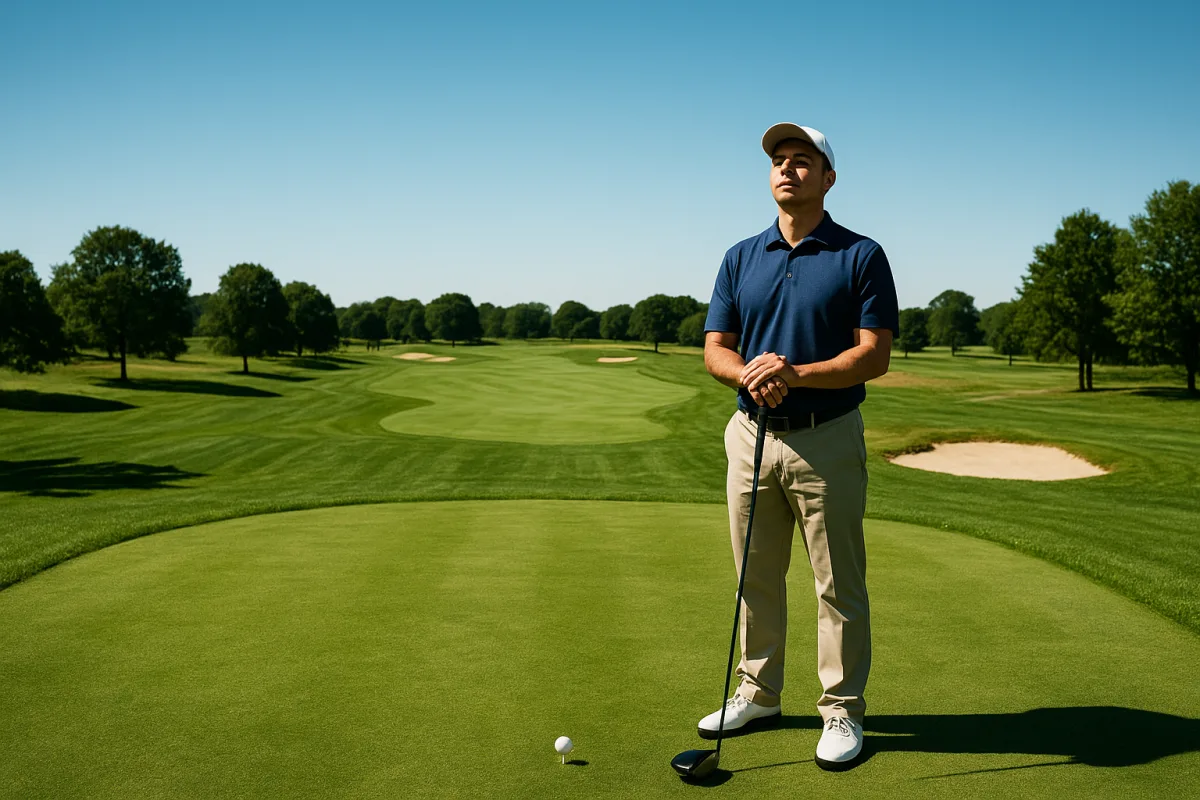
Before the tournament: remove decisions you do not need on the first tee
Tournament pressure starts well before the opening tee shot. The common mistake is arriving with a bag full of unresolved choices: uncertain club distances, a swing thought borrowed from last night’s range session, and no plan for awkward lies.
I am a mid-handicap golfer, so I do not assume a launch-monitor number is permanently mine just because I produced it once indoors. Carry distance, launch and spin all belong to the swing, strike and conditions that created them.
That matters in competition because uncertainty makes pressure louder. If you do not know whether your stock 7-iron carries 145 or 160 yards, do not solve it by swinging harder at a tucked pin. Use a conservative number and target.
Golf Monthly identifies consistent routines, controlled breathing, visualisation, acceptance and support from caddies or sport psychologists as methods professionals use to handle pressure. [5] You do not need a tour support team to borrow the useful part.
Write a simple tournament card before the round. Include your reliable carry yardages, the clubs you trust for tee shots, a preferred lay-up number and one reminder for greenside shots, such as “land it on, let it run.”
Keep the swing reminder physical and short. “Finish balanced” or “smooth tempo” is usable. “Keep the club shallower in transition while maintaining trail-arm structure” may be technically valid, but it is not a good thought when your name is being called.
Visualisation is most useful when it is specific. Before play, picture the opening tee shot starting at a chosen tree or bunker edge, not a vague image of “playing well.” Golfguidebook recommends visualisation and positive self-talk as pressure-management tools. [2]
On the first tee: lower arousal before you ask for precision
The first tee is where tournament nerves become physical: faster breathing, a tighter grip and the urge to hit a perfect drive. Trying to eliminate that feeling entirely is usually a bad target.
Golf performance psychologist Dr Mona Chandra’s guidance emphasises recognising emotional responses rather than ignoring them. [7] Name the feeling plainly: “I am nervous because this matters.” That is more useful than arguing with yourself about why you should not be nervous.
Then breathe before selecting the club. Box breathing, 4-7-8 breathing and extended exhales are commonly recommended for athletes because longer exhales are associated with activating the body’s relaxation response. [2][5]
Use the pattern that you have already practised, not a new breathing drill while the group waits. A practical option is to inhale calmly, then let the exhale run slightly longer, repeating it two or three times while checking wind and target.
There is no direct evidence that a particular breathing count produces better golf shots under tournament pressure. The sensible claim is narrower: breathing can help reduce anxiety, which may make it easier to make a normal decision and normal swing. [2][5]
Check grip pressure before taking the club back. Par Report contrasts amateurs who grip at roughly 7 or 8 out of 10 with a recommended 4 or 5 out of 10. [10] You should still hold on securely, especially in rain, but white-knuckling the handle is not a pressure cure.
Pick a first-tee target that matches your average pattern. If your usual driver miss is right and trouble is right, a 3-wood, hybrid or even long iron may be the tournament club, regardless of what distance looks best on the card.
Most claimed distance gains are within normal strike and day-to-day noise for many amateur golfers. On a tight opening hole, fitting and knowing your playable dispersion beat buying a longer driver or trying to access one extra gear.
Over the ball: use a short routine, not a long ceremony
A tournament routine needs to be short enough to repeat for 18 holes. Golf Blab cites routines lasting 60 to 90 seconds, but the more detailed guidance from Better Game Golf and Dr Mona Chandra supports roughly 15 to 40 seconds, often 15 to 30. [1][6][7]
The exact duration is not magic. What matters is that the routine has a consistent beginning, an external target, one rehearsal if you need it, a final look and full commitment before you start the swing.
Start after you have made the strategic decision. Stand behind the ball, identify a precise target, make a rehearsal that matches the intended shot, step in, settle the face and feet, look once more, then go.
Do not use the routine to keep reopening the decision. If you stand over the ball wondering whether it should be a cut, draw, punch or full stock shot, step away and restart. The routine should reduce thinking, not disguise it.
Better Game Golf advises releasing tension from the previous shot, focusing externally on the target and committing fully to the shot. [6] That sequence is useful because it separates what has happened from what you can still control.
The target should be external, not mechanical. “Start it at the left edge of the front bunker” gives your brain a job. “Do not come over the top” directs attention toward the very move you are trying to avoid.
A routine that fixed one player’s slice will not fix every slice. Some players need a tempo cue, some need a target cue, and some need to step back because they selected a shot they do not own.
After the bad shot: stop the second mistake
The shot that causes damage is often not the initial miss. It is the rushed recovery, the attempted hero shot from trees, or the angry next tee shot made to win the hole back immediately.
Golf Alcanada lists overexerting, result focus, inconsistent routines and excessive mechanical thinking among the mistakes that make pressure worse. [11] The practical response is to impose a reset before you reach the next ball.
Use the walk to the ball for the emotional reaction. Be annoyed if you are annoyed, then decide that the reaction ends when you arrive. At the ball, assess lie, branches, carry required and the real space available.
Ask one question: what is the best likely score from here, not the most impressive shot? If the gap requires a low, turning 5-iron that you have not practised, pitching sideways may be the aggressive choice in scoring terms.
On a recovery, choose a club and shot you can reproduce. A low punch back to a full number is often better than advancing the ball 30 extra yards into a worse lie. That is course management, not surrender.
Golf course-management guidance contrasts amateur risk-taking with safer professional decisions, including more conservative targets. [10] Under pressure, the center of the green is frequently a better target than the flag, particularly when short-sided misses bring bogey or worse.
Use the same thinking after a three-putt. Do not suddenly aim at every flag to “make up” shots. The scorecard has no column for moral victories after a forced birdie attempt finds water.
Around the green: make the shot simpler as pressure rises
Pressure makes amateurs overcomplicate short-game shots. Golf Monthly identifies unnecessary risk and avoidable amateur mistakes, while Par Report’s guidance points toward simpler fundamentals rather than trying to manufacture a miracle. [5][10]
If you have green to work with, choose the lowest-risk shot you can execute. That may mean a putter from fringe, a bump with a pitching wedge or a basic chip, rather than opening a lob wedge because the lie looks dramatic.
Pick one landing spot before you address the ball. Then judge the shot by whether it reached that spot with the intended strike, not by whether it finished tap-in close. A good process can still produce a bad bounce.
On short putts, reduce the task to pace and start line. Do not turn a four-footer into a referendum on the whole tournament. Read it, make a practice stroke for speed, settle in and use the same routine.
Late in the round: manage score pressure with targets and margins
The final holes create a different kind of pressure because the score becomes visible. You know what a par does, what a double does, and perhaps what the player beside you has made.
Golfguidebook and Golf Monthly both point toward present-focused attention and acceptance rather than obsession with outcomes. [2][5] Convert the outcome thought into a task: fairway target, lay-up number, landing area or two-putt zone.
If you need par on a difficult hole, do not automatically choose the club that can reach every danger. Choose the club that keeps your normal miss in play. Your best-ever drive is irrelevant to the decision.
Aiming at the center of the green is not always passive. On a hard hole, it may be the only target that leaves a realistic birdie putt while protecting against the short-sided miss that makes double bogey likely. [10][12]
If wind or rain arrives, add time for the practical jobs: drying grips, checking footing, reassessing carry and selecting a larger target. Weather clearly changes how golf is played, but there is no direct research proving one pressure technique works better in those conditions. [13][14][16]
That evidence gap matters. Use breathing and routine because they are established general tools, not because someone can promise they neutralise a 25-mph crosswind or a soaked fairway.
Between rounds: practise the pressure sequence, not just the swing
A tournament routine cannot be installed on Saturday morning like a new shaft. Build it during ordinary rounds and practice sessions, until the order feels familiar even after a poor strike.
At the range, alternate clubs and targets rather than hitting ten balls with the same iron. Go through your full 15 to 40-second routine, pick a target, hit one ball, then change the question. [6][7]
Create modest consequences without pretending they replicate a championship. For example, give yourself one ball to hit a fairway-width target, then one approach to a center-green target. Record whether you followed the routine, not only where the ball finished.
After competition, review decisions separately from execution. Note where you rushed, gripped tightly, chased a flag or abandoned your routine. That gives you something trainable, unlike the vague judgement that you “were not mentally tough.”
Some consumer devices claim to track stress, recovery or attention, and Garmin CIRQA is among the products reviewed for golfers by Golfers Authority. [15] These are not validated golf-specific biofeedback tools that can tell you how to manage pressure during tournament shots.
Use technology cautiously, as a general recovery or habit-tracking aid rather than a substitute for preparation. There is no strong evidence that a wearable can provide real-time, golf-specific stress coaching that improves competitive shot outcomes.
Frequently Asked Questions
How can I handle pressure in golf tournaments?
Handling pressure involves preparing before the tournament by removing unnecessary decisions, such as knowing your reliable club distances and having a simple game plan. During play, recognise your emotions without fighting them, use controlled breathing to reduce anxiety, and treat poor shots as information rather than failure. Maintaining a consistent pre-shot routine and focusing on manageable targets also helps manage pressure effectively.
What pre-shot routines help manage golf tournament nerves?
A repeatable pre-shot routine lasting 15 to 40 seconds is recommended. This routine should include releasing tension from the previous shot, focusing externally on a specific target, and committing fully to the shot. Keeping swing thoughts short and physical, like “finish balanced” or “smooth tempo,” helps avoid overthinking under pressure.
How do professional golfers manage pressure during tournaments?
Professional golfers use consistent pre-shot routines, controlled breathing techniques such as box breathing or extended exhales, visualization, positive self-talk, and mindfulness or acceptance of nervous feelings. They also rely on support from caddies and sports psychologists to maintain focus and composure during competition.
What breathing techniques reduce anxiety in golf competitions?
Breathing methods like box breathing, the 4-7-8 technique, and extended exhales help activate the body’s relaxation response. Using a practiced breathing pattern—such as inhaling calmly and exhaling longer two or three times before a shot—can reduce anxiety and help golfers make normal decisions and swings under pressure.
How should I adjust my course strategy under tournament pressure?
Under pressure, choose targets that allow for normal shot dispersion rather than aiming directly at pins that require perfect strikes. Use conservative carry distances based on reliable data rather than pushing for maximum distance. After a poor shot, reset physically and emotionally before selecting a recovery shot instead of dwelling on mistakes.
How we researched this
This article was assembled from 16 cited references.
Nothing here is based on hands-on testing. Where a figure or finding appears, it belongs to the source cited beside it, and the writing says so rather than implying otherwise. Every source is listed below so you can check it.
Sources
- Beat Tournament Nerves: 4-Week Toolkit for Amateurs & Juniors - Golf Blab
- How To Handle Pressure On The Golf Course: A Mental Game Guide (2026)
- Master the Mental Game: How To Handle Pressure During Club Tournaments
- Mental Toughness in Golf: Performing Under Pressure
- The Hidden Ways Golf Pros Deal With Pressure
- Golf Pre-Shot Routine | Better Game Golf
- Golf Pre-Shot Routine That Works Under Pressure (Mental Game Guide) — Dr. Mona Chandra, Golf Performance Psychologist
- Rutina de pre-golpe · Golf | SwingVantage
- Mastering Golf Nerves: Strategies For Calm And Confident Play | ShunGolf
- Pro vs Amateur Golf Course Management: Key Mistakes
- How to play under pressure in golf on the 18th hole
- Golf Course Management Under Pressure – Allen kelly pga
- PGA Weather: How Weather Affects Golf | Kevin Roth
- Rain Golf: What the Pros Know About Playing in Wet Conditions | GolfGabs
- Garmin CIRQA Smart Band Review (2026): Whoop Killer or Flop?
- The effect of weather conditions on scores at the United States Masters golf tournament | International Journal of Biometeorology | Springer Nature Link
Related Articles
Prepare Mentally for Golf Tournament: Focus and Routine Tips
Learn how to prepare mentally for golf tournament with focus routines, breathing exercises, and warm-up strategies for better performance.
How to Fix a Hook in Golf: Grip, Stance, and Swing Tips
Learn how to fix a hook in golf with grip, stance, and swing adjustments that improve ball flight and reduce hooks quickly and effectively.
Best Golf Drills for Short Game: Improve Chipping & Control
Discover the best golf drills for short game to improve chipping accuracy, distance control, and course strategy with practical landing spot methods.
How to Read Greens in Golf
Learn how to read greens in golf by understanding slope, grain, and speed to improve your putting accuracy and lower your scores.