
Golf Rain Gear and Strategy: What to Do If It Rains
Learn essential golf rain gear and strategies to stay dry, adjust your swing, and play safely when it rains on the course.
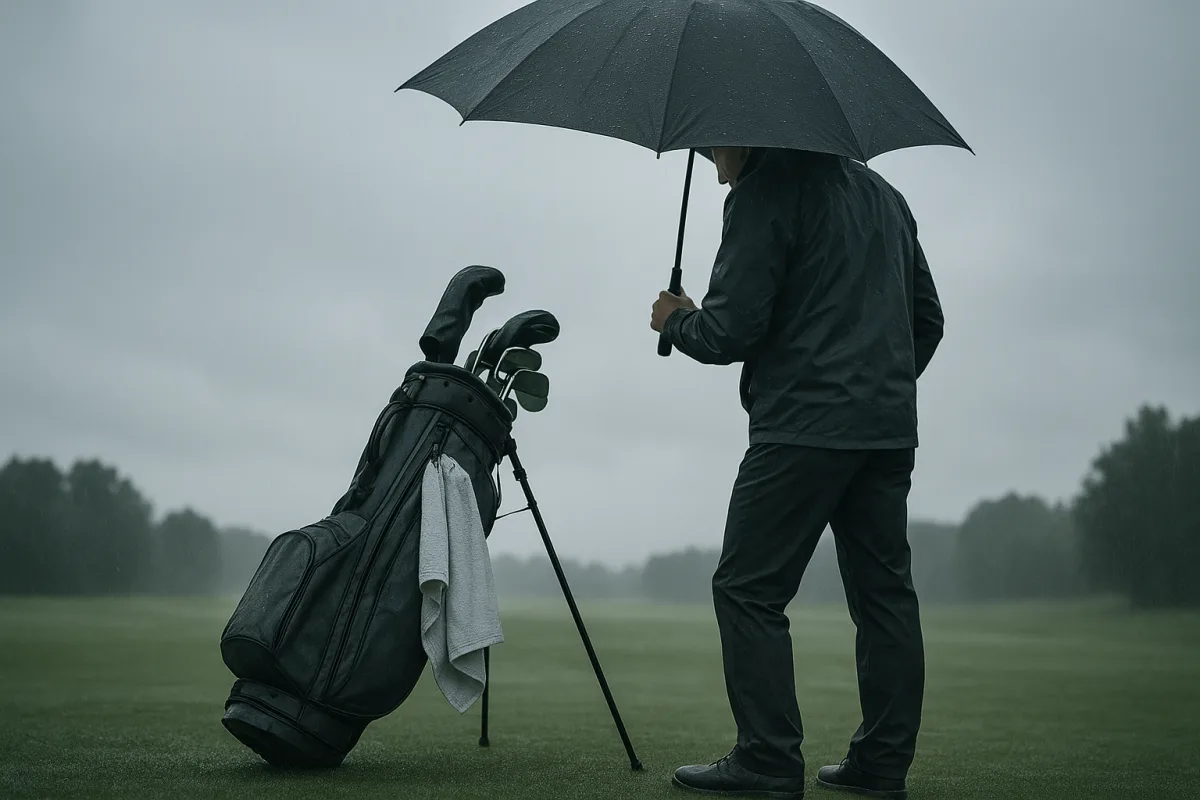
Before the first tee shot: keep the important things dry
Rain golf starts in the car park, not after the first grip gets slick. Put rain gloves, towels, waterproofs, umbrella and bag cover somewhere accessible, rather than buried below spare balls and a sandwich.
A golf umbrella needs enough canopy to cover you and the top of the bag without becoming a sail in the wind. Size guides from TheSize.net and Kinte put the practical range at 60 to 68 inches, or roughly 152 to 173 cm. [6][7]
A larger 72-inch umbrella may cover more, but the research brief only supports 60 to 68 inches as the balance of coverage and manageability. Also check your trolley or bag umbrella holder before relying on it, because handle compatibility is not established across every setup.
Use a rain cover with adjustable straps over the bag opening. These covers are generally universal-fit, waterproof and durable, but they only work if you close them between shots instead of leaving every club exposed while looking for a ball. [15]
I would bring at least two towels, one protected in a pocket or plastic bag strictly for grips and hands, and another for mud and clubfaces. A three-zone towel system, separating cleaning, drying and final wiping, is specifically recommended in grip-maintenance guidance. [13][16]
Waterproof clothing is worth choosing by membrane specification rather than by the word “waterproof” on a hang tag. Gore-Tex is commonly rated at 15,000 to more than 28,000 mm waterproofness and 10,000 to 28,000 g/m²/24h breathability. [1]
PU-membrane rainwear is cited at 20,000 to 30,000 mm waterproofness and 15,000 to 25,000 g/m²/24h breathability. Those are material figures, not a promise that every jacket will feel equally comfortable, because fit and your own heat output matter. [1]
For concrete price points, The Golf Shop Online lists the Galvin Green GORE-TEX Aston jacket at £229, a choice for golfers prioritising an established Gore-Tex membrane. The same retail guide lists DRYVR Arlo and Andrew jackets at £349, aimed at players wanting premium waterproof outerwear. [21]
Cubical Golfer lists the Under Armour Forefront Rain Jacket at $59.97, a lower-cost option for the golfer who needs rain protection without paying Gore-Tex-jacket money. Those are garment prices only, not a complete wet-weather kit, and no long-term durability comparison is established. [2]
A DWR, or durable water-repellent, coating helps shed light rain, but it is not equivalent to a waterproof membrane in sustained weather. If the forecast says showers rather than steady rain, DWR may be enough. If it says prolonged rain, treat it as a backup feature. [1]
At the course: decide whether playing is sensible
Do not judge course playability just by whether it is raining at that moment. Drainage, soil and how much water has already fallen matter more than the view from the practice green.
Sand-based courses normally drain more effectively than courses with silt or clay-heavy soil. Silt and clay retain water, which makes waterlogging, plugged balls and turf damage more likely even after the rain has eased. [17][19]
A well-drained course can handle about one inch of rain in 24 hours, according to course-drainage guidance. That is not a universal green light: rainfall intensity, saturated ground and local low spots can make one course unplayable while another stays open. [19]
Heavy rain can force temporary closures because saturated turf is vulnerable to damage and conditions may become unsafe. If the shop has imposed a trolley restriction, a carry-only rule or a closure, that is course protection, not a challenge to prove toughness. [18][20]
Lightning is the non-negotiable stop sign. Guidance says suspend play when lightning is within 6 to 10 miles, so get off the course and into proper shelter rather than waiting under an umbrella or tree for one more putt. [3][18]
Delays have no standard length. The BMW Championship in 2025 had a two-hour, 13-minute rain and lightning delay, while the Biltmore Championship in 2026 delayed its final-round start by one hour for fog and rain. [3]
Persistent rain can be more disruptive still. The 2025 LPGA NW Arkansas Championship was cancelled after round one, and the 2025 Alfred Dunhill Championship was shortened to 54 holes after suspension. [3]
For a regular Saturday fourball, that means checking the forecast before leaving and asking the club about conditions is more useful than assuming a shower equals a quick restart. The rain may stop while the course remains too wet to reopen. [18][19]
On the tee: reset your yardages and expectations
Rain changes the sensible target, not just your comfort level. Golfspan’s rain-distance guidance puts the carry loss at about 3 to 8 yards per club, with wet fairways reducing total distance by 10 to 20 percent. [4]
For a mid-handicap player, that usually means taking one more club when carry over trouble matters, then accepting that the ball may stop near its pitch mark. Do not choose club solely from your normal dry-yardage memory.
The exact loss belongs to the shot that produced it. Wind, temperature, strike location, launch and ball speed will move the number around, so 3 to 8 yards is a planning range, not a personal launch-monitor prescription. [4]
Wet faces and balls can also reduce friction, lowering spin. The awkward result is the wet-weather “flyer”, a shot that launches higher with less backspin and may not behave like a normal, controlled approach. [4]
That is a good reason to favour the larger landing area and avoid hero carries over bunkers or water. A flyer is not guaranteed, and most distance claims in wet conditions sit within the noise unless they come from your strike, speed and launch pattern.
Softer golf balls are sometimes suggested for control in wet conditions. The research brief does not quantify a performance benefit, so I would not buy a new ball model for one rainy medal based on that claim alone. [9]
From the fairway and rough: prioritise strike
The wet swing adjustment is mostly about low point and balance. Set a little narrower than usual, move the ball slightly back and lean forward enough to encourage a descending strike rather than trying to sweep the ball clean. [9][10]
Start with roughly 60 percent of pressure on the lead foot. That setup should help the club reach the turf predictably, particularly when a wet lie makes a thin or heavy strike more costly than usual. [9][10]
Then make a smooth swing at roughly 80 to 90 percent effort. Going after it at full speed can make footing and grip pressure worse, while a controlled tempo gives you a better chance of centre contact. [9][10]
Hold the club firmly enough that it will not rotate in wet hands, but do not strangle it. Over-tightening creates its own timing problem, and one slice fix is not every slice fix, particularly when wet grips and a slippery stance are involved. [9]
Pitching from wet turf deserves even more caution. GOLF.com’s wet-lie pitching guidance emphasises the need for solid contact, and the broader wet-condition advice supports a descending strike rather than adding loft and hoping the bounce solves everything. [8][10]
There is no supported, specific instruction here for changing putting technique in rain. Keep the ball and putter face dry as practical, read the surface you have, and avoid inventing a stroke adjustment based on an unsupported rule.
Between shots: protect grip, face and decision-making
Dry the grip before every meaningful shot, not only when it visibly shines with water. Golf Deft’s wet-weather system and Gorilla Gold’s grip guidance both stress frequent drying, because a dry glove cannot fully compensate for a wet handle. [12][13]
Golf Monthly identifies the Golf Pride ZGrip Cord as a moisture-resistant grip option for players who want more traction in poor weather. Grip preference remains personal, though, and the research does not establish one universally best wet-weather grip. [11]
Gorilla Gold towels are marketed as grip enhancers, and the company’s own guidance supports their use for maintaining grip in rain. Treat that as a practical aid rather than a cure for soaked equipment, since performance will vary with hands, glove choice and grip condition. [12]
Keep mud, grass and water out of the grooves as well. Dirt and grass interfere with club performance, while moisture already reduces face-to-ball friction, so a dirty face adds another variable when you most need predictable launch and spin. [14]
Use a soft-bristle brush along the direction of the grooves, then wipe the face dry after cleaning. Aggressive scrubbing across grooves is not the recommendation, and a clean, dry face is more useful than a shiny but still muddy club. [16]
After the round: prevent next week’s wet-weather problem
Do not zip a wet bag into the boot and forget it. Dry every club thoroughly after the round, including grips, because leaving moisture on equipment turns one rainy round into an avoidable maintenance issue. [13]
Clean remaining dirt from the faces and grooves with the same soft-bristle, groove-direction method used on the course. Once dry, inspect grips for slick spots or wear, because no towel system can restore traction to a grip that has reached the end of its life. [16]
For off-season storage, grip-maintenance guidance suggests wrapping grips in cling film. That is a storage recommendation, not something to do before playing, and it does not replace drying clubs properly after a wet round. [13]
Frequently Asked Questions
What golf gear should I bring when it rains?
Bring a 60 to 68-inch golf umbrella, a universal rain cover with adjustable straps for your bag, and at least two dry towels—one dedicated to drying grips and hands, another for cleaning mud and clubfaces. Waterproof clothing with quality membranes like Gore-Tex or PU is recommended for sustained rain, while DWR coatings may suffice for light showers. Rain gloves and grip enhancers also help maintain control in wet conditions.
How do I adjust my golf swing in the rain?
Use a slightly narrower stance and position the ball a bit further back in your stance. Apply about 60 percent of your weight on the lead foot and swing at 80 to 90 percent of your normal speed to maintain control. Focus on making solid, descending contact rather than trying to hit harder, as wet conditions reduce ball spin and distance.
What size golf umbrella is best for rain?
A practical golf umbrella size ranges from 60 to 68 inches (152 to 173 cm) in canopy diameter. This size provides enough coverage to protect both you and the top of your bag while remaining manageable in the wind. Larger umbrellas, like 72 inches, may offer more coverage but can be harder to handle.
When should I stop playing golf due to lightning?
Stop playing immediately if lightning is detected within 6 to 10 miles of your location. Lightning poses a serious safety risk, and play should be suspended until the threat passes. Rain delays can last from minutes to hours or even end the round depending on storm persistence and course drainage.
How does rain affect golf ball distance and course conditions?
Rain typically reduces carry distance by about 3 to 8 yards per club and can decrease total distance by 10 to 20 percent once the ball stops rolling on wet fairways. Wet conditions also reduce friction between the clubface and ball, leading to less backspin and higher, less predictable ball flight. Course drainage and soil type affect playability; sand-based courses drain better, while silt or clay soils retain water, increasing the risk of waterlogging and turf damage.
How we researched this
This article was assembled from 21 cited references.
Nothing here is based on hands-on testing. Where a figure or finding appears, it belongs to the source cited beside it, and the writing says so rather than implying otherwise. Every source is listed below so you can check it.
Sources
- What Is The Best Waterproof Golf Clothing: Complete Guide For Rainy Golf
- Best Golf Rain Gear 2026 — Tested in 20+ Rounds
- How Rain Probability Affects Your Golf Round: A Weather Data Study | Golf Weather Score
- Does Rain Affect Golf Ball Distance? Your Questions Answered.
- Rain Impact On Golf Greens: What You Need To Know | ShunGolf
- Umbrella Sizes: Compact, Auto, Golf Arc Diameter Guide | TheSize.net
- Golf Umbrella Size Guide: Understand 62", 68", & 72" Sizes for Optimal - Kinte
- The 4 keys for pitching off wet lies | GOLF.com
- Golf in the Rain: Tips for Playing in Wet Conditions and Maintaining Performance – Golf Pro Guides
- How To Make Solid Contact In Wet Conditions | Weekend Golfer's Guide
- Best Golf Grips For Drivers 2026
- How to Maintain Your Golf Grip in the Rain | Gorilla Gold | Gorilla Gold
- How to Keep Golf Grips Dry in Rain: A Complete System That Works -
- How Dirt and Grass Affect Golf Club Performance – DightonRock
- 7 Key Tips for Golfing in the Rain
- How to Clean Golf Club Grooves for Better Spin & Control – Aiming Fluid Golf
- LESCO®: Addressing Drainage Issues in High-Play Areas on Golf Courses
- Do Golf Courses Close for Rain? - Best Golfing Guide
- How Much Rain Can a Golf Course Take?
- Do Golf Courses Close When It Rains? Here’s What You Need to Know
- 5 Best Galvin Green Waterproof Jackets Rated 2026 - The Golf Shop Online Blog
Related Articles
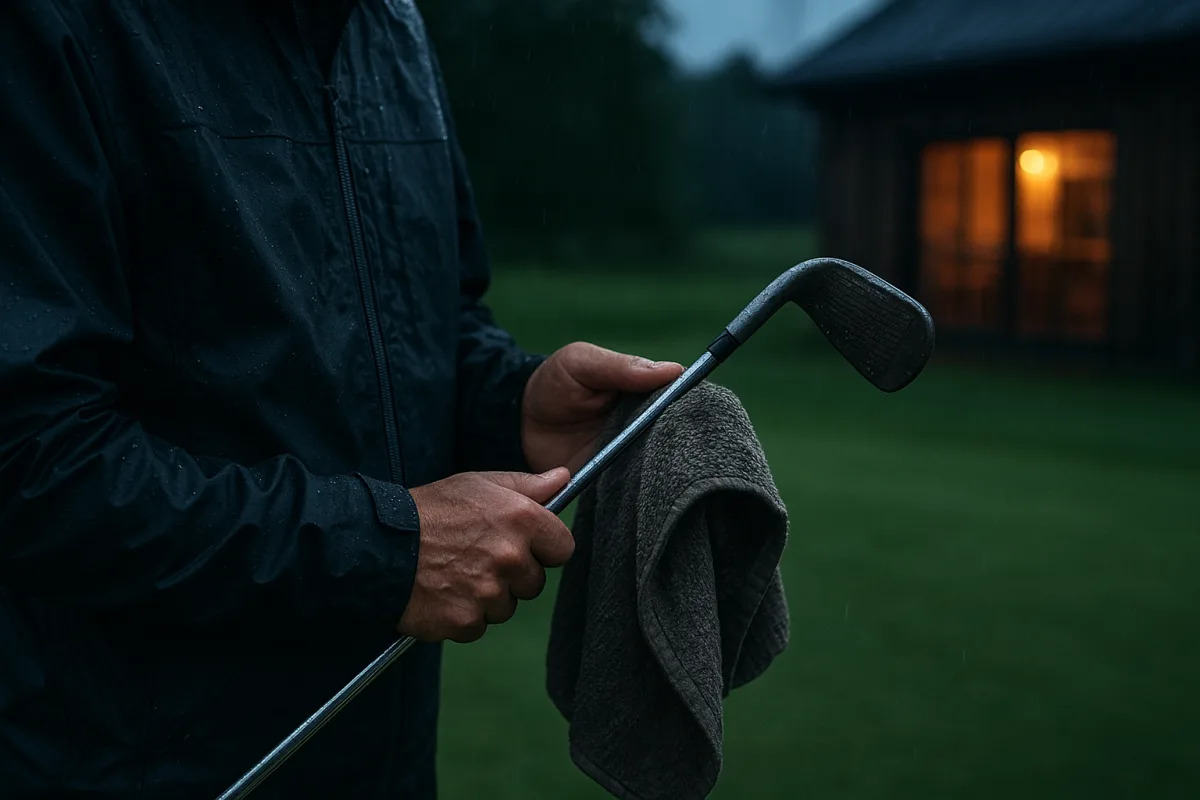
How to Play Golf in the Rain: Gear, Swing & Strategy Tips
Learn how to play golf in the rain with expert tips on gear, swing adjustments, and course strategy to improve your wet-weather game.
Playing Golf in Windy Conditions: Tips and Strategies
Learn how to play golf in windy conditions with club selection, swing adjustments, and course strategy to improve your game in the wind.
Summer Golf Trip Planning: Courses, Conditions & Deals
Learn how to plan a summer golf trip with tips on course conditions, pricing, packages, and what to expect from summer turf and weather.
Best Time of Day to Play Golf
Discover the best time of day to play golf by comparing morning and afternoon conditions for optimal performance and course strategy.