
How to Play Golf in the Rain: Gear, Swing & Strategy Tips
Learn how to play golf in the rain with expert tips on gear, swing adjustments, and course strategy to improve your wet-weather game.
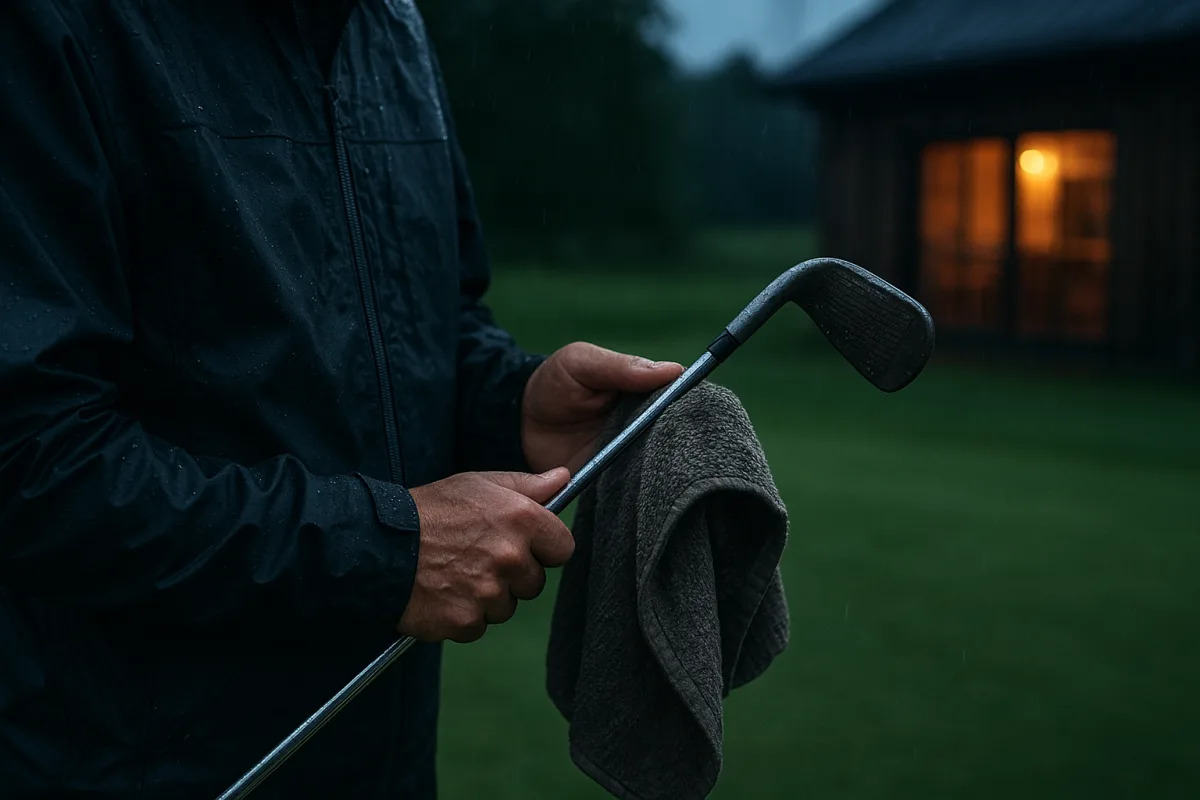
Before the first tee shot: dress for the swing, not just the forecast
Rain golf starts before the car park. If your waterproof jacket binds across the shoulders, rides up during the backswing or leaves your lead arm tight, it is not really golf rain gear, however dry it keeps you.
Look for fully taped or welded seams, because water usually finds stitching before it comes through the main fabric. For heavy rain, a breathability rating of at least 10,000 g/m²/24h is the sensible floor. [1][2]
Gore-Tex is the familiar benchmark, with typical waterproof ratings of 15,000 to 28,000 mm and breathability of 10,000 to 20,000 g/m²/24h. Gore-Tex Pro can exceed 28,000 on both measures. [1]
That does not mean every non-Gore-Tex jacket is a compromise. Premium polyurethane membrane garments can reach 20,000 to 30,000 mm waterproofing and 15,000 to 25,000 g/m²/24h breathability, matching or exceeding many standard Gore-Tex specifications. [1][2]
The useful shopping distinction is membrane versus simple coating. Coated polyurethane or PVC garments cost less, usually around $50 to $150, but trade away breathability and potentially leave you clammy through a long wet round. [1][2]
PU membrane rain gear generally sits around $100 to $300, while Gore-Tex garments run roughly $200 to $500. Those are garment prices, not a guarantee of fit, durability or comfort through 18 holes. [1][2]
For regular rain, spend the extra budget on articulated sleeves, stretch panels and trousers you can squat and rotate in. No waterproof rating helps if restricted movement changes your shoulder turn or encourages a short, defensive follow-through. [1][11]
In warmer climates, favour lighter, breathable layers rather than the heaviest shell available. The objective is to stay functional without overheating, because sweat trapped inside a rain suit is still moisture affecting comfort and grip. [11]
If you play regularly in a high-rainfall area such as the Pacific Northwest, a better jacket and trousers make more sense than a disposable emergency suit. Regional wet-weather guidance puts this practical outerwear category around $80 to $250. [11]
At the bag: create a dry side and a wet side
The first real problem is not ball flight. It is organisation. Once every towel, glove and pocket is wet, you spend the round managing equipment instead of choosing shots.
Carry at least two towels and assign jobs. Keep one protected for grips, hands and balls, and use the other for clubheads, shoes and anything already soaked. A single multipurpose towel becomes saturated quickly. [9][13]
Dry the grip immediately after each shot, not when you reach the next tee. That routine sounds fussy, but the next swing is where a wet grip matters, especially if rain has collected under your glove. [13]
Wipe the golf ball with a dry towel between shots as well. Water between clubface and ball reduces friction, which can lower backspin and reduce control, even though there is no useful universal percentage for the spin loss. [4]
A rain cover should be waterproof, durable and simple to deploy or remove. If it requires a wrestling match at every club selection, it will stay off during the downpour, which defeats the point. [8][9]
For an umbrella, 62 inches is the sensible middle ground. It provides coverage for one golfer and a bag while remaining manageable on the course, unlike larger options for which the available guidance offers no clear usability advantage. [5][6]
Pongee fabric in 190T or 210T is commonly preferred for a quieter canopy, while an EVA foam handle is designed to remain grippy when wet and fit standard cart umbrella holders. [5][7]
Do not mistake an umbrella for a substitute for rain gear. It protects the bag and gives you a dry space between shots, but it cannot keep your torso, hands and lower body dry through a windy walk. [5][9]
On the tee: secure your feet and hands before worrying about speed
Wet turf makes footing the first swing variable. Waterproof golf shoes with aggressive tread, whether spiked or spikeless, improve stability when the tee box or fairway becomes slick. [10]
Then deal with the hands. Synthetic or synthetic-natural rain gloves are designed to maintain grip in wet conditions, and mesh-backed versions offer more breathability when the rain is intermittent rather than relentless. [10][11]
Carry multiple pairs if rain is expected, particularly in persistently wet regions. Rotating gloves gives one pair time to dry and prevents you from trying to grip a club through a glove that is saturated and stretched. [11]
Examples commonly recommended for wet-weather grip include the Mizuno RainFit and FootJoy RainGrip rain gloves. The research brief does not provide current prices for either, so compare local pricing and fit rather than assuming one is better value. [13]
Your grips matter too. Rubber or corded models generally perform better in rain than smooth leather grips. Golf Pride’s ZGrip Cord is one named corded option, although the cited guidance provides no price or controlled product comparison. [10][13]
Keep grip pressure firm enough that the club cannot twist, but do not squeeze until your forearms lock. Extra tension usually shortens the swing and disrupts face control, which is exactly what a wet strike does not need. [10]
A smooth, controlled swing is the sensible default. The GOAT Sling Model data cited in wet-weather guidance associates smoother tempo with 42 percent fewer mishits, but that is model-specific data, not a promise for every golfer. [12]
That distinction matters. A tempo cue that fixes one player’s rain-induced slice will not fix every slice, because the underlying issue may be face control, path, footing, poor contact or simply a soaked glove. [10][12]
From the fairway: allow for lost carry and almost no release
Rain changes distance in two ways. It can reduce carry by approximately 3 to 8 yards per club, depending on rain intensity and trajectory, then wet turf takes away the rollout you might normally count on. [4][10]
That range is a planning number, not a launch-monitor prescription. A distance loss belongs to the swing, ball speed, launch, spin and rain intensity that produced it, so do not assume your 7-iron always loses exactly five yards. [4]
Start with one extra club on an approach. Move to two extra clubs when the rain is heavy, the shot is exposed, or you normally depend on a low-spinning ball rolling out after landing. [10][11]
This is not licence to hit a stock 8-iron as hard as possible because you selected more club. Take the longer club, make a three-quarter or controlled full swing, and prioritise centred contact. [11][12]
Water on the face and ball reduces friction, tending to reduce backspin and produce a higher launch. That can make the shot look as though it is flying adequately before it lands shorter or behaves unpredictably. [4]
Choose targets for the landing rather than the usual release. Soft fairways can stop the ball quickly or allow it to plug, so a front-edge number that works on a dry summer day may leave you short. [4][14]
Hybrids and fairway woods can be useful where they offer you more control than forcing a long iron from wet turf. That is a club-selection option, not a rule, because lie quality and your own strike pattern still decide it. [10]
Most advertised distance claims are within the noise for many mid-handicap swings even in dry conditions. In rain, fitting and knowing your carry windows beat buying a club on the theory that it will overpower wet weather.
Around the green: plan for soft landings and slower pace
Wet greens often slow the ball and can affect break, so give every putt a fresh pace read rather than assuming the morning line and speed still apply late in the round. [11][14]
The simple adjustment is more committed pace, not a jabby stroke. A tentative hit is especially costly when surface water and softer grass have already reduced ball speed, because the putt may die before reaching its intended break. [11]
On chips and pitches, expect less release after landing. Pick a carry spot that gets the ball nearer the hole, then accept that a shot that would normally check and release may stop much earlier. [4][14]
Do not overreact by adding loft to every greenside shot. Wet conditions change bounce, lie and rollout, but the right choice still depends on whether the ball is sitting up, buried, on closely mown turf or in waterlogged rough.
After every shot: reset the conditions you can control
The most common rain mistake is trying to make up for adverse conditions with effort. Swinging harder from a slippery stance, with a damp glove and an under-clubbed approach, compounds three problems at once. [10][12]
Instead, follow a repeatable reset: towel the grip, wipe the ball, confirm your footing, choose the extra club if needed, then make the same controlled motion you intended before the weather arrived. [10][13]
Grip-drying powders such as baby powder or rosin can help absorb moisture on gloves without adding slipperiness. Use them sparingly, because the goal is a stable hand-to-grip connection, not a chalky distraction. [13]
There is no evidence-backed universal interval for drying gear beyond the practical instruction to dry grips after each shot. If conditions are merely drizzly, keep the routine; if it is pouring, be more deliberate about sheltering gloves and towels. [13]
After the round, remove clubs from the bag if possible, wipe them down and air-dry them upright in a ventilated area for at least 24 hours. Avoid direct heat sources, which are not recommended for wet equipment. [13]
Frequently Asked Questions
What clothing is best for playing golf in the rain?
The best rain golf clothing features waterproof outer layers with fully taped or welded seams and a breathability rating of at least 10,000 g/m²/24h for sustained rain. Gore-Tex and premium polyurethane (PU) membrane garments offer comparable waterproofing and breathability, with PU membranes sometimes exceeding Gore-Tex standards. Prioritize stretch, articulated sleeves, and a swing-friendly fit over brand or logo to maintain full range of motion during your swing.
How does rain affect golf ball flight and distance?
Rain typically reduces carry distance by about 3 to 8 yards per club and removes most rollout because wet fairways and greens slow the ball significantly. Water between the clubface and ball reduces friction, lowering backspin and control, which often results in a higher launch angle. To adjust, it’s advisable to use one or two extra clubs rather than trying to swing harder.
What equipment should I carry when golfing in the rain?
Carry at least two towels with distinct purposes: one kept dry for grips, hands, and balls, and another for wet clubheads, shoes, and soaked items. Dry your grip immediately after each shot to maintain control, especially since rain can accumulate under your glove. Using rain gloves and corded grips can also help maintain grip security in wet conditions.
How do wet greens affect putting and course strategy?
Wet greens generally play slower but are not necessarily easier. They reduce ball speed and can alter how the ball breaks, requiring a more deliberate assessment of pace and line. Adjust your putting strategy by focusing on pace control and carefully reading the subtle changes in green conditions caused by moisture.
How we researched this
This article was assembled from 14 cited references.
Nothing here is based on hands-on testing. Where a figure or finding appears, it belongs to the source cited beside it, and the writing says so rather than implying otherwise. Every source is listed below so you can check it.
Sources
- What Is The Best Waterproof Golf Clothing: Complete Guide For Rainy Golf
- 8 Best Golf Rain Gears of 2026
- How Rain Probability Affects Your Golf Round: A Weather Data Study | Golf Weather Score
- Golf balls in the rain – how damp and wet conditions affect the game – Hitpin Golf
- What Is a Golf Umbrella? Size, Features, and When to Use One – Breliio
- Golf Umbrella Size Guide: Understand 62", 68", & 72" Sizes for Optimal - Kinte
- Golf Umbrella, How To Select A Golf Umbrella
- Best Waterproof Golf Bags 2026 | Golf Monthly
- Rain Gear for Golf: The Complete Wet Weather Kit
- Rain Golf: What the Pros Know About Playing in Wet Conditions | GolfGabs
- Golf in the Rain: A PNW Golfer’s Guide | ParWest Golf
- Play Golf in Heavy Rain: Focus & Strategy Tips | GOATCode
- How to Keep Golf Grips Dry in Rain: A Complete System That Works -
- How to Play Golf in the Rain and Actually Score | Learn Golf
Related Articles
Golf Rain Gear and Strategy: What to Do If It Rains
Learn essential golf rain gear and strategies to stay dry, adjust your swing, and play safely when it rains on the course.
Playing Golf in Windy Conditions: Tips and Strategies
Learn how to play golf in windy conditions with club selection, swing adjustments, and course strategy to improve your game in the wind.

Best Conditions for Golf: Ideal Weather and Wind Tips
Discover the best conditions for golf, including ideal temperature, wind effects, and how to adjust your play for optimal rounds.
When to Play Golf in Spring: Timing and Course Conditions
Learn when to play golf in spring by understanding course conditions, weather, and maintenance for the best tee times and experience.