
How to Play Golf in Cold Weather
Learn how to play golf in cold weather with tips on swing, clothing, equipment, and course strategy for optimal cold-weather golf performance.
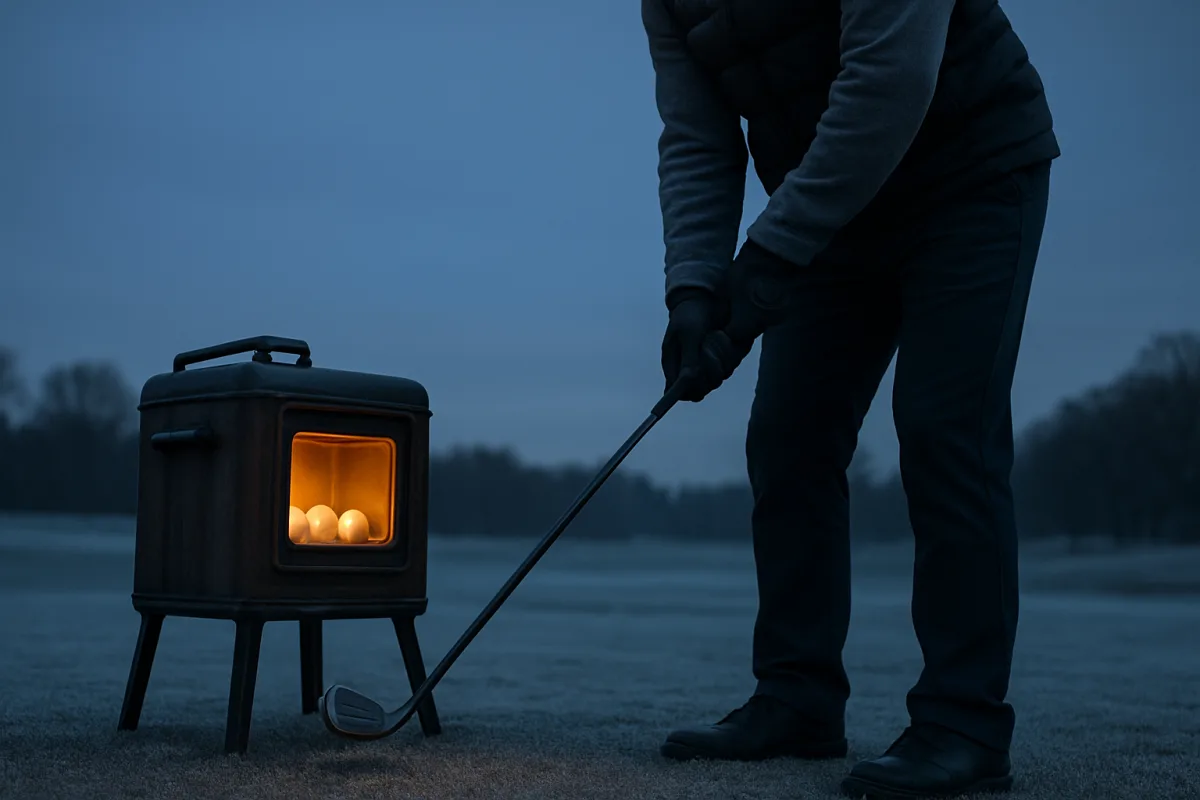
Before leaving home: dress for a swing, not a walk
The first winter mistake happens before the bag reaches the car. It is easy to dress as though you are standing on a touchline for four hours, then discover that three thick jackets make a normal backswing impossible.
The practical layering order is a merino wool or synthetic moisture-wicking base layer, a fleece insulating layer, then a windproof and water-resistant outer layer. That combination traps warmth while giving you the option to remove one layer once walking raises your temperature. [25]
Avoid a bulky sleeve or stiff outer shell that catches at the top of the backswing. A restricted turn can cost speed and change your low point, which is an expensive trade when cold air is already taking carry away.
Bring a spare pair of gloves and a towel that stays dry inside a pocket or plastic bag. Golf Monthly identifies the FootJoy WinterSof, Callaway Thermal Grip and FINGER TEN Winter Golf Gloves as winter options with warmth-oriented construction and water resistance. [1]
The research brief does not provide comparable prices for those three glove models, nor direct testing proving one is warmer or grippier than another. Buy the pair that fits securely without bunching in the fingers, and use it for warmth between shots if that helps.
For your feet, choose shoes with spikes rather than relying on a smooth summer sole. Wet grass, mud and soft turf make traction part of shot execution, particularly when your lead foot has to accept pressure through impact. [17]
At the course: warm the body before asking it for speed
Do not use the first tee as your warm-up session. Fulcria Labs and The Golf Hub both recommend roughly 10 to 15 minutes of dynamic movement and progressive swinging, with extra time sensible when temperatures drop below 50°F. [8][9]
Start with shoulder circles, torso rotations, hip movement and controlled bodyweight squats or lunges. The goal is not a fitness workout. It is to get joints moving and make a normal golf turn feel available before you add a club.
Then make a few half-swings, three-quarter swings and only later full swings. If your first few full shots feel short, do not chase them by swinging harder. Cold-weather speed loss is acknowledged, but the research does not establish one universal miles-per-hour penalty. [8][9]
That distinction matters. A launch-monitor number belongs to the swing that produced it, with that player’s clothes, temperature, ball and strike quality. There is no useful winter rule saying every golfer loses exactly the same speed or distance.
On the first tee: recalibrate distance before attacking flags
Cold air creates more drag, and Golf Guidebook estimates that 40°F air is around 6% denser than 80°F air. It puts the resulting carry reduction at roughly 10 to 20 yards, depending on the club involved. [3]
The ball also contributes. PGTAA explains that a cold golf ball compresses less effectively, reducing initial velocity and distance. [4] The result is a double problem: less efficient ball performance and air that resists flight more strongly.
For the opening holes, take one extra club as the default. If the shot is a forced carry over water, a bunker or a steep front edge, taking two more clubs is often the better percentage play. [3][20]
That does not mean every shot needs more club. A sheltered downhill hole, a downwind approach or a flushed strike can still fly normally. Use the first several full shots to establish actual carry, rather than treating a summer yardage-book number as fixed truth.
Most winter distance claims are within the noise unless they are based on repeatable strikes and known conditions. A thin 7-iron does not prove cold weather cost 15 yards, just as one good one does not prove it did not.
Choose a ball for cold conditions, but keep expectations sensible
A low-compression ball can make sense when temperatures fall because cold reduces ball compression. BallCaddie recommends models below 70 compression for cold-weather play, with typical prices around $22 to $30 per dozen for the options listed. [10]
The Wilson Duo Soft, at about 37 compression, suits the golfer prioritising the softest listed option. The Callaway Supersoft, around 49 compression, and Bridgestone e12 Straight, around 50, suit players seeking a low-compression alternative without choosing the softest figure. [10][27]
The Srixon Soft Feel, at roughly 58 compression, also fits the sub-70 winter category and may suit a player who wants a somewhat firmer listed option than the Wilson Duo Soft. These are compression figures, not guarantees of extra yards for every swing. [10][11][12]
Keep the balls in an inside pocket or otherwise out of prolonged cold before use. Golf Fit Finder’s cold-weather guidance emphasises storage as part of maintaining ball performance, which makes more sense than leaving a dozen in a freezing car overnight. [21]
There is no evidence in the supplied research that cold produces a predictable model-specific spin-rate or trajectory-shape change. Do not buy a low-compression ball expecting it to cure a ballooning flight, a low launch or a slice.
From wet fairways: reduce turf interaction
Winter fairways are often soft, and a shot that would normally take a shallow divot can suddenly dig. GOLF.com’s soggy-turf advice recommends reducing turf interaction by choking down and hovering the club rather than grounding it heavily. [17]
Choking down slightly shortens the effective club and can help you make a more controlled strike. Hovering keeps the club from settling into soft ground behind the ball, which can otherwise alter your setup and encourage a fat shot.
This is not a universal swing fix. A player who tops the ball because they stand up through impact does not need to hover the club and hope. The useful adjustment is specific to soft ground and the risk of the club digging.
Choose more loft where the lie is wet or the ball sits down. A higher-lofted club needs less perfect turf interaction to get the ball airborne, and it reduces the temptation to manufacture a low-running shot from a lie that will not support it. [17]
Around the green, a wedge with more bounce is generally better suited to soft turf than a low-bounce option. Golf Monthly’s surface guidance recommends higher bounce angles where the ground is soft, helping the sole resist digging. [17]
Play fairways and approaches for carry, not summer rollout
After rain or through winter moisture, fairways soften and the ball rolls less. Roaming Golf notes that the same hole plays differently after rain than during a dry spell, largely because firm ground produces run while soft ground absorbs it. [18]
That changes tee-shot strategy. On a hole where you normally aim at a fairway bunker expecting the ball to run short of it, carry becomes the relevant number. If you cannot carry the hazard, aim wider rather than hoping for summer bounce.
It also changes approach planning. Land the ball farther onto the putting surface because the first bounce will tend to stop sooner. On a front pin, that may mean accepting the middle of the green rather than trying to fly a precise number over trouble.
More club and a controlled swing are usually safer than trying to force a hard, low-lofted shot. The instruction sources recommend clubbing up one or two clubs in cold conditions, while more loft can help manage wet or frosty ground. [3][14]
A winter round is not the right time to force every approach at a tucked flag. Golf Thing’s cold-weather strategy advice supports more conservative decisions as conditions reduce distance certainty and make missed shots harder to predict. [28]
On and around greens: expect slower pace and less predictable release
Cold, moisture and softer ground affect putting and chipping as much as full shots. The USGA’s winter course guidance notes that seasonal conditions change how turf behaves, while cold-weather setup reporting has also highlighted slower green-speed targets in difficult conditions. [18]
The practical response is to spend five minutes on the practice green before the round. Hit putts from 10, 20 and 40 feet, then pay attention to how far the ball rolls after the first third of your round.
For putts, make a longer stroke with the same controlled tempo rather than a jabby hit. Trying to “pop” the ball because greens feel slow tends to damage face control, and winter greens can still have quick downhill or down-grain sections.
On chips, expect less release on damp turf and softer greens. Choose a landing point closer to the hole than your dry-summer default, but leave margin where a wet lie could grab the club or where the green slopes away. [18]
Between shots: keep hands, balls and tempo from getting cold
Use walking time to keep moving, but do not rush your pre-shot routine. Cold hands reduce comfort and grip confidence, and a quick, tense takeaway is a common path to a poor strike or an open clubface.
Keep a dry towel accessible and change into a dry glove when the first one becomes wet. Winter gloves are intended to provide warmth and grip in cold, wet conditions, but no supplied source establishes a definitive best model. [1]
If you carry a hand warmer, use it between shots, not while gripping the club. Your hands need to feel warm, but your grip still needs to feel the handle. A thick or numb-handed hold makes face control harder.
Most importantly, preserve tempo. Cold conditions do not require a different golf swing, but they do punish the golfer who starts lashing at the ball to recover lost yards. Take more club, commit to a balanced finish and let the carry be what it is.
The winter mistakes worth avoiding
Do not overdress, then compensate for restricted movement by swinging harder. Layering works because you can adjust it, and the whole point is warmth without sacrificing the shoulder turn, arm swing and balance needed for reliable contact. [25]
Do not assume a low-compression ball solves everything. A Wilson Duo Soft, Callaway Supersoft, Srixon Soft Feel or Bridgestone e12 Straight may be a sensible cold-weather choice within the roughly $22 to $30-per-dozen category, but strategy still matters. [10][27]
Do not play the same landing spots you used on dry July fairways. Soft ground removes rollout, wet lies increase the penalty for poor turf interaction, and slower greens change the pace you need to start the ball on line. [17][18]
Finally, do not turn one useful adjustment into a rule for every bad shot. Choking down and hovering can help from soggy turf, but it will not fix every fat shot. Taking two extra clubs can cover a forced carry, but not a poor strike.
Frequently Asked Questions
How do I adjust my golf swing in cold weather?
Instead of swinging harder to compensate for cold weather, it is better to take one or two extra clubs because cold air is denser and reduces carry distance by 10 to 20 yards. Warm up gradually with dynamic stretches and progressive swings to maintain swing mechanics and reduce injury risk. Avoid rushing your first shots and do not try to force extra speed immediately.
What clothing should I wear to play golf in cold weather?
Wear a moisture-wicking base layer like merino wool or synthetic fabric, a fleece mid-layer for insulation, and a windproof, water-resistant outer shell. Avoid bulky or stiff layers that restrict your backswing or arm movement. Also, use winter golf gloves with warmth and water resistance, and wear spiked shoes to improve traction on wet or soft turf.
How does cold weather affect golf ball distance?
Cold air is about 6% denser at 40°F compared to 80°F, which increases drag and reduces carry distance by 10 to 20 yards depending on the club. Additionally, cold golf balls compress less effectively, lowering initial velocity and further reducing distance. Together, these factors make shots shorter in cold weather.
What equipment changes help when playing golf in cold weather?
Use one or two extra clubs to offset reduced carry distance caused by cold air and ball compression. Consider low-compression golf balls (under 70 compression) designed for cold weather to improve ball performance. Choose wedges with higher bounce angles for soft turf, and wear spiked shoes for better traction on wet or muddy ground.
How should I warm up before playing golf in cold weather?
Spend 10 to 15 minutes warming up dynamically with shoulder circles, torso rotations, hip movements, and controlled squats or lunges to loosen joints. Progress from half-swings to three-quarter swings before attempting full shots. This routine helps prepare muscles and joints for the golf swing and reduces the risk of injury in cold conditions.
How we researched this
This article was assembled from 28 cited references.
Nothing here is based on hands-on testing. Where a figure or finding appears, it belongs to the source cited beside it, and the writing says so rather than implying otherwise. Every source is listed below so you can check it.
Sources
- Best Winter Golf Gloves 2026 | Golf Monthly
- Best Golf Clothes For Cold Weather - 2026 Reviews - Fun with Golf | Your Golf Product Guide
- Cold Weather Golf: How To Adjust Distance, Grip, Clothing And Strategy When The Temperature Drops
- Temperature and Golf Ball Performance: What Every Golfer Should Know - PGTAA - Become a Golf Instructor and PGA Teaching Professional
- Cold facts about golf balls | Golf News and Tour Information | Golf Digest
- Cold Weather's Impact on Golf Ball Distance
- Temperature and Golf Ball Performance: Effect of Weather on Balls
- Golf Warm-Up Routine: 10 Minutes to Better Shots | Fulcria Labs
- Understanding Golf Warm-up Routine: A Practical Guide - The Golf Hub
- Best Golf Ball for Cold Weather (2026): Picks by Swing Speed | BallCaddie
- Srixon Golf | High-Performance Clubs, Balls & Gear for Every Golfer – Golf HQ
- Wilson 2023 Staff Duo Soft Golf Ball with Boost Core, White, 12-Pack - Walmart.com
- TaylorMade 2025 Distance+ Golf Balls | Blank | Personalized Golf Balls
- What Golf Balls Work Best in Cold Weather?
- The Best Cold Weather Golf Balls in 2026
- Golf Shot Selection: Make Smarter Decisions | Hole19
- Golf Tips: How to Hit It Pure from Soggy Turf | GOLF.com
- Why the same course plays differently after rain versus a dry spell
- A Practical Guide to Shot Selection | Golf Articles
- How Far Does a Golf Ball Go in Cold Weather? | ParPath
- Golf Balls for Cold Weather: Flight, Feel, and Storage
- Cold Weather Golf: When It’s Worth Playing (and When It’s Not) — Alba
- Golf in Winter: Tips for Playing in Cold Weather | DIGITALGOLF
- What to Wear Golfing in Cold Weather: Complete Guide – MG Golf
- How to Dress Warmly for Cold Weather, According to Science
- Leading Golf Store In India With Premium Brands In One Place
- Bridgestone 2025 e12 Straight Golf Balls — The House of Golf
- How to Adjust Your Golf Strategy for Cold Weather Play – Golf Thing
Related Articles
How to Play Golf in the Rain: Gear, Swing & Strategy Tips
Learn how to play golf in the rain with expert tips on gear, swing adjustments, and course strategy to improve your wet-weather game.
Golf Rain Gear and Strategy: What to Do If It Rains
Learn essential golf rain gear and strategies to stay dry, adjust your swing, and play safely when it rains on the course.

Best Golf Courses for Winter Play: Top Destinations and Tips
Discover the best golf courses for winter play, including top destinations, turf conditions, and travel tips for a great winter golf experience.
Playing Golf in Windy Conditions: Tips and Strategies
Learn how to play golf in windy conditions with club selection, swing adjustments, and course strategy to improve your game in the wind.