
Playing Golf in Windy Conditions: Tips and Strategies
Learn how to play golf in windy conditions with club selection, swing adjustments, and course strategy to improve your game in the wind.
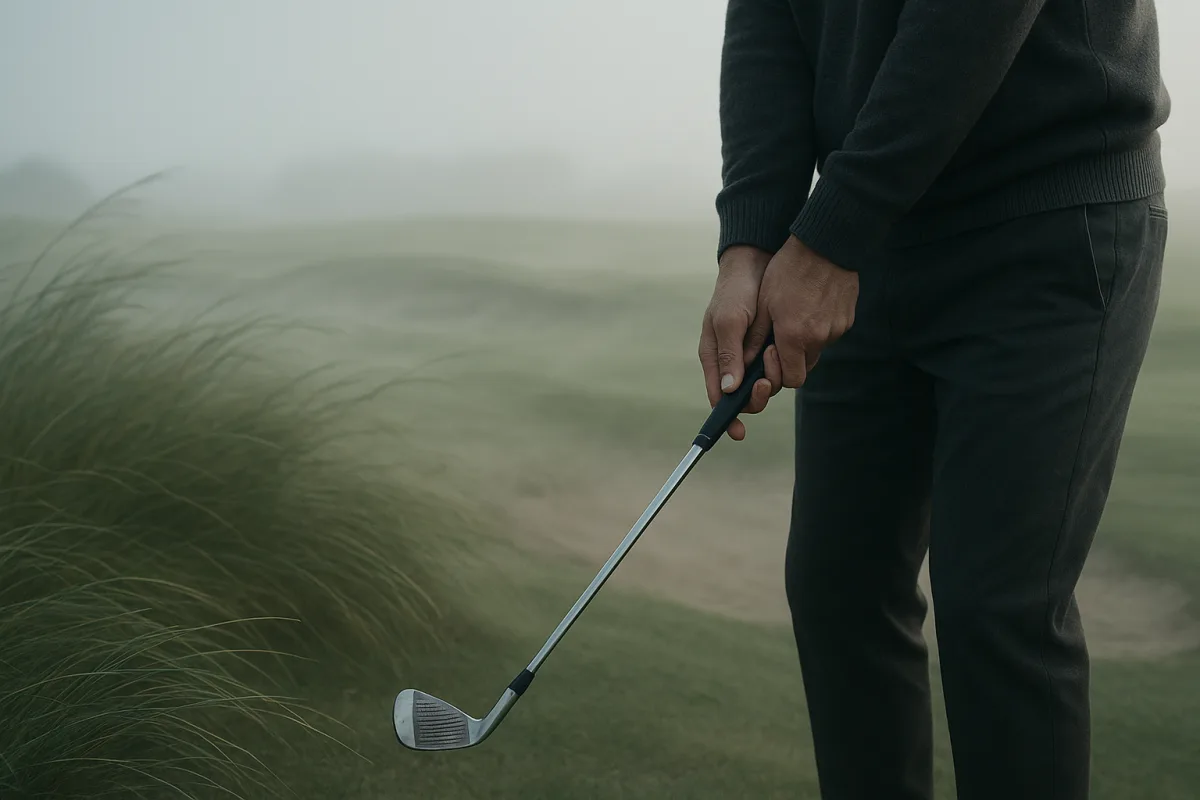
Before the first tee shot: work out what the wind is doing
The obvious mistake is checking the forecast, seeing “15 mph,” and applying that number to every hole. Wind can be stronger above the trees, weaker in a sheltered fairway and different near an exposed green.
Use visual clues at the tee, fairway and putting surface. Watch treetops, flags and grass, then note whether the wind is helping, hurting or crossing the intended starting line.
Open and coastal venues amplify this problem because there is less shelter. Golf Monthly highlighted significant wind concerns around Riviera Country Club during Pacific storms, while Bernardus Golf has also been identified as a venue where changing weather can matter. [9]
Write down a baseline if you have time during the warm-up. For example, note what a 10 mph headwind does to a stock 7-iron carry, but label it as your estimate rather than a universal conversion.
One carry model estimates that a headwind cuts carry by roughly 1 percent per mph, while a tailwind adds about 0.5 percent per mph. That makes a 15 mph headwind potentially much more significant than it looks. [4]
Those figures are useful for starting decisions, not for pretending golf is a spreadsheet. Strike quality, launch, spin, ball speed, temperature and whether the wind is gusting will all change the actual result.
On the tee: pick a shot you can keep in play
The first difficult decision is usually driver. A wide fairway with a following breeze may still favour driver, but a narrow hole with trouble downwind may call for less club and a lower-risk starting line.
Do not respond to wind by simply swinging harder. Golf.com and Golf Digest both advise controlled tempo, because forcing the swing can add spin and create the high, floating flight that the wind punishes. [1][11]
For a lower flight, set the ball slightly farther back than normal and make a compact swing. Golf.com and Golf Easer recommend this practical adjustment to reduce trajectory and improve control in wind. [1][9]
“Compact” does not mean chopping down or trying to manufacture a steep, trapping strike. It means a shorter, balanced motion with a finish you can hold, using enough club that you do not need maximum effort.
That distinction matters to a mid-handicap player. A hard swing may occasionally produce a bigger ball-speed number, but most claimed distance gains are within the noise once strike location and dispersion enter the picture.
If you use an adjustable driver, avoid treating the hosel as a weather dial. Golf Monthly warns that excessive loft-setting changes can disrupt mechanics and produce inconsistent strikes, and there is no authoritative 2026 guidance specifying exact degrees for windy conditions.
A lower-lofted club can help produce a more penetrating flight, but the safer on-course version is often choosing a 3-wood, hybrid or long iron when the hole allows it. Golf Club Brokers links lower loft with reduced wind impact. [2]
Into a headwind: add club before adding effort
Once the ball is in play, a headwind is where golfers most often under-club. Golf Easer suggests adding one to three clubs depending on wind strength, while other instruction uses roughly one extra club per 10 mph. [1][9]
The disagreement is important. It means “two extra clubs” is a testable starting point, not a rule that overrides your normal carry distances, the lie or a flag positioned over trouble.
Take enough club to preserve a controlled swing. If your normal 150-yard shot is an 8-iron, a headwind may turn it into a 7-iron or 6-iron played at ordinary tempo, rather than a full-blooded 8-iron.
The ball will not only lose carry, it can climb excessively if spin rises. That is why a punch-style intent, ball slightly back and reduced follow-through can be more useful than trying to chase a perfect low stinger. [1][9]
Do not expect the ground game to save every shot. A strong headwind often comes with firm, exposed turf, but it can also accompany rain-softened fairways, so plan for the carry you need rather than assuming a big release.
With a tailwind: do not automatically chase the pin
A tailwind appears friendly, but it can complicate distance control. The same carry estimate that gives a 0.5 percent gain per mph also tells you a 20 mph breeze can add meaningful carry to a high-lofted approach. [4]
Golf Easer’s broad guidance is to use one or two fewer clubs with a helping wind. [9] That can work, but check the landing area first because a wind-assisted shot may land farther forward and release unpredictably.
Tailwinds can also make a ball fall out of the sky with less spin, particularly on a high shot. If the pin is fronted by water or a bunker, do not assume a soft, floaty wedge will behave normally.
Choose a target that gives the longest safe miss. Often that means aiming at the fat side of the green and accepting a longer putt, rather than taking dead aim at a downwind flag with trouble long.
Across the wind: solve the starting line first
Crosswinds create the most visually uncomfortable shots because the target is not where you should start the ball. ShotTally estimates lateral drift at roughly 0.75 percent of carry distance per mph of crosswind. [3]
On that estimate, a 150-yard carry in a 20 mph crosswind could move roughly 22.5 yards sideways. The research brief gives 15 yards as an illustrative 20 mph example, which shows why these calculations must remain approximate. [3]
Golf Easer and Golf Club Brokers suggest aiming into the wind by about 10 to 20 yards per 10 mph as a general guide. [2][9] Start conservatively and use the first few holes to calibrate it.
For a right-to-left wind, aim sufficiently right of the target and allow the ball to drift left. Do not aim at the flag and hope a stock draw or fade will cancel the wind perfectly.
Using shot shape with the wind can work for skilled players, but the evidence is not settled on whether it is consistently better than aiming into the wind. [2] For most mid-handicaps, a stock shot and a wider target are more repeatable.
A crosswind also changes miss patterns around hazards. If water is left and the wind is blowing left, the sensible target may be much farther right than feels comfortable, even if it leaves a longer putt.
From the fairway and rough: change trajectory, not your whole swing
A clean fairway lie is the best time to use the lower-flight adjustments. Put the ball slightly back, make a controlled swing and select more club, so the club’s loft supplies the distance without excessive speed. [1][9]
From rough, be careful with the low-shot idea. Grass can reduce the clubface’s ability to control spin and launch, so a forced punch may come out unpredictably and run farther or shorter than planned.
The practical answer is usually more margin. Take the safer part of the green, avoid a low shot that must carry a bunker, and choose a club whose likely miss does not bring the worst trouble into play.
Turf interaction matters here. A ball sitting down in grass is not the same strike as a ball perched on tight links turf, and neither one will reproduce the launch-monitor window from your well-struck range shot.
Around the green: let the wind change the landing spot
Near the green, first decide whether the wind affects the ball during its short flight or after landing. A gusting crosswind can move even a partial wedge enough that a direct aerial shot becomes the wrong percentage play.
When there is room, a lower-running chip limits time in the air. That follows the same lower-trajectory principle recommended for full shots, while also reducing the precision required from a high, spinning pitch. [1][2]
With a tailwind, land the ball shorter than your usual spot and allow for forward release. Into the wind, expect the ball to check or stop sooner only if you strike it cleanly with sufficient loft and spin.
Avoid turning every windy greenside shot into a heroic low spinner. A simple bump-and-run to the middle of the green is often preferable when the alternative needs a precise launch, exact spin and a narrow landing area.
Putting: read the gust, then commit
Wind is less dramatic on a putt than on a wedge, but it still affects balance, feel and exposed downhill putts. Before starting the stroke, settle your feet and wait for a gust to pass if conditions are unstable.
On fast greens, favour a slightly firmer, more positive stroke rather than leaving the ball vulnerable to a gust near the hole. Do not rush, because the same wind can alter flag movement and your sense of direction.
The strategic point is to leave yourself manageable putts in the first place. Windy golf rewards approaches aimed away from severe slopes and tucked flags, because a 25-footer on level ground is often a better outcome than a short-sided miss.
Equipment choices for a windy round
A low-spin ball may help reduce wind influence by producing a more penetrating flight. Golf Play Guide names the Callaway Supersoft as one example in this category, while Golf Club Brokers similarly recommends lower-spin ball choices for wind. [2][7]
That does not mean every golfer should buy a low-spin ball solely for one windy weekend. Ball fitting should consider driver launch, iron stopping power, short-game feel and your usual playing conditions, not just a single weather variable.
Golf Monthly notes that compression matching to swing speed is commonly advised, but direct evidence connecting compression choice to better wind performance is less certain. [8] Fitting beats buying based on packaging claims.
If you already know that a particular ball launches lower and spins less for your swing, it is reasonable to pack it for an exposed course. Just do not assume another player’s launch-monitor spin rate will transfer to you.
The same caution applies to clubs. Lower loft can reduce wind impact, but there is no detailed authoritative evidence specifying the ideal loft change or swing-plane angle for windy golf, so keep adjustments modest and measurable. [2]
Keep a wind notebook, not a collection of myths
After the round, record the wind direction, approximate strength, club, target, strike and result on a few key shots. That gives you better future information than remembering only the one wedge that flew over the green.
Look especially for patterns: whether you under-club into a 15 mph breeze, whether your driver balloons when you chase speed, and whether your crosswind starts are conservative enough. Those are actionable tendencies.
A tip that fixed one player’s slice in a left-to-right wind will not fix every slice, and it may not apply to your path or face relationship at all. Wind strategy should simplify your normal pattern, not disguise a swing problem.
The goal is not to hit every shot low. It is to choose a trajectory, starting line and club that leave room for the wind’s uncertainty, then make the most controlled version of your normal swing.
Frequently Asked Questions
How do I adjust my golf swing in windy conditions?
To manage wind, make a compact, smooth swing with a controlled tempo rather than swinging harder. Position the ball slightly back in your stance to promote a lower ball flight, which is less affected by wind. Avoid trying to create extra speed, as this can add spin and cause the ball to balloon.
What club should I use when playing golf in the wind?
When facing a headwind, add one to three clubs depending on wind strength instead of trying to swing harder. For lower flight and better control, consider using a lower-lofted club like a 3-wood, hybrid, or long iron rather than adjusting loft settings excessively, which can disrupt swing mechanics and cause inconsistent strikes.
How does wind direction affect golf shots?
A headwind reduces carry distance by about 1% per mph, while a tailwind increases it by roughly 0.5% per mph. Crosswinds cause lateral ball movement, so aim well into the wind—about 10 to 20 yards per 10 mph—to compensate. These effects vary by actual conditions and strike quality.
How can I control ball flight in windy golf conditions?
Control ball flight by moving the ball slightly back in your stance and making a shorter, balanced swing to produce a lower trajectory. Using lower-lofted clubs and low-spin golf balls can also help create a more penetrating flight less affected by wind.
What strategies help improve golf performance in wind?
Before playing, observe wind conditions at ball height using visual clues like flags and treetops rather than relying solely on forecasts. Choose conservative targets, especially in crosswinds, and avoid trying to overpower the wind with harder swings. Adjust club selection based on wind direction and strength, and maintain a smooth, controlled swing tempo for better consistency.
How we researched this
This article was assembled from 13 cited references.
Nothing here is based on hands-on testing. Where a figure or finding appears, it belongs to the source cited beside it, and the writing says so rather than implying otherwise. Every source is listed below so you can check it.
Sources
- Top teacher shares 3-step guide for playing golf in the wind | GOLF.com
- How to Play Golf in the Wind: Equipment and Strategy | Golf Club Brokers
- Golf Wind Adjustment Calculator — Headwind, Tailwind, Crosswind | ShotTally
- How Much Does Wind Affect a Golf Ball? (Carry Charts)
- How Wind Changes Golf Ball Selection - The Right Golf Ball
- How does Wind Affect Golf Ball Distance?
- Best Golf Ball For Windy Conditions: Top Picks For Control -
- Golf Ball Compression Explained: What Should You Be Using?
- 15 Proven Strategies to Dominate When Playing Golf in Windy Conditions
- Top Tips For Playing Golf In Windy Conditions - The Golf Experts
- 3 common score-damaging weather mistakes golfers make too often | How To Play Golf | GolfDigest.com
- Golf in windy conditions " Tips for ball flight, tactics & club selection
- How to Play Golf in the Wind: Into, Down and Across | Learn Golf
Related Articles
How to Play Golf in the Rain: Gear, Swing & Strategy Tips
Learn how to play golf in the rain with expert tips on gear, swing adjustments, and course strategy to improve your wet-weather game.
Best Golf Courses to Play in Summer: Top Picks and Tips
Discover the best golf courses to play in summer with tips on conditions, tee times, and course selection for an enjoyable round.

When to Play Golf in Spring: Timing and Course Conditions
Learn when to play golf in spring by understanding course conditions, weather, and maintenance for the best tee times and experience.

Best Golf Courses in Fall: Top U.S. Autumn Destinations
Discover the best golf courses in fall with tips on course conditions, booking, and top U.S. autumn golf destinations for 2026.