
How to Fix a Shank in Golf: Causes and Practical Fixes
Learn how to fix a shank in golf with setup tips, swing adjustments, and drills to stop hosel contact and improve your iron shots.

Confirm you are hitting the hosel
The next iron catches the hosel, shoots off line, and leaves you staring at the club as if something broke. A shank happens when the ball meets the hosel or heel-side area instead of the intended clubface contact point. [1][2]
Do not label every weak, low, or heel-biased strike a shank. The fix starts with recognizing that the club has moved too close to the ball at impact, or that your body has moved toward it. [2][3]
A shank is usually a delivery and setup issue, not a sign that your irons are suddenly wrong for you. Start with the address position and motion that put the hosel in the ball’s path. [3][4]
Rebuild your distance from the ball
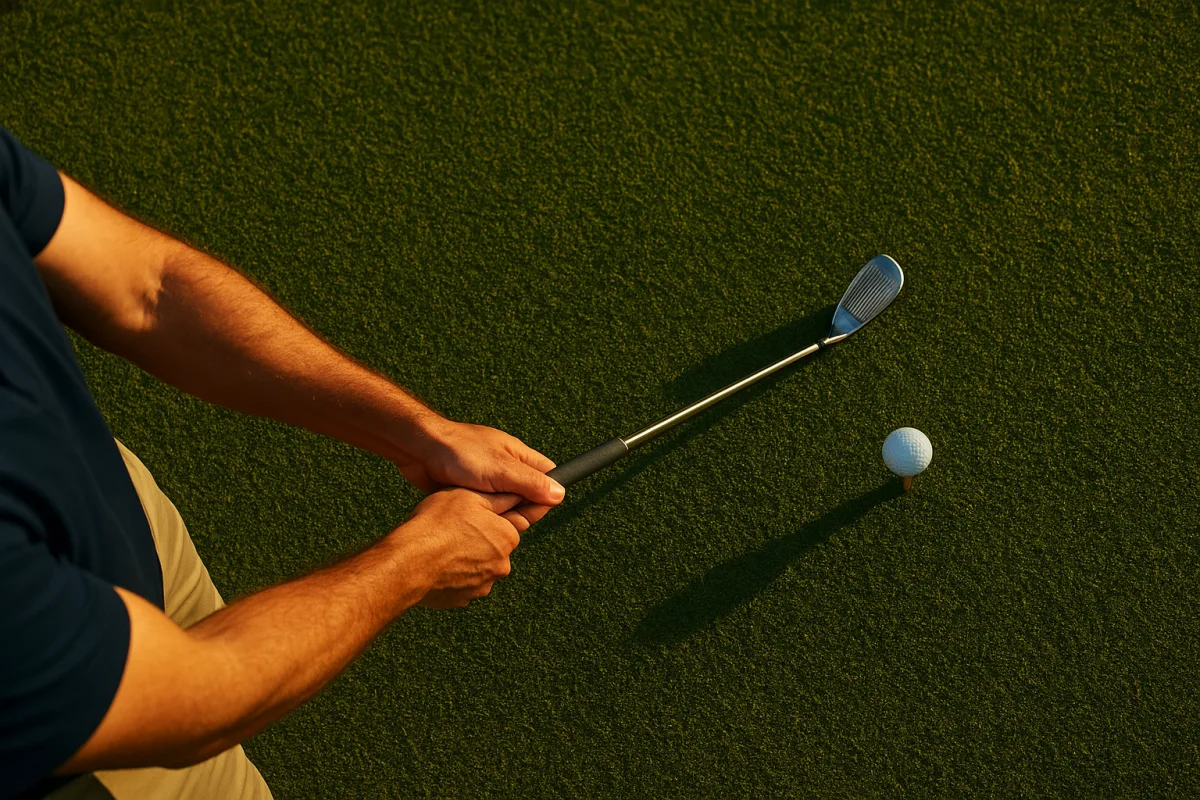
Stand upright behind the ball, take your grip, then bend forward until the club rests behind it. Your arms should hang naturally from your shoulders, with neither a reach toward the ball nor a tucked-in feeling. [5][6]
For a mid-iron, build a stance roughly shoulder-width wide. With wedges and short irons, move slightly narrower to encourage a steeper strike, but keep your balance centered through both feet. [5][6]
Standing too close often makes your arms move away from your body during the swing, which brings the heel and hosel into danger. Standing too far away can make your arms pull inward and produce toe contact or toe hooks. [5][12]
Use the same setup routine on every practice ball for a week. Grip the club, stand tall, hinge forward, let the arms hang, then check that you can feel pressure through the middle of both feet.
We would begin here even if the shanks seem to appear only with one club. A setup that is slightly too close can survive with a short wedge one day, then become a hosel strike when your tempo changes.
Put your pressure back in the middle of your feet
Toe-heavy pressure is a common shank pattern because it pulls your body toward the ball. Once your weight moves toward your toes, your hands and club can be pushed outward through impact. [2][4]
Feel the ground under your whole foot at address, especially the heel and the ball of the foot together. You are not trying to lean back, only to stop pitching your chest and hips toward the golf ball.
Check this before every shot at the range. If you can wiggle your toes easily, you may be too far back; if you feel as though you could fall toward the ball, you are too far forward.
This is a feel, not a launch-monitor number. Pressure patterns vary between players, and no published coaching figure says a toe-pressure correction will remove a fixed percentage of shanks. [1][4]
Keep your hips from moving toward the ball
Early extension means your hips move toward the ball during the downswing. That reduces the room available for your arms and hands, so the club is pushed outward and the hosel becomes the first part to arrive. [3][4]
The correction is full body rotation through impact, not an effort to freeze your hips. Your chest and hips need to keep turning through the shot so your hands have room to return without being shoved toward the ball. [11]
Instructor Eric Cogorno’s Setup Distance and Rotation Check pairs the address routine with a deliberate rotation through impact. It is aimed at the player whose shanks arrive after the body stalls and the arms try to rescue the strike. [11]
Make a few rehearsals without a ball. Set the club behind an imaginary ball, rotate through, and notice whether your hips stay back enough for your arms to pass in front of your body.
Avoid adding a hard “stay down” thought. If that cue makes you bend more toward the ball, it can produce the very crowding you are trying to remove.
Find the path error you actually have
An over-the-top, outside-in path can move the club toward the ball too early. An excessively inside-out path can also send the hosel outward, so a shank does not automatically mean you need to swing more from the inside. [2][3]
That is why generic anti-slice advice can be risky for a shanking player. A drill that helped another golfer stop cutting across the ball may worsen your strike if your club is already approaching too far from the inside.
Grip pressure can also contribute. Excessively tight hands restrict normal wrist movement and can push the hands and club outward, particularly when you try to guide the ball away from another shank. [2][12]
Start with enough pressure to control the club, then keep it steady through the swing. Do not squeeze harder at the top because you are anxious about contact, since that reaction can make the next strike worse.
Practice one anti-shank drill at a time
Instructor Ged Walters’s Water Bottle Drill places a bottle to the right of the ball, creating an obstacle that encourages a more neutral approach and improved weight transfer. Hit shots without contacting the bottle, using your normal setup distance. [4]
The bottle gives you immediate feedback, which is helpful when your path has become too far from the inside or your hands are moving outward. Place it far enough away that you are changing the path, not trying to steer the club around it.
A towel drill can address an over-the-top move. Hold a towel in your lead hand and swing it toward a wall, using the towel’s path to encourage the arms to travel more directly instead of cutting across the ball. [13]
These are practice drills, not permanent swing positions. Use one for 15 to 20 minutes, then hit a few normal shots and see whether the improved contact remains when the training aid is removed. [11][13]
Run this work about three times a week for four weeks. That schedule gives you repeated setup and motion practice without turning every range session into a long attempt to force a mechanical change. [11][13]
No large-scale coaching study confirms that these drills eliminate shanks for every player. If the pattern persists after structured practice, book time with a qualified instructor who can identify whether your issue is path, early extension, address distance, or pressure. [1][4]
Check your iron fit after your setup is stable
A badly matched club can make a sound setup harder to repeat, but equipment is a supporting factor. Do the mechanical work first, then check whether length and lie angle let you return the club to the turf without reaching or standing unnaturally. [7][12]
A standard 7-iron is commonly about 37 1/4 inches long, with fitting adjustments often running plus or minus 1/2 to 1 inch. Taller golfers may need added length, while shorter golfers may benefit from shorter shafts that support better posture and swing plane. [7]
Do not order a longer shaft because you feel cramped at address. If you are standing too close, extra length can make the club even harder to manage and may encourage another adjustment that moves you toward the ball.
Lie angle is the next fitting check. Typical lie adjustments run about 1 to 3 degrees, though forged irons can often be bent 2 to 3 degrees while cast irons are commonly limited to about 1 degree. [12]
A correct lie angle helps the sole and clubface arrive in a more appropriate position at impact. It can support centered contact, but it will not stop a hip slide toward the ball or cure a swing path that keeps throwing the hosel outward. [12]
We would ask a fitter to assess length, lie, posture, and strike pattern together. A static measurement can begin the process, but your actual delivery determines whether a standard-length, upright, flat, shorter, or longer build fits.
Adjust your routine on wet or firm turf
Wet grass can reduce friction, spin, and launch angle, making clean contact harder to repeat. Keep your grips dry and clean, maintain a consistent swing speed, and avoid trying to hit the ball harder because the turf feels heavy. [9][10]
Use shallower divots in wet conditions and consider taking an extra club when reduced rollout changes the distance equation. That is a distance and turf-interaction adjustment, not a proven cure for shanks. [8][9]
Firm fairways can expose imperfect ball striking and reduce rollout, so do not use a poor contact day as proof that your swing suddenly changed. Return to your address distance, pressure check, and rotation rehearsal before changing your equipment. [8]
There is limited direct evidence tying wet grass or firm conditions specifically to a higher shank frequency. Shanks remain primarily tied to setup and swing mechanics, even when the course makes every imperfect strike more obvious. [8][9]
Frequently Asked Questions
What causes a shank in golf and how can I fix it?
A shank occurs when the ball contacts the hosel or heel-side of the clubface instead of the center. Common causes include standing too close to the ball, shifting weight onto the toes, early extension of the hips toward the ball, and swing path errors. Fixes start by rebuilding your setup to maintain proper distance, keeping pressure centered on your feet, preventing hips from moving forward during the downswing, and working on a consistent swing path.
How do I adjust my stance to stop shanking the ball?
Set your stance about shoulder-width wide for mid-irons and slightly narrower for wedges and short irons. Stand upright behind the ball, grip the club, then bend forward letting your arms hang naturally without reaching or crowding the ball. Avoid standing too close, which causes your arms to move away and the hosel to contact the ball, or too far, which pulls your arms inward and can cause toe strikes.
What drills help prevent shanking in golf?
Focus on one drill at a time during short practice sessions, such as the Setup Distance and Rotation Check drill that emphasizes proper setup distance and full body rotation. Other helpful drills include the Water Bottle Drill to encourage a neutral swing path and weight transfer, and the Towel Drill to promote a direct arm path and avoid over-the-top swings. Consistent practice with these drills can help reduce shanks over time.
How does pressure distribution affect shanking in golf?
Shifting your weight toward your toes at address often leads to shanks by pulling your body and hands toward the ball, pushing the club outward and causing hosel contact. To prevent this, feel balanced pressure through the middle of both feet, including the heel and ball of the foot together. Proper pressure distribution helps maintain your posture and swing path, reducing the risk of shanks.
Can changing swing path reduce golf shanks?
Yes, swing path errors such as over-the-top (outside-in) or excessively inside-out paths can cause the club to contact the hosel. Correcting your swing path to avoid these extremes helps keep the clubface square and centered on the ball. Drills that promote a neutral swing path and proper body rotation can assist in reducing shanks caused by path issues.
How we researched this
This article was assembled from 13 cited references.
Nothing here is based on hands-on testing. Where a figure or finding appears, it belongs to the source cited beside it, and the writing says so rather than implying otherwise. Every source is listed below so you can check it.
Sources
- What Is a Shank in Golf (and How to Stop It)? | The Other Golf Channel
- What Causes Shanks? Why Golfers Shank the Ball & What to Do About It
- What Is a Shank in Golf? Causes and Fixes | GolfRoots
- Golf Shank Causes - Four Key Faults And Fixes! | Golf Monthly
- Golf Stance, Posture & Setup Guide: The Three Feet That Fix Everything Else - FairwayWise
- Stance, Posture, and Ball Position · Rotation.Golf
- Golf club length chart: standard iron lengths by maker, and your set adjusted
- What Impacts Golf Ball Distance? Weather, Grass, Rough, and Temperature, Clubbage
- How Rain and Wet Fairways Change Your Golf Shots (2026) Guide
- Wet Grass: Golf's Tricky Challenge | ShunGolf
- Setup Distance and Rotation Check (Shanks): Golf Drill Steps & Video | AI Golf School
- Irons Shank: Causes & Fixes | Fairway Support
- Golf Swing Drills: Takeaway to Impact, With Reps | Learn Golf
Related Articles
How to Fix a Slice in Golf: Causes and Effective Solutions
Learn how to fix a slice in golf with grip, setup, and swing tips that address the real causes for straighter, more consistent shots.
Best Golf Training Aids for Beginners
Discover the best golf training aids for beginners, comparing alignment sticks and the Orange Whip to improve your swing and setup effectively.

How to Play Golf in Cold Weather
Learn how to play golf in cold weather with tips on swing, clothing, equipment, and course strategy for optimal cold-weather golf performance.

Common Golf Swing Faults: Trail Arm Lift, Head Sway & More
Learn about the most common golf swing faults like trail arm lift, head sway, and pelvis thrust, and how to identify them in your swing.