
How to Fix a Slice in Golf: Causes and Effective Solutions
Learn how to fix a slice in golf with grip, setup, and swing tips that address the real causes for straighter, more consistent shots.
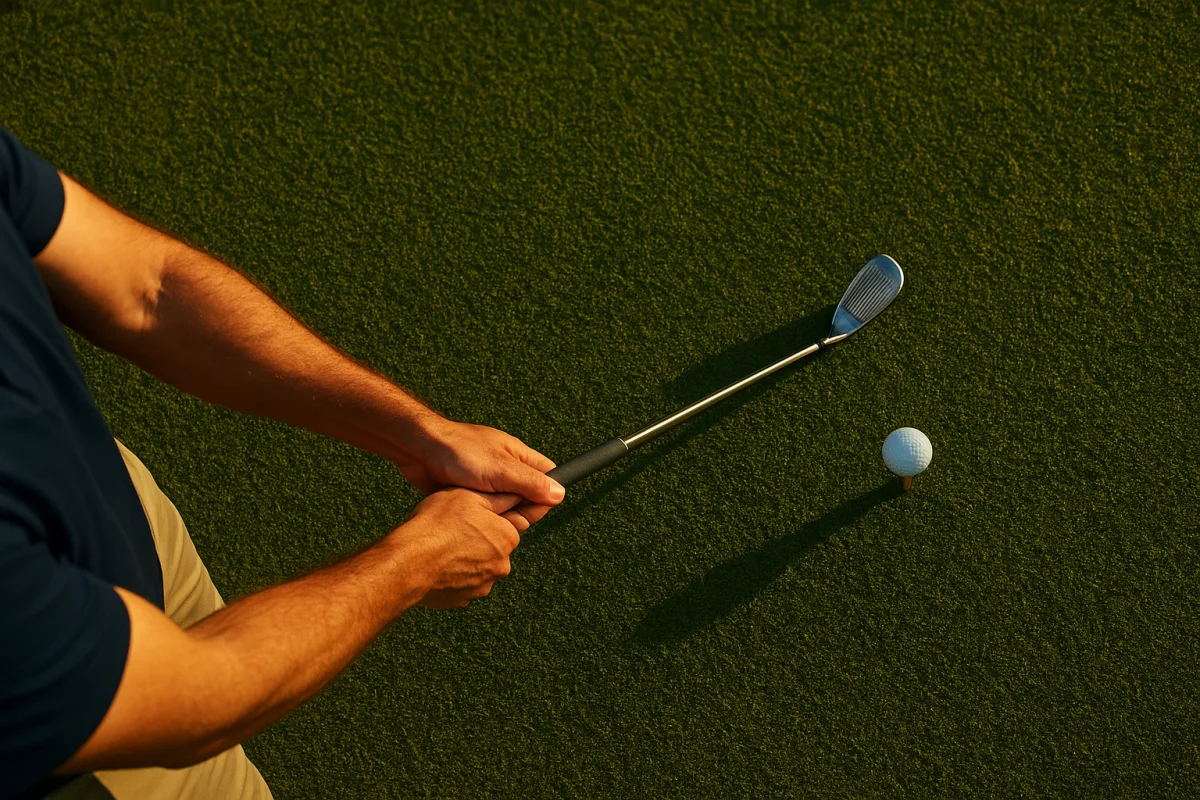
How to Fix a Slice in Golf, Starting With the Miss You Actually Hit
First, make sure you are dealing with a slice
A slice is not every shot that finishes right. For a right-handed golfer, a true slice starts left or near the target line and curves substantially right. A push starts right and stays right, which points to a different problem.
That distinction matters because the ball does not care what swing thought felt good. Golf Club Brokers’ ball-flight explanation says clubface angle has the largest influence on initial direction, while path relative to face creates most curvature. [9]
If your driver begins well right and continues right, do not immediately blame an over-the-top path. The clubface is likely open to the target. If it begins left then peels right, you probably have both an open face and a leftward path.
GOLFTEC’s analysis of 14 million swings identifies an open face, often four to seven degrees open for mid-handicap slicers, as a central slice pattern. [1] That is not a universal number to chase, but it explains why a small-looking face error creates a large miss.
Before changing anything, hit ten balls with your usual driver swing and record where each starts. Use an alignment stick or a target-line marker, not vague memory. The start line is the useful evidence.
Problem one: the ball starts right because the face is open
For most players, the first fix is not a dramatic swing rebuild. It is learning what a square face feels like at impact. Foy Golf Academy notes that face angle drives roughly 75 to 95 percent of initial ball direction, depending on the club. [8]
Begin with waist-high half swings using a short iron or wedge. Set the face square behind the ball, then stop at a waist-high follow-through. At that checkpoint, notice whether the lead wrist and clubface feel naturally able to rotate through.
SwingSwing recommends half swings and clubface checkpoints for building face awareness. [10] This is useful because full-speed driver swings often hide the actual issue behind a lot of athletic effort, especially when the ball has already gone into the next fairway.
Do not try to shut the face with a frantic roll of the hands at the ball. That can trade a slice for a pull-hook, usually without producing a repeatable strike. The goal is a face that arrives less open, not a rescue move.
A reasonable practice progression is five half swings without a ball, five with a ball, then five three-quarter swings. Only move to full swings if the start line improves. Distance claims during this process are mostly within normal strike-to-strike noise.
Problem two: your grip makes an open face likely
A weak grip makes it harder to square the face, particularly when tension rises on the course. The Golf Ace recommends a stronger grip for right-handed slicers: rotate both hands slightly right, show two or three knuckles on the left hand, and aim the “V” shapes toward the right shoulder. [2]
Make that adjustment before you take the club back. The common mistake is strengthening the left hand while leaving the trail hand too far under or too far on top. The two hands need to work together, not merely look different at address.
Golf Scorecard App also identifies grip position as a practical early fix for an open face. [4] Hit a small batch of shots after the change, because a grip that helps one slicer may cause another player to pull the ball.
Use moderate pressure rather than squeezing the handle as though it is escaping. Pecan Grove Country Club suggests roughly four out of ten pressure, while FairwayWise notes that excessive pressure can restrict the release through impact. [5][6]
That four-out-of-ten figure is a feel cue, not a calibrated measurement. If the club shifts in your hands, you are too loose. If your forearms feel hard before the club reaches the top, you are probably too tight.
Problem three: your setup sends the swing left before it starts
Once the grip is serviceable, check your address. An open stance and a ball position too far forward can contribute to a slice, according to The Golf Ace. [2] These are easy faults to overlook because they can feel normal.
For a driver, put an alignment stick along your toe line and another on the target line. Your feet, knees, hips and shoulders should be parallel left of the target, not aimed left of it as if those lines were meant to intersect.
Then check ball position without guessing. For the driver, keep the ball forward in the stance, but not so far forward that you have to reach for it or leave the face open while chasing the ball. Make small changes, one ball-width at most.
A mid-handicap golfer can waste months “fixing path” while aiming left with open shoulders. Take a phone video from down the line if possible. The purpose is not to build a social-media swing, just to verify your address lines.
Problem four: the downswing begins with the shoulders
The familiar over-the-top pattern is usually visible before impact. The upper body lunges, the trail shoulder moves out toward the ball, and the club approaches from outside the target line. That leftward path adds cut spin when the face remains open. [2][10]
Trying to “swing out to right field” can help some golfers, but it will not fix every slice. If your face is still open, an exaggerated inside path may simply create a push-slice. Face and path must be read together.
Start with the Three-Quarter Pump Drill described by SwingSwing. Make a controlled backswing, begin down by shifting and turning with the lower body, then rehearse the club dropping into a shallower delivery before swinging through. [10]
Do not hit every rehearsal at full pace. Make three pump motions, then hit one shot at about 60 percent effort. Your objective is a ball that starts closer to target, preferably with a gentler curve, rather than a personal-best carry number.
Golf Monthly recommends drills aimed at curing the over-the-top move, including the Bowler Drill, which changes trail-foot position to refine how the arms move in the downswing. [11] Use it as a movement rehearsal, then return to your normal stance.
Problem five: you cannot release the club through impact
Some slicers have a reasonable grip and path on a practice swing, then lock up with the ball present. Forearm tension and insufficient wrist rotation can leave the face open through impact, according to The Golf Ace. [2]
Try a short drill with your trail hand lightly resting on the grip. Make waist-high swings and allow the clubhead to pass your hands after impact. This is not about flipping, it is about feeling that the face can rotate rather than stay held open.
If that drill sends the ball sharply left, do not panic and instantly revert. It may simply show that your previous release was excessively restricted. Reduce the feeling until you can start shots near the intended line rather than manufacturing a hook.
Practice from decent turf or a mat that does not disguise fat contact. A poor strike can change ball speed, launch and spin enough to make your conclusions unreliable. Turf interaction matters more with irons, but quality contact still affects your driver feedback.
Take the repair to the course without making worse decisions
On the course, do not aim farther left to allow for a slice unless that shape is genuinely repeatable. Aiming left with an open face often makes the player swing farther left, which can deepen the original path problem.
Choose targets that leave room on the side where your current miss goes. If the right side is trouble, use a club that keeps the ball in play, even if it is not the driver. That is strategy, not surrender.
Avoid chasing weather explanations. The available guidance on slicing focuses on face, path, grip and setup, not humidity or wind as a mechanical cure. [1] Wind can make the result look worse, but it does not explain a persistently open face.
Likewise, do not swap golf balls expecting the slice to disappear. Club & Carry says low-compression balls, under 65, generally suit speeds below 85 mph, while 90-plus compression is more appropriate above 105 mph. [12]
Those are ball-fitting guidelines for distance and feel, not anti-slice prescriptions. There is no direct evidence that compression rating changes slice tendencies in mid- to high-handicap golfers. Fitting beats buying, but mechanics still beat a ball change here.
When feedback and lessons are worth paying for
A training aid can be useful if it targets the fault you have identified. It is not useful because its packaging says “anti-slice.” The Path Trainer Pro costs $44.95 and is designed to promote an in-to-out swing path. [17]
Swing Plane Pro also costs $34.95 and focuses on wrist angle and on-plane delivery. Swing Sync, another $34.95 option, targets arm-body connection. Those categories are different, so choosing one should follow a diagnosis rather than a shopping impulse. [17]
The Champkey Swing Trainer is listed by Fulcria Labs as a tempo and sequencing aid, though the cited guide does not provide a price. [18] That may suit a golfer whose rushed transition starts the shoulders first, but it cannot independently prove the clubface is square.
For more direct path feedback, Eyeline Golf’s Speed Trap 2.0 is listed at $100 to $120. [17][18] It suits players who need a physical reference for an outside-to-in delivery, although it still requires sensible setup and controlled practice.
HackMotion Sensor 4 costs from $295 to $995 and provides real-time app feedback on wrist mechanics. [17][18] It suits golfers willing to interpret data over time, not players hoping one session of numbers will override a poor grip or open alignment.
If you cannot identify whether your miss starts right, starts left, or curves from a reasonable start line, spend the money on coaching first. Private golf lessons typically cost $50 to $150 per hour in 2026, with elite instructors sometimes charging $200 or more. [13][14]
Group clinics generally run $25 to $50 per person, while one published five-hour lesson package is priced at $400 to $475. [13][15] Ask the instructor to measure face, path, strike and setup, then give you one priority rather than five unrelated tips.
A couple of weeks of focused daily practice can produce noticeably straighter shots for many golfers, according to SwingDialed. [16] Treat that as a plausible timeframe, not a guarantee. A different grip, mobility limit or impact pattern can require a different route.
Frequently Asked Questions
What causes a slice in golf and how can I fix it?
A slice is mainly caused by an open clubface at impact and an outside-to-in swing path. The open face points the ball right initially, while the swing path adds the curve. Fixing a slice begins with identifying whether the face or path is the primary problem, then working on squaring the face and adjusting the swing path to inside-to-out.
How do I adjust my grip to fix a golf slice?
To fix a slice, strengthen your grip by rotating both hands slightly to the right for a right-handed golfer. Show two or three knuckles on your left hand and point the “V” shapes formed by your thumbs and forefingers toward your right shoulder. Use moderate grip pressure—about four out of ten—to allow natural release without tension.
What drills help correct an over-the-top golf swing?
Correcting an over-the-top swing involves slower, rehearsed half swings focusing on an inside-to-out delivery rather than swinging farther right. Practicing waist-high half swings with a short iron or wedge while maintaining a square clubface helps build awareness. Gradually increase swing length only after improving the start line of the ball.
How can I tell if my slice is caused by an open clubface?
If your ball starts right of the target line and continues curving right, the clubface is likely open at impact. For a right-handed player, an open face typically ranges from four to seven degrees open and largely determines initial ball direction. Recording your ball’s start line with alignment aids can help confirm if the face angle is the main cause.
What setup changes can reduce my golf slice?
Setup changes that reduce a slice include adopting a stronger grip, ensuring the clubface is square behind the ball, and positioning the ball correctly in your stance. Avoid an open stance and placing the ball too far forward, as these can contribute to an open face and slice. Moderate grip pressure also supports a natural clubface release.
How we researched this
This article was assembled from 18 cited references.
Nothing here is based on hands-on testing. Where a figure or finding appears, it belongs to the source cited beside it, and the writing says so rather than implying otherwise. Every source is listed below so you can check it.
Sources
- How to Stop Slicing Your Driver: The 3 Biomechanical Causes (Backed by 14 Million Swings) | GOLFTEC Scramble
- Slice in Golf? Expert Fixes to Straighten Your Swing Now | The Golf Ace
- https://www.swingspec.com/golf-club-guides/golf-slice-fix?utm_source=openai
- How to Fix a Slice in Golf — 5 Proven Drills (2026) | Golf Scorecard App
- How to Fix a Slice in Golf ? (August 2026) Guide
- Grips and Slice: Can the Right Grip Size Fix Your Slice? - FairwayWise
- Why Do I Slice the Golf Ball? Path vs. Clubface | Golf Smart Academy
- Face Angle at Impact: The #1 Cause of Directional Misses - Foy Golf Academy
- Ball Flight Laws Explained: What Your Shots Are Telling You | Golf Club Brokers
- How to Fix a Slice in Golf — Drills, Causes & AI Swing Analysis
- If I Wanted To Cure My Over The Top Swing And Banish A Slice Quickly - I'd Do These 3 Simple Drills
- Golf Ball Compression Explained (2026): Match It to Your Swing | Club & Carry
- How Much Do Golf Lessons Cost in 2026? (Real Pricing Data)
- How Much Are Golf Lessons? (Real 2026 Pricing) | The Other Golf Channel
- Rates | Goforth Golf Instruction
- Fix Your Slice | Anti-Slice Golf Training Aids – SwingDialed
- What's the best golf training aid to fix a slice? – FinalPutt
- Best Golf Training Aids for Fixing a Slice 2026 | Fulcria Labs
Related Articles
How to Fix a Hook in Golf: Grip, Stance, and Swing Tips
Learn how to fix a hook in golf with grip, stance, and swing adjustments that improve ball flight and reduce hooks quickly and effectively.
Improve Golf Swing Path: Tips, Drills, and Common Mistakes
Learn how to improve golf swing path with drills, setup tips, and launch monitor insights for better ball flight and consistency.
Golf Rain Gear and Strategy: What to Do If It Rains
Learn essential golf rain gear and strategies to stay dry, adjust your swing, and play safely when it rains on the course.
Types of Golf Grips: Overlapping, Interlocking & More
Learn about the types of golf grips, including overlapping, interlocking, 10-finger grips, grip sizes, and materials to improve your game.