
Best Time of Day to Play Golf
Discover the best time of day to play golf by comparing morning and afternoon conditions for optimal performance and course strategy.
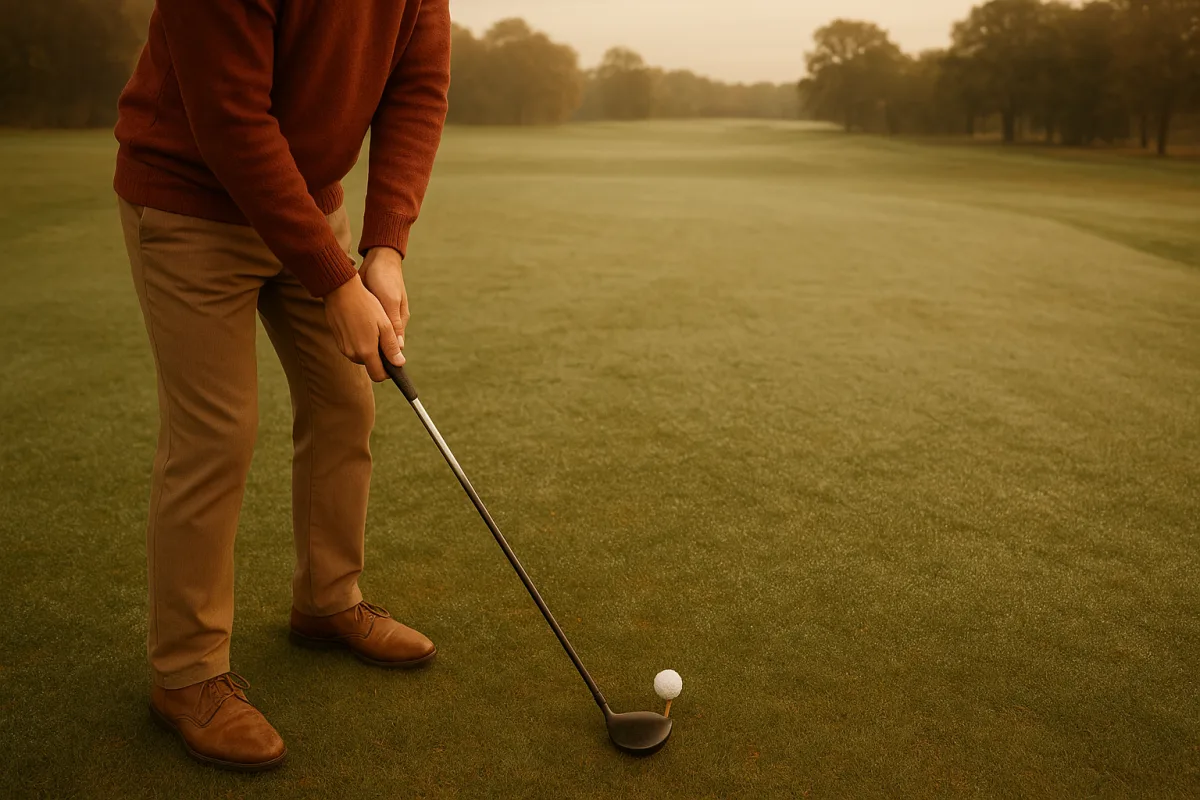
The best tee time is really a surface-and-air trade-off
There is no universal best time of day to play golf. The useful question is not, “When are conditions perfect?” It is, “Which set of compromises gives me the round I want?”
A tee time determines two things before you hit a ball: the air through which the ball flies and the surface on which it lands. Those conditions change through the day, sometimes subtly and sometimes enough to alter club selection.
That matters because golfers often treat a morning or afternoon round as a lifestyle choice. It is more accurately a course-setup choice, with some weather risk and a price attached.
The primary trade-off is straightforward. Morning golf generally offers cooler air, wet grass and slower greens. Afternoon golf generally offers drier turf, faster surfaces, more warmth and, often, more wind.
Neither option is automatically better for scoring. A player who relies on predictable putting pace may prefer drier afternoon greens. A player who struggles in gusty conditions may score better in calmer morning air, even with dew.
What changes between your first and last tee-time option
The ball does not know whether it is 8 a.m. or 2 p.m. It does respond to temperature, air density and wind, while the ground responds to moisture, sun and maintenance.
Cooler air is denser, which slightly increases drag on the ball. A commonly cited rule of thumb is a loss of roughly 2 to 3 yards of carry for every 10°F drop in temperature. [1]
That is enough to matter around a front bunker or on a forced carry. It is not enough to explain a 15-yard short approach, unless other variables such as strike quality, wind or elevation changed too.
A launch-monitor number belongs to the swing that produced it, in the conditions where it was produced. The same applies to a stock yardage from a calm summer fitting session versus a cold morning round.
Humidity gets more credit than it deserves in most casual golf-weather talk. The available guidance suggests humidity itself changes ball flight by less than a yard, a much smaller effect than players usually imagine. [2]
Wind is the variable to respect. Depending on speed and direction, it can change carry by around 10 to 20 yards, which overwhelms the modest temperature effect of a typical day warming up. [1]
That distinction helps when choosing a tee time. If the forecast says the morning will be 50°F and calm, while the afternoon will be 65°F with a strong breeze, the warmer slot is not necessarily the longer one.
Why mornings play softer and slower
Morning conditions are mostly about moisture. Dew sits on the grass, the ground has not yet dried under sun and wind, and the ball tends to receive less rollout after landing.
There is no strong published number that says dew slows a putt by exactly a certain percentage or costs exactly a certain number of feet. Most claims about morning putting speed are informed observation, not precise measurement.
Still, the mechanism is sensible. Water between the ball and the grass increases resistance, while wet turf can reduce bounce and rollout on shots that would release later in the day.
For a mid-handicap player, that can mean a morning approach finishes closer to its pitch mark rather than releasing toward the back tier. It can also mean a chip that normally hops and checks simply lands softer.
The downside is that slower greens are not necessarily easier greens. A wet surface can disguise pace, especially if the ball tracks through heavier grass or if different parts of the course dry at different rates.
Footing also changes. Dew can make shoes slippery, particularly on sloping tees, wet rough and closely mown banks around greens. If your balance is already inconsistent, that is not a trivial variable.
Morning maintenance is another part of the system. Some courses mow, roll, irrigate or prepare greens early, which can affect tee-time availability and playing rhythm even if the forecast is ideal.
Ask the course rather than assuming. A first tee time may be the quietest slot available, or it may place you behind maintenance staff and a crew setting pins, depending on local practice.
Why afternoons can feel faster, harder and less forgiving
As the day warms, dew evaporates and the course firms up. Fairways can produce more bounce and run, while greens usually feel faster because there is less surface moisture slowing the ball.
That can help the player whose game is built around landing a ball short and letting it release. It can hurt the player carrying a hazard that becomes more relevant when the fairway is firm and feeding forward.
The faster-green part deserves care. A green can be faster in the afternoon without being more consistent, especially when heat, wind and traffic dry some areas more than others.
This is where “I play better in the afternoon” can become a misleading generalisation. You may putt better on firmer grass, but you may also face stronger gusts and a more fatigued swing.
Heat is not merely a comfort issue. In humid regions, particularly the southeastern United States, an afternoon round can add dehydration, concentration loss and heat-illness risk to an already demanding four-hour walk or ride.
That can change strike quality more than any temperature-related gain in carry. If a hot afternoon makes your speed drop or your sequencing sloppy, the theoretical benefit of warmer air does not matter much.
September also brings thunderstorm risk in parts of the Southeast. Lightning is a safety issue, not a weather inconvenience, and play should be suspended when storms threaten under PGA of America and National Weather Service guidance.
A cheap afternoon tee time is not much value if the course closes after seven holes. Check the hourly forecast, storm timing and the club’s rain-check policy before treating a lower rate as a bargain.
The September daylight problem with twilight golf
Evening golf can offer a pleasant middle ground: temperatures begin falling, wind can ease and the course may become quieter. The constraint is daylight, especially for anyone expecting to complete 18 holes.
For September 2026, the research brief estimates that the latest practical tee times for finishing before dark range from about 12:00 PM in Mountain Time to about 2:30 PM in Eastern Time. [8][9]
Those are planning estimates, not guarantees. Course length, pace of play, tree cover, terrain, clouds and whether your group walks or rides can all make darkness arrive functionally earlier.
A 2:30 PM tee time may be perfectly sensible for nine holes, a fast two-ball or a short municipal course. It is a riskier choice for a full 18 on a busy resort layout.
This is where “twilight” and “super twilight” labels need translating. They are pricing categories set by the course, not promises that a golfer can finish a full round in daylight.
Discounts can be substantial, with twilight and super-twilight pricing sometimes running 30 to 50 percent below peak morning or midday rates. [3][5][6] The missing holes are the potential cost of that saving.
Before booking, ask two specific questions: whether the rate permits 18 holes, and whether the club has a policy for golfers unable to finish because of darkness. Those policies vary materially.
Price is part of the tee-time decision
The best time can be the time that makes regular golf financially sustainable. A player who can afford two twilight rounds a month may improve more than one who stretches for a single premium morning round.
There is no national price chart that makes a 7:30 a.m. tee time inherently better value than a 3 p.m. slot. Municipal, daily-fee, resort and private-access courses price time differently.
The research brief places some weekday municipal 18-hole rounds in the $34 to $60 range, while premium destination golf operates in a different market entirely. [3][5][8]
Bandon Dunes in Oregon illustrates why golfers should check the exact date and rate sheet. The brief reports summer rates, including September, around $375 to $425 per round, while a 2026 rate listing advertises prices from $475. [4]
That discrepancy is not a reason to distrust every published rate. It is a reason to check season, day, lodging package requirements and whether a quoted price is a current rack rate rather than a promotional starting point.
Local courses can also attach restrictions to lower-priced times. A twilight rate may require starting after a fixed hour, limit access to certain tees or make a nine-hole outcome more likely on a crowded day. [6][7]
For the golfer seeking the optimal playing window, price should be considered after the round objective. A serious scoring round, a practice round and a casual nine with friends do not need the same tee time.
A practical way to choose your tee time
Start with the golf you are trying to play. If you want to post a score under stable conditions, prioritize the calmer forecast window, then ask whether dew and maintenance will materially affect your course.
If you are working on carry distances, avoid treating a cold, wet morning as the new truth about your irons. Record the temperature and wind, then compare only broadly similar conditions.
If you want to practise short-game shots that release, the drier afternoon can be more representative of firm, fast tournament conditions. If you need confidence on slower pace, morning greens may be useful instead.
For most mid-handicaps, the sensible default is an early-to-mid morning tee time after the course has opened and maintenance has cleared, but before heat and stronger afternoon wind become the dominant variables.
That is a default, not a rule. A course with heavy morning dew, aggressive irrigation or early maintenance may play better later, while a hot and storm-prone region may make morning the clearly safer choice.
The fitting-style answer is therefore not “play at 7 a.m.” It is to fit the tee time to your weather tolerance, your preferred turf interaction, your daylight requirement and the course’s actual policies.
Frequently Asked Questions
What are the advantages of playing golf in the morning?
Morning golf typically offers cooler temperatures and calmer air, which can make ball flight more predictable. However, the turf is often damp with dew, leading to slower greens and less ball rollout. Some players may prefer these conditions for more consistent putting, though footing can be slippery and early maintenance may affect play.
How does temperature affect golf ball carry distance?
Temperature influences carry distance modestly, with roughly a 2 to 3 yard decrease in carry for every 10°F drop in temperature. Cooler, denser air increases drag on the ball, slightly reducing how far it travels. This effect is generally smaller than the impact of wind.
Why are afternoon golf greens faster than morning greens?
Afternoon greens are faster because the sun and wind evaporate morning dew, drying the turf and reducing surface moisture. Firmer, drier greens allow the ball to roll more freely, increasing putting speed compared to the slower, wetter morning surfaces.
How does wind influence golf ball flight during different times of day?
Wind is a major variable affecting ball flight and can change carry distance by 10 to 20 yards depending on its speed and direction. Afternoon rounds often experience stronger and more variable winds, which can make ball flight less predictable compared to typically calmer morning conditions.
Is twilight golf practical for completing 18 holes?
Twilight tee times in September are generally only practical if completing a full 18 holes is not a priority. Due to limited daylight—roughly noon in Mountain Time or 2:30 PM in Eastern Time—finishing a full round after these times can be difficult. Twilight rates may offer savings but may not allow enough time for 18 holes.
How we researched this
This article was assembled from 9 cited references.
Nothing here is based on hands-on testing. Where a figure or finding appears, it belongs to the source cited beside it, and the writing says so rather than implying otherwise. Every source is listed below so you can check it.
Sources
- How Wind, Temperature & Altitude Affect Your Golf Ball—and How TrackMan Takes the Guesswork Out
- How Humidity Affects Golf Ball Flight - The Right Golf Ball
- Overlook Golf Club: 2026 Rates & Tee Times | Carl Golf
- Bandon Dunes Green Fees 2026: From $475 | GolfForKings
- Crystal Springs Golf Course — Tee Time Prices & Twilight Rates | CaddieReport
- Green Fees & Policies - Westridge Golf Club CA
- Rates & Information
- Green Crest Golf Club tee times — Middletown, Ohio | Loop Golf
- Saddle Rock Golf Course tee times — Aurora, CO — OneTee
Related Articles
When to Play Golf in Spring: Timing and Course Conditions
Learn when to play golf in spring by understanding course conditions, weather, and maintenance for the best tee times and experience.
Playing Golf in Windy Conditions: Tips and Strategies
Learn how to play golf in windy conditions with club selection, swing adjustments, and course strategy to improve your game in the wind.
Best Golf Courses to Play in Summer: Top Picks and Tips
Discover the best golf courses to play in summer with tips on conditions, tee times, and course selection for an enjoyable round.
Best Golf Courses in Fall: Top U.S. Autumn Destinations
Discover the best golf courses in fall with tips on course conditions, booking, and top U.S. autumn golf destinations for 2026.