
Improve Golf Mental Toughness with Proven Strategies
Learn how to improve golf mental toughness with routines, breathing techniques, and visualization to perform better under pressure.
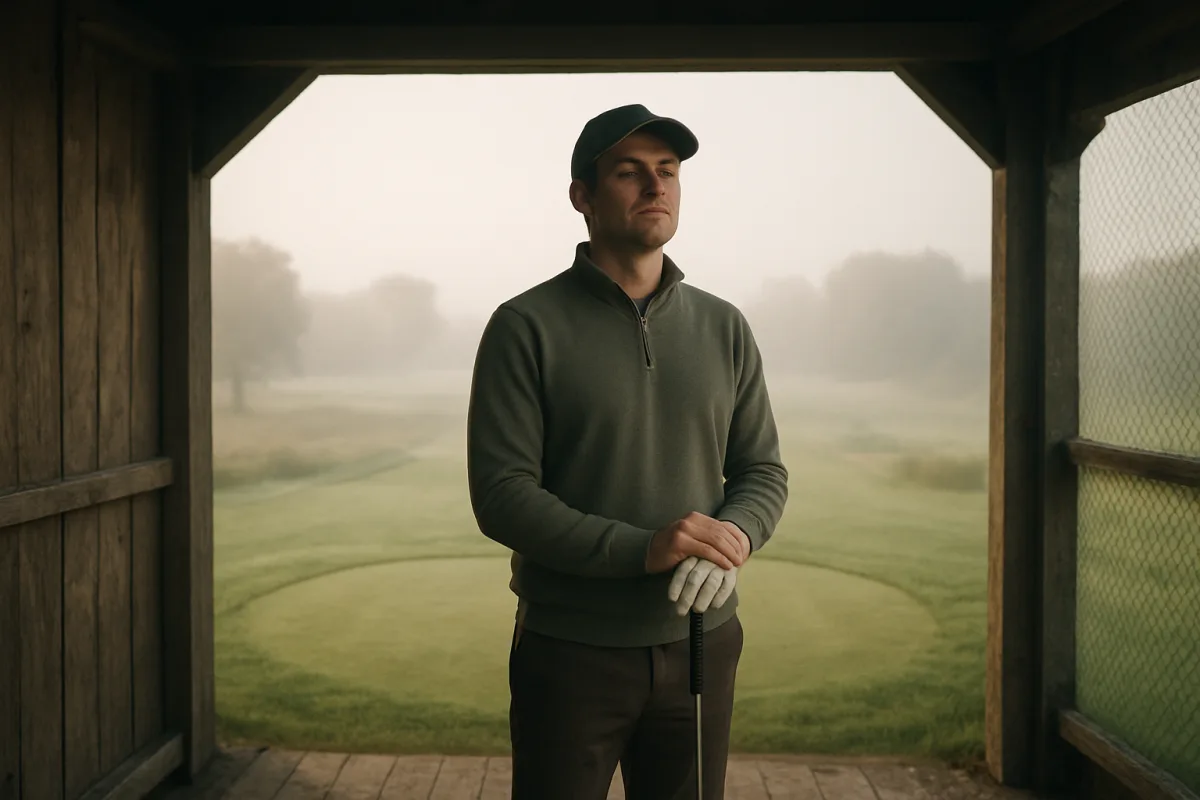
Reset behind the ball
A five-foot putt to save bogey can make your hands feel quick, your grip feel tight, and the hole look smaller. Start your reset behind the ball, before you select a target or take a practice swing.
Mental toughness under pressure is not forcing yourself to feel calm. It is recognizing the nerves, narrowing your attention to a controllable action, and following the same process you use when the score is irrelevant. [3][15]
Many amateur mistakes begin when the result takes over the swing. GOLF.com identifies overthinking, doubt, poor focus, and fear of failure as common problems, all of which pull attention away from the shot in front of you. [9]
Use a short reset phrase: “Pick it, see it, commit.” The words themselves are less important than their job, which is to move you from score-based thinking toward the next target and the next swing.
Build your pre-shot routine
Your routine needs three phases: assess the shot, make a decision, then execute with commitment. Sports Psychology Today recommends this structure because it separates thinking from hitting, so you do not keep solving the shot during the takeaway. [14]
Assess from behind the ball. Check lie, distance, wind, trouble, landing area, and the shape you can realistically produce today. A pressure situation is a poor time to chase the perfect shot if your normal pattern is a small fade.
Next, select the club and target, then stop reopening the decision. A golfer who keeps changing clubs, targets, or swing thoughts is often trying to remove uncertainty, but golf does not offer that option once conditions are set.
Choose one rehearsal feel only. RPS Academies recommends a consistent routine built around target selection, a rehearsal feel, one swing thought, and committed execution. [2] For a mid-handicap player, “finish balanced” beats a stack of mechanical positions.
Step in, look once at the target, and hit. We would make the final look brief, because repeated target checks can become another form of doubt. Your routine should feel purposeful, not like a delay tactic.
Use the same sequence with driver, wedge, and putter, while allowing the assessment phase to change. A tucked pin may require a safer target, but it should not require a different emotional process.
Breathe before you commit
Pressure often shows up physically before it appears in your thoughts: shallow breathing, tight forearms, fast feet, and a rushed walk into the ball. Treat those signs as a cue to breathe, not proof that you cannot handle the shot.
Golf Guidebook recommends controlled breathing techniques, including box breathing and extended exhales, to reduce anxiety and regain composure within roughly 60 to 90 seconds. [3] Golf Blab also links controlled breathing to focus and anxiety management during the pre-shot process. [7]
Try this before a tee shot or short putt: inhale through your nose, pause briefly, then exhale longer than you inhaled. Repeat while standing behind the ball, then begin your routine only after your shoulders and hands feel less hurried.
A longer exhale is the version we would start with on the course because it fits into normal pace of play. Save a fuller box-breathing pattern for waiting on a tee, walking between shots, or before a playoff-style putt in practice.
Reports cited by Golf Guidebook say Rory McIlroy and Collin Morikawa, both major-championship-winning PGA Tour players, use breathing techniques as part of handling pressure. [3] Their results do not make breathing a universal fix, but the method gives you a repeatable response to nerves.
Picture the shot you can hit
Before stepping in, picture a specific starting line, curve, and landing area. Visualization is not a promise that the ball will follow the image, but it gives your attention somewhere productive to go after club selection. [4][13]
See the shot from behind the ball, then match the picture to your decision. If you have chosen a 150-yard middle-of-the-green target with an 8-iron, do not visualize a towering flag-hunting shot that requires your best strike.
Include recovery shots in your mental rehearsal. Golf Profiler recommends visualizing trajectories and recovery scenarios to build confidence, which helps when a miss leaves you in rough, behind a tree, or short-sided around the green. [4]
This is where mid-handicap players can save strokes under pressure. A recovery image encourages a low punch, a safe pitch, or a two-putt target, instead of the high-risk hero shot that can turn one mistake into double bogey.
Finish each shot before judging it
Once the ball is in the air, the swing is over. Watch the result, collect the information you need, and avoid replaying the motion all the way to the next tee.
RPS Academies recommends a post-shot routine for emotional management, specifically to stop negative carryover. [2] Give yourself a brief reaction, then use a fixed action such as replacing the club, taking one breath, and identifying the next location.
After a bad shot, use neutral language. “That started right” or “I caught that thin” describes what happened; “I always do this” turns one shot into a prediction about the round. GOLF.com and Golf Digest both identify negative mental habits and poor focus as performance problems. [9][11]
After a good shot, do not demand a repeat. Golf Monthly reports a mental coach’s warning that even top golfers may not have their full swing every round, a useful reminder for amateurs who expect mechanical consistency from every ball. [12]
Your job is to repeat the process, not the exact ball flight. A player can hit a poor shot after making a strong decision, and can hit a good shot after making a reckless one. Keep those evaluations separate.
Reframe pressure as energy
A tight match, a first tee with strangers watching, or a round near your best score can bring fear of failure. Golf Guidebook recommends reframing that feeling as excitement, directing nervous energy toward the challenge instead of treating it as danger. [3]
Use language that remains believable. “I am excited to hit this shot” may work for you; “My body is ready” may work better. Avoid claiming total confidence when you feel none, because the goal is composure and commitment, not performance theater.
Keep your attention on controllables: target, club, routine, breathing, and pace. ShunGolf identifies blaming external factors as a common mistake, while weather, lies, and opponents may affect the shot without controlling how you respond to them. [10]
We would also stop chasing perfect consistency. Golf Monthly’s reporting on mental coaching argues that amateur golfers can become trapped by that expectation. [12] Under pressure, adapt to the swing you brought rather than trying to manufacture a different one.
Adjust your routine for wind and weather
A gusty 165-yard approach creates extra decisions before you ever swing. Wind and temperature can add cognitive load and mental fatigue, so simplify the target and commit to a conservative plan before you stand over the ball. [8]
Start by accepting the changed conditions. Pick a club and flight that account for the wind, choose a wider landing area, then avoid a second round of calculation once you are addressing the ball.
Golf Weather Score recommends mental preparation, goal setting, positive self-talk, and mental imagery to maintain composure in difficult weather. [8] Use those tools to keep your attention on the flight you chose, not on every possible gust.
In tough conditions, a good goal may be “commit to every target” rather than “hit 12 greens.” Process goals give you something achievable even when the wind turns solid contact into an awkward leave.
Practice pressure in small doses
Do not reserve mental training for tournament day. Integrate your routine into range sessions, putting drills, and casual rounds, because a pre-shot process cannot feel automatic if you only use it when your hands already shake. [2][14]
Make one range game demanding. Pick a fairway target, hit one driver with your full routine, and score the result as fairway, playable miss, or penalty. Then change clubs and targets instead of beating the same driver repeatedly.
On the putting green, give each ball a consequence. For example, make three-footers using your full read, breath, picture, and routine, then restart the set after a miss. The pressure is modest, but the reset practice is real.
Do not assume a fixed mental-practice duration will produce better tournament results. A study of mental practice for a self-paced putting task examined sessions from two to 20 minutes without identifying a definitive optimal duration. [16]
Recommendations differ widely, from 30-minute deliberate-practice sessions to rest intervals every five minutes. [5][6] We would focus on quality: a few fully committed repetitions embedded in normal practice beat a longer session spent rehearsing while distracted.
Track your response, not only your score
After the round, record three items: pressure moments, whether you followed your routine, and what pulled you away from it. A simple note such as “rushed after double bogey” gives you a specific practice target.
Do not judge progress solely by whether the next pressure shot finished close. Golf is variable, and one launch, one putt, or one round cannot confirm that a mental technique works for every player or every type of pressure.
Experience generally appears to improve coping strategies under pressure, but research on PGA Tour golfers also suggests that age-related physical and cognitive changes complicate the relationship. [17] You can build resilience at any stage, yet nobody has identified a universal age curve for mental toughness.
Keep the routine stable long enough to learn from it. If breathing, visualization, and a post-shot reset help you stay committed through a difficult nine holes, retain them, even before the scorecard catches up.
Frequently Asked Questions
How can I improve golf mental toughness during pressure shots?
Improving mental toughness involves recognizing nerves and narrowing attention to controllable actions rather than trying to force calmness. Use a short reset phrase like “Pick it, see it, commit” to shift focus from score-based thinking to the shot at hand. Maintaining a consistent pre-shot routine and practicing mental skills alongside physical practice also helps build resilience under pressure.
What is the best pre-shot routine to build mental toughness in golf?
A strong pre-shot routine has three phases: assess the shot (checking lie, distance, wind, hazards), make a decision (select club and target without second-guessing), and execute with commitment using one rehearsal feel and swing thought. The routine should be consistent across clubs and designed to separate thinking from hitting, preventing overthinking during the swing.
How does controlled breathing help improve mental toughness in golf?
Controlled breathing, especially taking a longer exhale than inhale, helps reduce anxiety and physical signs of pressure such as shallow breathing and tight muscles. This technique can calm nerves and refocus attention within 60 to 90 seconds, allowing golfers to approach the shot with steadier hands and a clearer mind.
What mental exercises can help improve golf mental toughness?
Mental exercises include practicing a consistent pre-shot routine, using controlled breathing techniques like box breathing or extended exhales, visualizing the desired shot trajectory, and employing post-shot routines to avoid negative carryover. These exercises build confidence, focus, and emotional control during play.
How do professional golfers maintain mental toughness on the course?
Professional golfers like Rory McIlroy and Collin Morikawa use controlled breathing techniques to manage pressure and maintain focus. They combine this with structured pre-shot routines and mental strategies that emphasize commitment and confidence, helping them handle nerves and perform consistently under tournament conditions.
How we researched this
This article was assembled from 17 cited references.
Nothing here is based on hands-on testing. Where a figure or finding appears, it belongs to the source cited beside it, and the writing says so rather than implying otherwise. Every source is listed below so you can check it.
Sources
- Temperature and Mental Health: Evidence from Helpline Calls
- Mental Toughness Training for Golfers in Tournaments
- How To Handle Pressure On The Golf Course: A Mental Game Guide (2026)
- How to Build Mental Toughness for Golf: Habits for Everyday Life and the Driving Range | Golf Profiler
- Deliberate Practice in Golf: Why Mindless Reps Don't Work
- Why Rest Intervals Matter More Than You Think - Intervals.Golf Blog
- Golf Mental Focus Workflow: Your Complete 2026 Guide - Golf Blab
- The Mental Game: Sports Psychology Research Behind Golf's Greatest Clutch Performers | Golf Weather Score
- These 3 common mental mistakes are killing your golf game | Instruction | GOLF.com
- Why Am I Bad At Golf? Uncovering Common Mistakes And Fixes | ShunGolf
- The five biggest mental mistakes golfers make | How To Play Golf | Golf Digest
- 'A Top Golfer Once Said To Me He Reckoned He Only Had His Swing 10 Rounds Per Year' - Renowned Mental Coach On Why Amateurs Should Forget About Consistency
- The Best Golf Pre-Shot Routine Based on Golf Psychology
- Course Management and Pre-shot Routines | Sports Psychology Today - Sports Psychology
- What Is Mental Toughness In Golf? - Definition From GolfingForeAll
- Determining the optimal duration of mental practice for a self-paced putting task
- The Impact of Age on the Ability to Perform under Pressure: Golfers on the PGA Tour
Related Articles

Improve Focus During a Round of Golf: Tips and Strategies
Learn how to improve focus during a round of golf with routines, mental strategies, and practical tips to maintain concentration on every shot.

Handle Pressure in Golf Tournaments: Mental Game Strategies
Learn how to handle pressure in golf tournaments with routines, breathing, and course strategy to improve your mental game under stress.
Prepare Mentally for Golf Tournament: Focus and Routine Tips
Learn how to prepare mentally for golf tournament with focus routines, breathing exercises, and warm-up strategies for better performance.
How to Warm Up Before Golf: Effective Pre-Round Routine
Learn how to warm up before golf with a 10-15 minute routine focusing on dynamic stretches and gradual swing speed for better performance.