
How to Choose a Golf Instructor: Key Tips and Qualifications
Learn how to choose a golf instructor with the right qualifications, teaching style, and lesson plan to improve your game effectively.
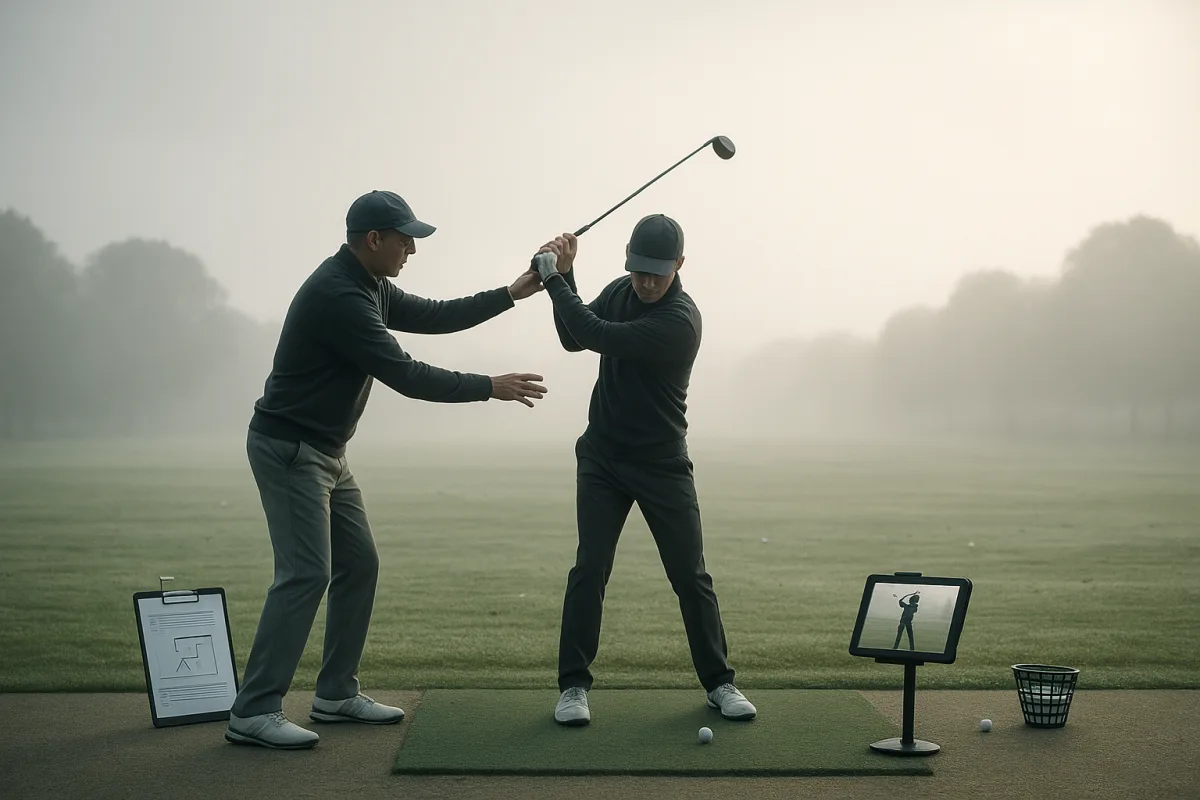
First problem: you know you need help, but not what help to ask for
A new golfer often arrives at the lesson search with a vague request: “I want to hit it better.” Fair enough, but it makes choosing a coach harder. Before contacting anyone, write down the shots causing the most damage.
That might be a right miss with the driver, heavy iron contact, topped fairway woods, or simply not understanding setup. Add a practical goal, such as getting the ball airborne reliably or breaking 110, rather than asking for a “better swing.”
This matters because an instructor’s preferred method should not replace your actual needs. GolfConnecting warns that players can lose sight of their own goals when they defer too completely to the coach’s preferred approach. [9]
I am a mid-handicap golfer who reads the fitting data before the marketing, and the same principle applies here. A launch-monitor number belongs to the swing that produced it, and a coach’s stock drill belongs to the player it helped.
A tip that fixed one player’s slice will not fix every slice. One golfer may leave the face open, another may swing sharply left with an open face, and another may be fighting contact or alignment before either of those matters.
Ask prospective instructors what they would assess in a first lesson. You want to hear grip, stance, posture, contact, ball flight, and your goals, not a promise to rebuild everything before they have watched you hit balls.
Beyond Golf Performance identifies the lack of an initial skill and physical assessment as a common mistake in selecting coaching. [4] That assessment is not an optional extra for a beginner, because the right first change depends on the starting pattern.
Next problem: credentials are confusing, and popularity is not proof
PGA of America membership remains the broad industry-standard qualification. The training covers swing mechanics, teaching methods, rules and business management, so it is a sensible first filter for a general beginner instructor. [2]
That does not mean a PGA label automatically makes a teacher the best fit. GolfConnecting and Florida Golf Lessons both caution against choosing solely on qualifications or popularity without judging communication, personalization and the actual learning environment. [9][10]
PGTAA certification is another recognized route, with an emphasis on teaching methodology, player development, communication and golf psychology. That can suit a beginner who wants structured feedback and plain-language coaching rather than an instructor focused mainly on playing credentials. [3]
USGTF certification is also recognized, while high-level playing experience can be valuable without being mandatory. A former competitive player may demonstrate shots well, but demonstration is not the same skill as diagnosing your setup and explaining a manageable change. [2][4]
TPI certification is more specialized. It focuses on fitness and biomechanics related to the golf swing, so it is worth asking about if mobility, balance, prior injury or physical restriction seems to be limiting your motion. [4]
LPGA certification broadly parallels PGA training and may be especially relevant if you prefer a female instructor or want a coach who specifically markets to female golfers. The useful question is still whether that person teaches your game clearly.
Use credentials to make a shortlist, then use a conversation to choose. Ask: “How do you decide what to change first?” “How many swing thoughts will I leave with?” and “What would I practise before our next lesson?”
The first call should tell you whether the teaching style fits
Traditional in-person instruction is generally the most effective starting point for beginners because the instructor can see grip pressure, alignment, posture and strike in real time. [8] Those details are hard to judge from a single swing clip.
Video analysis can be very useful, particularly for visual learners. It gives you a reference between lessons and can stop the familiar problem of thinking you are making a change when the camera says otherwise. [8]
For most new players, the strongest starting format is a blend: in-person coaching for the initial setup and movement work, plus video for review and reinforcement. Research summarized by Lexolino identifies blended instruction as generally effective for beginners. [8]
Online coaching has a place, especially when location or schedule makes regular in-person lessons difficult. But it is less personalized, so I would not make it the only plan until you can set up consistently and send useful video angles. [8]
A remote swing review commonly costs $20 to $50, according to 2026 pricing reported by Fit My Golf Clubs and The Other Golf Channel. [5][6] That can be a cost-effective check-in, not necessarily a substitute for a first assessment.
Ask whether the instructor uses video, but do not treat cameras or launch monitors as proof of better teaching. Numbers and video are evidence, not instruction by themselves, and a beginner can be buried under data quickly.
If a coach shows you face-to-path or clubhead-speed figures, ask what action you should take from them. The useful output is one clear priority, not a screen full of measurements you cannot reproduce on the course.
Then comes the budget problem, which is more than the hourly rate
Lesson pricing varies sharply with certification, reputation and geography. Entry-level instruction is commonly $50 to $75 per hour, PGA Associates run about $90 to $140, and PGA Members typically cost $120 to $225. [5][6]
PGA Certified instructors and directors commonly charge $175 to $250 per hour. PGA Master Professionals and highly ranked instructors can run from $250 to $500 or more, figures reported in 2026 lesson-pricing guides. [5][6]
A higher fee can reflect experience, demand and local costs, but it does not guarantee that the teacher communicates well with a raw beginner. Most distance claims in golf are within the noise for many recreational swings, and “premium” is not a measurable teaching outcome.
Location matters. Fit My Golf Clubs reports metropolitan rates around $100 to $175 or more per hour, compared with roughly $60 to $80 in rural markets. [5] Compare instructors within your area and teaching format before judging a quote.
Semi-private lessons generally cost $30 to $75 per person, while group clinics cost around $20 to $50 per person. [5][6] They can make sense for learning basics or sharing costs, although they offer less individual diagnosis.
Packages may save 10 to 20 percent, with five-lesson offers around $250 to $600 in the cited pricing guides. [5][6] Do not let the discount force the decision, though. One lesson is usually enough to judge whether the coaching makes sense to you.
Big-box academy lessons can cost $150 to $300 each, with larger packages reaching $10,000 or more. [5][6] That may include a structured system and technology, but ask exactly how much one-to-one teaching, practice planning and follow-up you receive.
Your first lesson should create a plan, not a full rebuild
There is no well-supported standard lesson length, so do not select an instructor based on a supposed ideal number of minutes. The stronger evidence concerns structure, frequency and what you do between sessions. [7][14]
A good first lesson should establish a baseline, identify the most important limiting issue, and leave you with a small practice assignment. If you receive six mechanical changes, you are likely to practise none of them properly.
Florida Golf Lessons lists excessive technical jargon, unclear explanation and too many simultaneous changes among the warning signs for students. [10] Beginners need understandable cause and effect, not an anatomy lecture they cannot use over the ball.
Ask the instructor to state the priority in ordinary language. For example: “Set the club behind the ball squarely, then check your feet are parallel left of the target,” is actionable. “Improve your kinematic sequence” is not, unless it becomes equally concrete.
Also ask how progress will be tracked. GolfEaser and Rotation Golf both flag the absence of systematic progress tracking and between-lesson guidance as common weak points in instruction. [11][12]
Tracking does not need to mean chasing launch-monitor averages every week. Keep a simple record of strike quality, typical start direction, biggest miss, practice sessions completed and on-course results from a few similar holes.
The hard part is what happens between lessons
New golfers generally need about five to 10 lessons before measurable swing-mechanics improvement becomes realistic. [16][17][18] That is not a promise that everyone will improve at the same speed or reach the same score.
The recommended early rhythm is one lesson every one to two weeks, followed by a wider two-to-four-week interval after the fundamentals begin to settle. [7][14] This gives you enough feedback without turning every practice into a fresh rebuild.
Plan two or three practice sessions between lessons. [7][14] Each session should rehearse the assigned setup or motion, then include enough ball flight and contact feedback to see whether it holds up when you hit an actual target.
A useful instructor should tell you what to practise, how many repetitions to make, what mistake to watch for and when to stop. Without that structure, lesson gains fade quickly because the old movement tends to return under speed or pressure. [7][11]
Use your practice time in a sensible order. Start with the slow rehearsal, move to short shots, then hit fuller shots only when the rehearsal still resembles the intended change. Randomly pounding driver after a grip lesson is usually poor transfer.
Do not demand a new swing key after every bad range session. Report what happened, ideally with a short video or clear notes, and let the instructor decide whether the issue is execution, misunderstanding or a plan that needs revision.
Know when to stay, and when to change instructors
After two or three lessons, you should understand what you are working on and why. You do not need a perfect swing, but you should have a repeatable setup routine, a clear practice plan and some way to notice progress.
If you leave confused every time, the issue may be communication rather than effort. Athlon Sports and GolfConnecting both emphasize fit, clear explanation and individualized coaching over an instructor’s reputation alone. [9][13]
Change instructors if yours repeatedly dismisses your goals, offers no initial assessment, uses one-size-fits-all drills, or cannot explain a recommendation without jargon. Those are documented warning patterns, not signs that you are simply “not coachable.” [4][9][10]
Do not overthink regional climate or local turf as a selection criterion. The current research brief found no concrete, up-to-date evidence that regional conditions should determine your choice of instructor or early lesson focus.
Choose the person who can see your present swing, explain the next change in language you understand, and give you a practice route you can actually follow. In golf, as in fitting, the best answer is usually the one matched to the player in front of it.
Frequently Asked Questions
What should I look for when choosing a golf instructor?
Look for an instructor who can clearly explain one priority at a time, assess your current swing and physical limits, and provide a practical practice plan. Avoid coaches who overload you with too many swing thoughts or ignore your personal goals. An initial skill and physical assessment is essential, especially for beginners.
How do I assess a golf instructor's teaching style?
Ask what they would evaluate in your first lesson; you want to hear about grip, stance, posture, contact, ball flight, and your goals. A good instructor communicates clearly, personalizes feedback, and avoids overwhelming you with technical jargon or too many changes at once. Avoid instructors who cannot explain changes or who impose their preferred methods without considering your needs.
Which golf instructor certifications matter most?
PGA of America membership is the broadest and most recognized certification, covering swing mechanics, teaching methods, rules, and business management. PGTAA certification emphasizes teaching methodology, player development, communication, and golf psychology, which can suit beginners well. USGTF and TPI certifications are also recognized, with TPI focusing on physical fitness and biomechanics related to the golf swing.
How many golf lessons do beginners typically need?
Beginners usually see improvement after about 5 to 10 lessons, spaced every one to two weeks initially. Between lessons, two or three purposeful practice sessions are important to reinforce changes. Consistent practice is critical to maintain and build on lesson gains.
What questions should I ask a potential golf instructor?
Ask what they would assess during your first lesson and how they plan to address your specific goals and swing issues. Inquire about their teaching approach, how they communicate changes, and whether they provide a structured practice plan. Also, clarify their credentials and experience, but focus on how well they personalize instruction rather than just their qualifications.
How we researched this
This article was assembled from 18 cited references.
Nothing here is based on hands-on testing. Where a figure or finding appears, it belongs to the source cited beside it, and the writing says so rather than implying otherwise. Every source is listed below so you can check it.
Sources
- Golf Instructor Hiring Guide: Find Top Talent Fast
- How to become a golf instructor — the complete 2026 path | golfcoachwebsites.com | golfcoachwebsites.com
- PGTAA - Learn To Teach Golf - Become a Certified Golf Teacher
- Golf Coach Qualifications: What to Look For | Beyond Golf Performance
- How Much Do Golf Lessons Cost? 2026 Prices (+ What Pros Charge)
- How Much Are Golf Lessons? (Real 2026 Pricing) | The Other Golf Channel
- Your First Year of Golf Lessons: How Many, How Often, and What to Expect | SwingMatch Blog
- Golf Instruction Methods in Sports,Golf | lexolino.com
- How to Choose a Golf Coach | GolfConnecting
- Golf Instructor Warning Signs Every Student Should Know
- Do Golf Lessons Work? 7 Truths Weekend Golfers Need to Know
- Instruction, Fitting, and Development · Rotation.Golf
- 5 Things to Look for When Choosing a Golf Instructor - Athlon
- How Often Should You Take Golf Lessons? | Fulcria Labs
- Average Cost of Golf Lessons: What Affects the Price?
- How Many Golf Lessons Do I Need? A Beginner's Guide | Swyng
- How Many Golf Lessons Do Beginners Need? | Grip Golf
- How Many Golf Lessons Do You Actually Need? | Evolution Golf
Related Articles
How to Choose the Right Golf Course Using Course and Slope
Learn how to choose the right golf course by understanding course and slope ratings to match your skill and carry distances.
How to Start Playing Golf
Learn how to start playing golf with beginner equipment advice, practice routines, swing basics, and etiquette tips for new golfers.

Golf Course Features for Beginners: What to Look For
Learn key golf course features for beginners, including fairway width, landing zones, course length, and green design to improve your game.

Starter Golf Equipment List: What You Need to Begin
Discover the starter golf equipment list for beginners, including essential clubs and gear to get you ready for your first round.