
Types of Golf Course Grasses: Cool-Season and Warm-Season
Learn about the types of golf course grasses, including cool-season and warm-season varieties, and how they affect course play and maintenance.
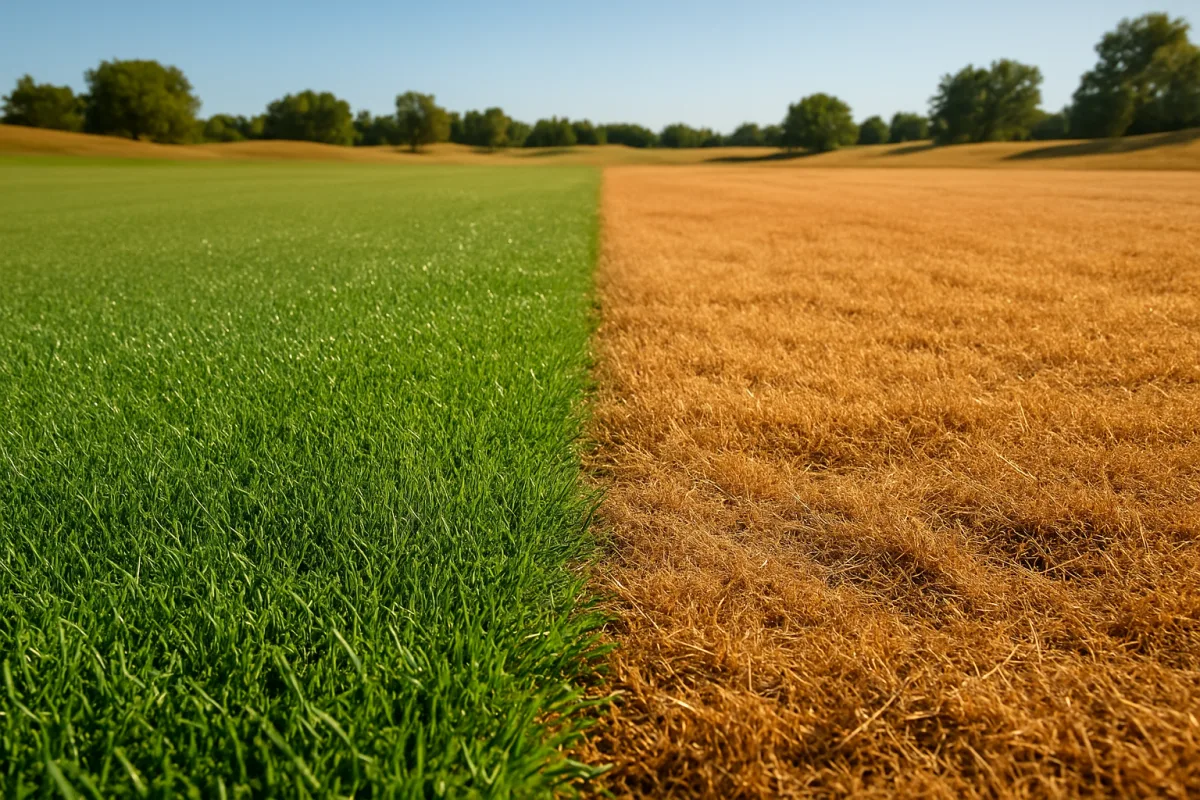
The grass under your ball is a climate decision
You notice grass most clearly after a bad bounce. A tight, firm fairway can turn a cleanly struck hybrid into a long runner, while a soft ryegrass fairway may let the same ball sit up.
Those conditions begin with a superintendent’s largest turf decision: choosing grass that can survive the local temperature pattern, humidity, rainfall, soil, and water supply. Grass type is not cosmetic. It determines how much mowing, irrigation, fertilizer, aeration, and recovery work the course needs.[3][10]
Golf-course turf falls into two broad groups, cool-season grasses and warm-season grasses. Each group has a temperature range where it grows strongly, and each becomes stressed when the weather moves too far outside that range.[1][6]
Cool-season grass includes creeping bentgrass, perennial ryegrass, Kentucky bluegrass, and tall fescue. These grasses are common on greens, tees, and fairways in cooler regions, where summer heat is less likely to overwhelm them.[3][6]
Warm-season grass includes bermudagrass and zoysia. These grasses dominate many fairways and roughs in warmer climates because they handle hot conditions well and can maintain coverage when cool-season turf is under heat stress.[3][6]
The course is making a trade every day. It can grow grass that naturally wants the local weather, or it can spend money and labor forcing a less compatible grass through conditions it does not prefer.
Cool-season grass: fine texture, demanding summers
Creeping bentgrass is the grass many golfers associate with tightly cut greens. Its fine leaf texture and tolerance for very low mowing make it suitable for putting surfaces, including greens maintained at approximately 0.5 inches or less.[3]
That low cut is part of why a bentgrass green can roll so cleanly. The plant is trimmed close enough to create a smooth surface, but it needs consistent water, nutrition, disease management, and careful traffic control to stay healthy.
Bentgrass, ryegrass, and Kentucky bluegrass generally perform best between 60 and 75°F.[1][6] Once temperatures rise beyond roughly 70 to 75°F, cool-season grass can come under increasing stress, especially where heat combines with humidity.[1]
Humidity makes the superintendent’s job harder because wet leaf surfaces and warm temperatures can favor turf disease. The response is not one fixed treatment program, since weather, soil, shade, and grass condition vary across the property.
A green beside trees, a sheltered low spot, and an exposed putting surface can need different attention on the same afternoon. That is why a course may water one green lightly while another stays dry and firm.
Perennial ryegrass is often valued for its appearance and use in overseeding programs. Kentucky bluegrass can be used in cooler-climate fairways and roughs, while tall fescue is another cool-season option with its own maintenance demands.[3][7]
For golfers, cool-season fairways often mean a greener appearance through cooler weather and a more active turf surface in spring and fall. In a hot summer, though, a course may protect those surfaces by reducing stress rather than chasing perfect color.
Warm-season grass: built for heat, quiet in winter
Bermudagrass is a familiar fairway and rough grass across hot regions. It performs best in temperatures around 80 to 95°F, where cool-season grass can struggle to maintain density and color.[6][8]
Zoysia also belongs to the warm-season group. It is used where heat tolerance, dense coverage, and lower water demand than cool-season turf fit the course’s climate and maintenance plan.[3][6]
Warm-season turf has an annual change golfers can see immediately. As soil temperatures drop to about 50 to 55°F, bermudagrass and similar warm-season grasses can go dormant, losing their green color and shifting toward tan or straw brown.[6][8]
Dormancy does not mean the course has failed. It means the grass has slowed its growth in response to temperature, and a dormant bermudagrass fairway can still be the correct grass choice for a climate with long, hot summers.
Bermuda can be especially attractive where summer heat is the defining problem. Golfdom reports that bermudagrass can be adapted in northern climates as well, but a course considering it outside its natural comfort zone must account for winter conditions and establishment risk.[11]
Zoysia often costs more to establish than bermuda. Bermudagrass seed is listed at about $6 per pound and sod at roughly $0.35 to $0.65 per square foot, while zoysia seed is about $10 per pound and sod about $0.55 to $1.00 per square foot.[8]
Those are grass-material figures, not a completed golf-course renovation price. Site preparation, irrigation changes, labor, equipment, drainage work, grow-in time, and lost playing access can all add substantially to the final project cost.
Water is part of the grass choice
A golf course does not water every acre equally. Greens, tees, fairways, rough, native areas, and practice facilities have different expectations, and a superintendent can direct water toward the turf that most affects play.
Cool-season grasses typically require about 80 percent of evapotranspiration, or ETo, while warm-season grasses require about 70 percent.[5] ETo is a measure of how much water moves from the soil and plant into the atmosphere.
That percentage does not translate into one reliable weekly gallon number. Weather, wind, humidity, soil, irrigation efficiency, shade, grass density, and local restrictions all change the actual amount a course needs.
A dry, firm fairway is therefore not automatically under-watered. The course may be using less water intentionally, preserving turf health, conserving resources, and keeping the playing surface from becoming soft enough to plug every approach shot.
Poor water conservation is one of the management errors identified for courses in transition zones, areas where summers may be too hot for cool-season grass yet winters can be too cold for warm-season grass.[10]
The best turf program in those regions begins with climate compatibility. A grass that needs constant rescue through heat, cold, or drought can cost more than its appearance on opening day suggests.[10]
The expensive compromise: winter overseeding
Overseeding means planting cool-season grass seed into an existing warm-season surface, commonly bermudagrass, as temperatures fall. The ryegrass grows through winter, keeping fairways, tees, or rough greener while the bermuda is dormant.[4]
Augusta National is a prominent example of a course associated with overseeding warm-season turf with ryegrass during cooler months.[4] For golfers, the immediate appeal is obvious: winter color and a visibly active turf surface.
The hidden work begins before the winter grass appears. The course needs seed, labor, watering, mowing changes, and a plan for managing the ryegrass once bermudagrass wants to resume growth in spring.
Overseeding can also create turf stress because two grass systems must occupy the same surface across changing seasons. Management mistakes include relying too heavily on overseeding without accounting for cost, climate, and the warm-season grass’s recovery needs.[10]
This is why a brown winter bermudagrass course can be a deliberate choice, not a neglected one. Skipping overseeding may reduce inputs and let the base turf transition more cleanly into its next growing season.
We would not assume a green winter fairway is automatically better maintained. If you play a warm-climate course in winter, ask whether it has overseeded ryegrass or dormant bermuda, then expect different lies, rollout, and color.
What the maintenance budget looks like
Grass choice shapes annual spending long after construction ends. Reported annual maintenance costs per 1,000 square feet range from about $165 to $240 for bermuda and $120 to $180 for zoysia.[7]
For cool-season options, Kentucky bluegrass is listed at roughly $220 to $300 per 1,000 square feet annually, while tall fescue is about $200 to $280.[7] Regional labor, water pricing, course size, and maintenance intensity can move those figures considerably.
Establishing turf also has a wide cost range. General seed costs are listed at approximately $0.10 to $0.50 per square foot, while sod ranges from about $0.30 to $0.80 per square foot.[7]
Sod can create a playable-looking surface faster, but its price includes only the turf material range in those figures. It leaves out grading, soil preparation, irrigation, installation labor, grow-in maintenance, and any course closure or restricted-play period.
Fertilization, aeration, and mowing are not optional line items that stay constant year-round. Their timing changes with the grass’s active growth period, weather stress, and the course’s playing calendar.[3][6]
Bentgrass greens require particularly close mowing management because their playing quality comes from a short, uniform surface. Fairways and rough can be cut higher, allowing more leaf area and a larger margin for recovery.
Technology helps, but it does not change the climate
Modern maintenance tools can help a crew make better decisions across a large property. Golf Business Monitor reported the September 2026 introduction of Turfgrass Mastery OS, an integrated platform designed to connect golf-course data and management decisions.[12]
Real-time monitoring and remote irrigation technology can help superintendents identify where turf needs attention before an entire surface declines. That can reduce waste, but the system still depends on local observation and a grass suited to the location.
Autonomous mowing is also expanding. By March 2026, Husqvarna reported 150 clubs in the United Kingdom and Ireland using robotic mowers, while Strandhill Golf Club in Ireland has used autonomous mowing within a broader sustainability program.[13]
Strandhill’s approach also includes native landscaping, which can reduce maintained turf area and support biodiversity.[13] For golfers, that may mean more natural rough and fewer acres of intensely managed grass beyond the main playing corridors.
The grass you see from the first tee is the result of thousands of small choices, but climate sits above all of them. A course that selects the right grass can spend its effort refining conditions, instead of constantly rescuing turf from weather it was never built to handle.
Frequently Asked Questions
What are the main types of grass used on golf courses?
Golf courses primarily use two broad groups of turfgrass: cool-season grasses and warm-season grasses. Cool-season types include creeping bentgrass, perennial ryegrass, Kentucky bluegrass, and tall fescue, commonly found in cooler regions. Warm-season grasses such as bermudagrass and zoysia dominate fairways and roughs in warmer climates.
How do cool-season and warm-season grasses differ on golf courses?
Cool-season grasses perform best between 60 and 75°F and tend to struggle with heat and humidity, requiring careful water and disease management. Warm-season grasses thrive at higher temperatures, roughly 80 to 95°F, and handle heat stress better but may go dormant in cooler weather. These differences influence maintenance needs and turf performance throughout the year.
Which grass types are best for golf courses in hot climates?
Warm-season grasses like bermudagrass and zoysia are best suited for hot climates because they tolerate high temperatures and maintain coverage when cool-season grasses become stressed. Bermudagrass, in particular, performs well around 80 to 95°F and is commonly used in fairways and roughs in warmer regions.
Why do golf courses overseed bermudagrass with ryegrass?
Overseeding bermudagrass with ryegrass helps keep the course green during winter months when bermudagrass goes dormant. However, this practice increases costs, water demand, and turf stress, making it a trade-off that courses manage depending on their climate and maintenance goals.
How does grass type affect golf course maintenance and playability?
Grass type determines mowing height, irrigation, fertilization, aeration, and disease management practices. For example, creeping bentgrass greens are mowed very low for smooth putting surfaces but require close attention to moisture and disease. Warm-season grasses generally need less water during hot months but may require overseeding or other interventions to maintain year-round playability.
How we researched this
This article was assembled from 13 cited references.
Nothing here is based on hands-on testing. Where a figure or finding appears, it belongs to the source cited beside it, and the writing says so rather than implying otherwise. Every source is listed below so you can check it.
Sources
- High temps are hard on cool-season grasses | Turfgrass Science | Nebraska
- Healthy Lawns, Grass development: Seasonal growth pattern of grasses
- Golf Course Grass Types: The Full Guide
- What Is Overseeding On A Golf Course?
- How Much Water Golf Courses Need
- Introduction to warm and cool season grasses | Pitchcare
- Golf Course Maintenance Cost Guide 2026, LatestCost, Real-Time Price Insights
- Bermuda Grass (Cynodon dactylon): Complete Guide 2026
- Identifying the Best Types of Grass in Florida for Your Lawn | LawnsGuide
- Common Golf Course Turf Management Mistakes That Undercut Performance
- Bermudagrass adaptability in northern climates | Golfdom
- Turfgrass Mastery: Is this the missing link between golf course data and better decisions? : Golf Business Monitor
- Going autonomous at Strandhill Golf Club | GEO Foundation for Sustainable Golf
Related Articles

Best Golf Courses for Winter Play: Top Destinations and Tips
Discover the best golf courses for winter play, including top destinations, turf conditions, and travel tips for a great winter golf experience.

Summer Golf Trip Planning: Courses, Conditions & Deals
Learn how to plan a summer golf trip with tips on course conditions, pricing, packages, and what to expect from summer turf and weather.

Types of Golf Courses: Links, Parkland, Heathland & More
Explore the types of golf courses and learn how links, parkland, heathland, desert, and resort courses affect play and strategy.

When to Play Golf in Spring: Timing and Course Conditions
Learn when to play golf in spring by understanding course conditions, weather, and maintenance for the best tee times and experience.