
Improve Golf Swing Tempo: Tips and Drills for Success
Learn how to improve golf swing tempo with practical tips, drills, and training aids to enhance your rhythm and consistency on the course.
How to Improve Your Golf Swing Tempo: A Practical Guide
If you've ever watched a professional golfer swing with the grace of a gazelle and thought, "Why can't I do that?" it's time to get serious about your swing tempo. The rhythm of your swing can mean the difference between a glorious drive down the fairway and a ball that flops pitifully into the nearest bunker. Here’s a practical guide to help you enhance your swing rhythm, addressing the very issues you’re likely to encounter along the way.
Understanding the Ideal Tempo Ratio
Before we dive into drills and tools, let’s start with the fundamentals. The ideal swing tempo ratio for golf is generally accepted to be around 3:1, meaning your backswing should take about three times longer than your downswing. This isn’t just an arbitrary figure; it’s supported by sources like SwingVantage and the TruSwing device manual from Garmin. However, not every golfer will fit neatly into this box. Individual preferences and physical capabilities can lead to variations in this ratio, as confirmed by research published in "Towards a Biomechanical Understanding of Tempo in the Golf Swing" (2006). So, while the 3:1 ratio is a good target, don't feel guilty if you find a slightly different rhythm works better for you.
Assessing Your Current Swing
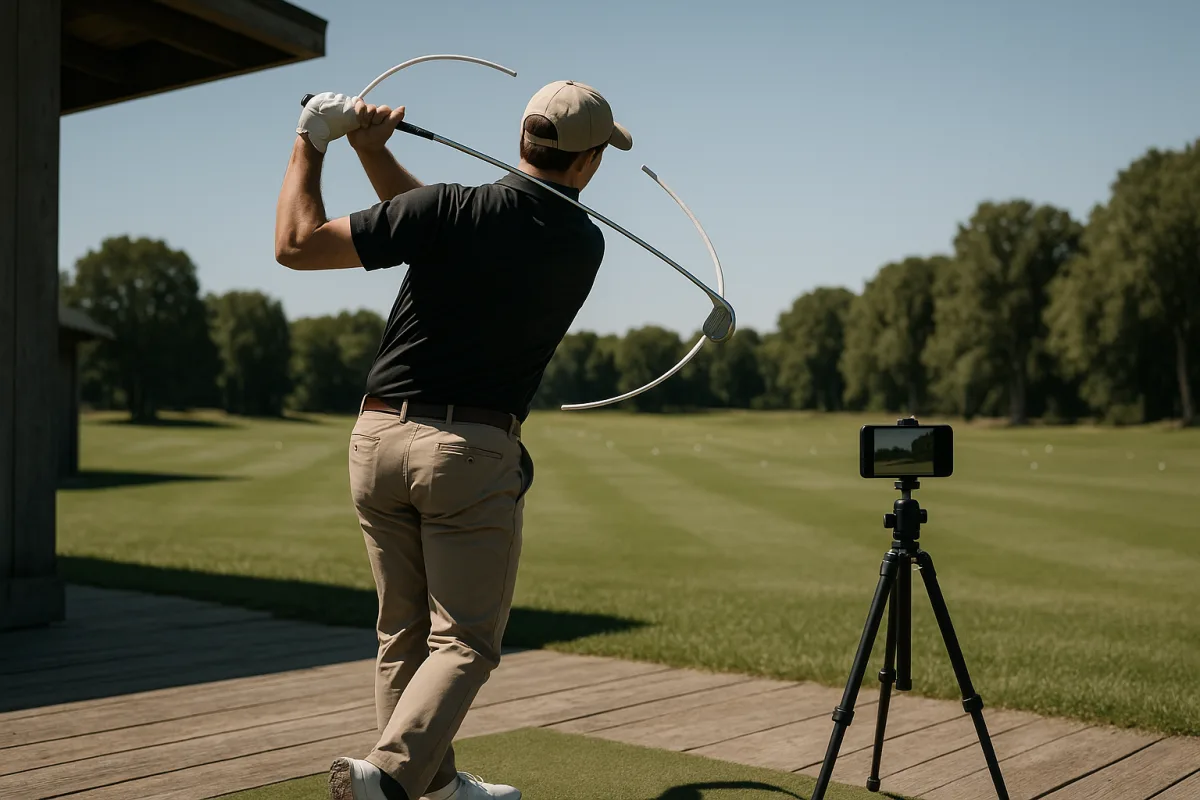
Before you can improve, you need to know where you stand. Grab your smartphone and set up a video recording of your swing. Pay attention to how long each phase takes. A good rule of thumb is to aim for a backswing of about 0.75 seconds, which is consistent with the average for PGA Tour professionals. If your swing clocks in at a leisurely 1.3 to 3.0 seconds, it’s time for a tune-up.
Common Mistakes Impacting Your Swing Tempo
Rushed Transitions: A quick change from backswing to downswing can throw your entire tempo out of whack. Focus on a smooth transition.
Excessive Grip Tension: If your hands are tighter than a drum, your swing will be jerky and uncontrolled. Loosen up; your grip should be firm but not white-knuckled.
Over-swinging: Trying to crush the ball often leads to a loss of control. Focus on a balanced swing rather than sheer power.
Deceleration Through Impact: A common error is slowing down as you reach the ball. Maintain your speed through impact for more consistent results.
Inconsistent Rhythm: If your tempo varies wildly, your shots will too. Establish a steady rhythm by practicing consistently.
Recommended Training Aids
Training aids can help refine your swing tempo, but choosing the right one can be overwhelming. Here are a few that have garnered attention:
Orange Whip Trainer: Recognized by Golf Digest, this device improves tempo, balance, and flexibility, making it a popular choice among golfers.
SKLZ Gold Flex Trainer: Priced around $49.99, this is a budget-friendly option that still offers effective training for swing rhythm.
SuperSpeed Golf Training System: Costing approximately $150, this system uses three weighted clubs to promote overspeed training, which can enhance your tempo.
Lag Shot: At $149, this training aid is designed to improve swing mechanics and can be beneficial for tempo.
ProSENDR: Developed by renowned coaches, this tool aids in wrist and hand coordination, crucial for maintaining a fluid swing.
It's important to note that there’s no definitive evidence proving that one training aid is superior to another. Your choice may be influenced by personal preference, so consider trying a couple to see what resonates with you.
Effective Practice Duration
When it comes to practice, don’t overdo it. Experts recommend dedicating 10 to 15 minutes per session to tempo-focused drills. This duration is optimal for rhythm training without leading to fatigue. To keep your tempo on track, setting a metronome to 75 beats per minute can be a game-changer, helping you to develop a consistent rhythm.
Tempo Drills Without Equipment
If you’re not keen on investing in training aids just yet, there are several effective drills you can perform without any equipment:
Counting Drill: Count "one-two-three" during your backswing and "four" on the downswing. This simple exercise can help internalize your rhythm.
Slow-Motion Swing Rehearsals: Practice your swing in slow motion, focusing on the timing of each phase. This will help you feel the correct tempo without the pressure of hitting a ball.
Mirror Work: Use a mirror to observe your swing mechanics and ensure you’re maintaining a smooth tempo.
Right-Left Drill: Alternate swinging with your right and left hands to develop a more balanced rhythm.
Pause and Go Drill: Take your backswing to the top, pause for a moment, and then smoothly transition into your downswing. This helps eliminate rushed movements.
Adjusting to Weather Conditions
Weather can have a significant impact on your swing tempo. For instance, windy conditions may require a more stable tempo, while humid weather can make grips slippery, necessitating a focus on a deliberate rhythm. Cold weather often leads to muscle stiffness, which can result in rushed swings; thus, it’s crucial to warm up thoroughly before hitting the course.
While there's no comprehensive study quantifying the precise effects of weather on swing tempo, the consensus is that being mindful of these conditions can help you maintain a more consistent swing.
Final Thoughts
Improving your golf swing tempo is akin to fine-tuning a high-performance engine. It requires patience, practice, and a keen awareness of your mechanics. By focusing on the right drills, utilizing effective training aids, and being mindful of common mistakes, you can transform your swing into a thing of beauty.
Remember, the 3:1 ratio is a helpful guideline, but feel free to adjust according to what feels natural for you. With consistent practice, your swing will not only improve in tempo but also in overall effectiveness. So get out there, record your swings, and start making the necessary adjustments. In no time, you'll be striding down the fairway with the confidence of a pro.
Frequently Asked Questions
What is the ideal golf swing tempo ratio?
The ideal swing tempo ratio for golf is generally accepted to be around 3:1, meaning your backswing should take about three times longer than your downswing. This guideline is supported by sources like SwingVantage and Garmin's TruSwing device manual, although individual preferences and physical capabilities may lead to variations in this ratio.
How can weather affect my golf swing tempo?
Weather conditions can significantly impact swing tempo. For instance, windy conditions may require a more stable tempo, while humidity can make grips slippery, necessitating a focus on a deliberate rhythm. Cold weather often leads to muscle stiffness, which can result in rushed swings, so thorough warm-ups are essential before playing.
Sources
- Golf Swing Tempo: Find Your Rhythm | SwingVantage
- TruSwing - Swing Tempo
- Towards a Biomechanical Understanding of Tempo in the Golf Swing
- Orange Whip - Full Size - marsdengolfdrivingrange, Marsden Golf Driving Range
- Best Golf Training Aids in 2026: 12 Tools That Actually Work | Fulcria Labs
- SKLZ Gold Flex Strength and Tempo Golf Swing Trainer - 48 inches - NEW NWT | eBay
- Top 5 Golf Swing Training Aids for Home Practice (2026)
- Shop Golf's #1 Swing Speed Training System, SuperSpeed Golf
- Best Golf Training Aids in 2026: Ranked by What Actually Improves Your Game - GolfSource
- Golf Training Aids: #1 Tools Producing Amazing Results, Hitting It Solid
- Best Golf Training Aids 2026: SuperSpeed ($199), Lag Shot ($149), Arccos ($230), T5 Golf
- 【楽天市場】ProSENDR プロセンダー 練習器具 右手用 左手用 ハンドファースト ゴルフ スイング 練習 飛距離アップ スイング練習 ゴルフ練習器具 ゴルフスイング ポイント10倍:ゴルフポケット楽天市場店
- The Swing Training Aid That Has Helped Turn Wyndham Clark's Form Around In 2026
- 8 Golf Swing Tempo Drills for a Smoother, More Consistent Swing
- Golf Swing Tempo: The 3 to 1 Ratio and How to Train It | Learn Golf
- How to Improve Your Golf Swing Tempo, 3:1 Ratio & Drills
- Golf Swing Tempo, Explained: The 3:1 Ratio and How to Train It | Fairway Support
- How to Improve Your Golf Swing Tempo ? (August 2026) Guide
- Golf Swing Tempo: Improve Rhythm For More Consistency -
- Golf Swing Tempo and Rhythm Faults Explained
- Your SWING TEMPO Is Probably DEAD WRONG!
- Golf Weather Betting Edges (2026): Exploit Wind & Rain Odds, Betting on Golf
- How weather and elevation affect your golf ball flight
- How to Get Proven Precision and Real Consistency with Weather-Tuned Club Fitting (The Right Way) - Tour Quality Golf | Indoor Lessons, Fittings & Virtual Golf
- Golf Swing Tips for Fall: Prepping Your Game for a New Season - Performance Golf
- Golf Practice at Home: Simple Routines That Fit Real Life
- 3 Simple Golf Tempo Drills That Actually Work!
- 3:1 Tempo Ratio: What It Means - How To Break 80 - Ultimate Free Golf Guide
- Golf Swing Tempo: Why Smooth Beats Fast Every Time | Swyng
- Speed of the Game: Swing Tempo
Related Articles

Practice Golf Swing with a Friend: Safe, Effective Tips
Learn how to practice golf swing with a friend safely and effectively using structured drills, feedback roles, and focused sessions.

Tumi Golf Bag Review: Luxury Performance for Discerning Golfers
Discover the luxury and performance of the Tumi golf bag on Modern Golf. Crafted with ballistic nylon and premium materials, this $1,000 bag offers unique features like a foldable neoprene rain hood and ample storage. Perfect for golfers seeking style and functionality on the course.

Pacific Sunday's Stylish Worm Burner Golf Bags: Waterproof & Limited Editions
Discover the innovative and stylish Worm Burner series of golf bags by Pacific Sunday. With unique color themes, 100% waterproof design, and exclusive limited editions, these bags offer both functionality and flair. Complete your golfing experience with matching head covers, a convenient fanny pack, and a soft towel. Experience the perfect blend of performance and style on the golf course.

Top Cart Bags Comparison 2025: Sunday, Ghost, Pins and Aces
Compare popular cart bags: Sunday Big Rig, Ghost GT14, and Pins and Aces Nardo Gray. Features, prices, and unique elements make them top choices for golfers in 2025.