
How to Maintain Golf Clubs: Cleaning, Grips & Storage Tips
Learn how to maintain golf clubs with cleaning, grip care, and proper storage to extend their life and performance.
The job starts before you leave the course
The practical maintenance routine begins when the round finishes, not when winter arrives. Before putting clubs into the bag, brush loose mud and grass from the face and grooves, then wipe the grip and shaft dry. GolfOnline recommends this after every round. [26]
That is particularly worth doing with wedges and short irons. Their grooves create the friction that helps control launch and spin, but compacted dirt leaves less defined contact between ball and face. GrooVex Golf specifically identifies groove maintenance as central to retaining spin performance. [1]
I would not pretend a clean face adds a measurable number of rpm to every shot. Launch-monitor numbers belong to the swing, strike, ball and conditions that produced them. Still, dirt packed into grooves is a controllable variable, and it costs nothing to remove.
Use a towel and a soft brush, not the retractable wire brush that seems to live on half the bags at a public course. GolfOnline and Clean and Hit both warn that metal bristles can scratch clubfaces and damage grooves. [23][26]
If a club is wet from rain or morning dew, dry it before it goes back into the bag. Leaving wet heads, shafts and grips in a closed bag invites corrosion and gives moisture time to sit around ferrules and steel shafts. [28]
When you get home, separate irons from woods
This is where the usual “bucket of soapy water” advice becomes too broad. Irons and wedges can be soaked, but drivers, fairway woods and hybrids should not receive the same treatment. Golf Club Brokers and Loris Golf Shoppe make that distinction clearly. [2][27]
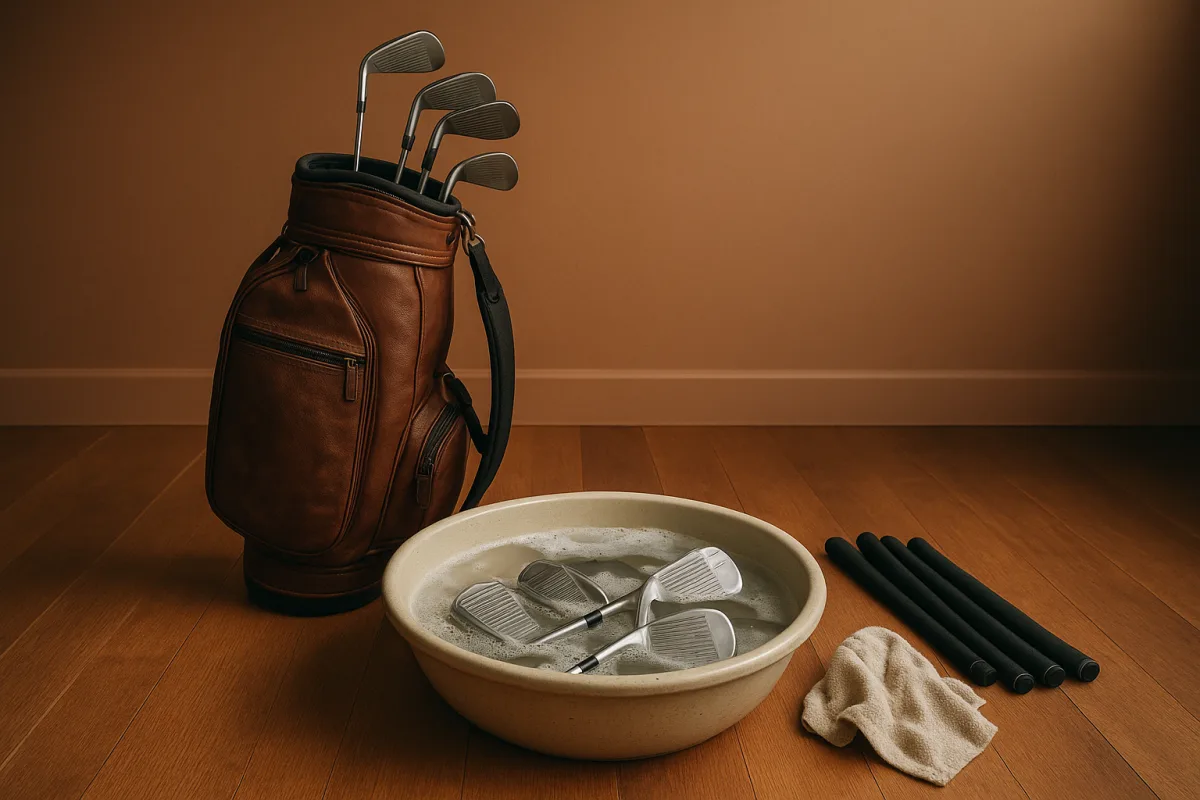
For irons and wedges, fill a bucket with warm water and mild dish soap. Keep the water level below the ferrule, the small collar where shaft meets head, then soak the clubheads for a short period before scrubbing gently. [26][28]
Use a soft-bristled brush, including an old toothbrush, to work through grooves and around the sole. Rinse with clean water, dry thoroughly with a microfiber towel, then leave the clubs out briefly if any water remains around the head or ferrule. [26][28]
Warm matters here. Hot water can weaken the epoxy bond that secures the head to the shaft, according to GolfOnline and Golf Setup UK. It is one of those maintenance errors that feels harmless until an expensive head works loose. [26][28]
For woods, wipe the crown, face and sole with a damp cloth. If dirt remains in the face texture or sole channels, use a soft brush carefully, then dry with a soft cloth. Do not immerse a driver or hybrid. [2][27]
That difference is not cosmetic. A modern driver head has more seams, finishes and bonded components than a forged iron head, so treating every club like a pitching wedge is a poor shortcut. The brief supports careful wiping, not soaking, for woods. [2][27]
Avoid bleach, harsh household cleaners, dishwashers and pressure washers across the set. Golf Setup UK lists all of them among cleaning methods to avoid, and pressure is especially unnecessary around ferrules, shaft labels and bonded components. [28]
Clean grips as their own maintenance job
A grip can look acceptable while feeling too slick to use with relaxed hands. That matters because a worn grip often leads golfers to squeeze harder, which can affect tempo and face control. Golf Club Brokers lists increased grip pressure among wear signs. [3]
Clean grips regularly with warm water, mild soap and a soft cloth. Loris Golf Shoppe recommends that simple method, rather than solvents or harsh chemicals that may dry or damage the grip material. [2]
Wipe the grip after each round, especially if you have used sunscreen, insect repellent or played in damp weather. The sources do not provide a laboratory comparison of cleaners, so I would stay with soap, water and a cloth rather than chase a miracle product. [2][28]
Check the grips as you clean them. Slick patches, a hardened feel, cracks, worn logos and loss of tack are all practical signs that cleaning has stopped being enough. Golf Pride and Golf Club Brokers both identify those symptoms. [3][4]
The usual replacement interval is annually or every 40 to 50 rounds. That is not a law, because some players wear a glove, play more often in heat, or simply have lighter grip pressure, but it is a sensible inspection trigger. [3][5]
If eight iron grips need replacing, current professional pricing is about $100 to $180 for the set, according to Golf Services. Individual regripping runs from roughly $3.50 to $18.99 per club, depending on grip and provider. [15]
That price is for the grip work, not an excuse to assume every grip suits every golfer. Grip size, texture and taper affect how the club sits in your hands. Fitting beats buying on this one as surely as it does with shafts.
Do a quick inspection before damage becomes a repair
Once the heads are clean and dry, run your eye down each shaft. Look for rust spots on steel, dents, deep scratches, splits in graphite, loose ferrules and any head that appears to have shifted. Golf Setup UK specifically flags shaft care and rust prevention. [28]
A loose ferrule does not automatically mean the head is loose, but it is worth checking rather than waiting for a failure. Do not try to solve a structural issue with household glue. Club repair shops have the correct epoxy, preparation tools and curing process.
Also inspect wedges for groove condition, particularly if you practise heavily from sandy or abrasive turf. Worn grooves and polished face areas are normal wear, but they are not restored by aggressive scraping. Soft cleaning protects the face better than metal brushes. [1][23]
If a shaft needs repair, published 2026 pricing puts iron work at roughly $15 to $95 per club, while driver reshafting starts at $125 or more. Golf Services lists those ranges, though final cost depends on shaft choice and labour. [15]
Refinishing is usually a cosmetic decision rather than a performance rescue. Sublevel Golf Club Refinishing lists iron and wedge refinishing at $50 to $95 per head, and putter refinishing at $140 to $250 per head depending on finish. [22]
Those figures cover the repair or refinishing service, not a new shaft, grip, shipping or any fitting work unless the shop states otherwise. Before repairing a club, ask whether the work preserves the club’s playing specs, especially swing weight and shaft length.
Do not let the bag become a damp storage locker
After cleaning, leave the bag open until the clubs and headcovers are dry. Storing wet clubs in a zipped bag is one of the common maintenance mistakes identified by Golf Setup UK, and it is easily avoided. [28]
For long-term storage, keep clubs indoors where conditions are stable. CaddieHQ gives a target range of 60°F to 75°F, with humidity around 40% to 60%, while other storage guides similarly recommend closets, spare rooms or finished basements. [10][12]
Store the bag upright, away from direct sunlight. Golfer Hive recommends avoiding garages, sheds, attics and car trunks because those places experience bigger temperature and humidity swings than a conditioned room. [12]
The trunk is particularly tempting after a late round, but it is poor storage rather than harmless convenience. Heat, cold and trapped humidity can affect grips, finishes, adhesive bonds and shafts over time, even if the exact rate varies by material and climate. [10][14]
I would not invent a precise seasonal checklist beyond that. The available guidance agrees that cold can harden grips and that weather changes matter, but it does not provide authoritative figures for different winter and summer routines.
What is supported is a proper end-of-season check. GolfOnline recommends a thorough inspection of grips and ferrules, alongside the normal cleaning routine. Use that moment to identify rust, damaged grips, loose heads or worn headcovers before storing the set. [26]
Spend on maintenance before replacing clubs
A club that is dirty, slippery or stored badly can feel “finished” before it actually is. Start with cleaning, grip condition, shaft inspection and a proper storage routine. Those are cheaper interventions than replacing a whole set on a hunch.
Most broad distance claims are within the noise for a mid-handicap player anyway. A new driver may be right after a fitting, but an intact shaft, sound grip and clean face are the baseline before deciding equipment has stopped performing.
For routine work, the sensible kit is small: bucket, warm water, mild dish soap, soft brush, microfiber towel, soft grip cloth and a dry indoor place for storage. That covers irons, wedges, woods and grips without exposing any of them to unnecessary risk. [2][26][28]
Frequently Asked Questions
How do I properly clean my golf clubs after a round?
After every round, brush loose dirt and grass from the club faces and grooves, then wipe the grips and shafts dry before placing clubs back in the bag. This routine prevents moisture buildup that can cause corrosion and damage over time. Use a towel and a soft brush rather than metal bristles to avoid scratching the clubfaces.
What is the best way to clean irons versus woods?
Irons and wedges can be soaked in warm, mildly soapy water (below the ferrule) for a short time, then scrubbed gently with a soft-bristled brush to clean grooves and soles. Drivers, fairway woods, and hybrids should not be soaked; instead, clean them by wiping with a damp cloth and using a soft brush carefully if needed, then dry thoroughly.
How often should I replace golf club grips?
Grips should be replaced annually or after about 40 to 50 rounds. You may need to replace them sooner if they feel slick, hard, cracked, or if you find yourself gripping the handle harder than usual.
How should I store golf clubs to prevent damage?
Store clubs indoors at temperatures between 60°F and 75°F with humidity around 40% to 60%. Keep them upright and away from direct sunlight. Avoid storing clubs long-term in places like car trunks, sheds, or attics where temperature and humidity can fluctuate excessively.
Can I soak all types of golf clubs in soapy water?
No. Only irons and wedges should be soaked in warm, mildly soapy water. Drivers, fairway woods, and hybrids should never be soaked because their heads have bonded components that can be damaged by water immersion. Instead, wipe these woods with a damp cloth and dry them carefully.
How we researched this
This article was assembled from 28 cited references.
Nothing here is based on hands-on testing. Where a figure or finding appears, it belongs to the source cited beside it, and the writing says so rather than implying otherwise. Every source is listed below so you can check it.
Sources
- How to Maintain Golf Club Grooves for Maximum Spin | GrooVex Golf
- How to Clean Golf Clubs: Irons, Woods, Grips & Rust
- When and How to Regrip Your Golf Clubs (2026 Guide) | Golf Club Brokers
- Grip Wear
- How Often Should You Regrip Clubs? | Fairway Golf USA
- Get a grip! Why amateur golfers need to change their grips more often - Golf365
- When to Replace Golf Grips: 5 Signs (and How Often You Really Should) – Geoleap
- This Simple Hack Will Keep Your Golf Grips In Near-Perfect Condition (And Stop Poor Shots From Creeping In)
- 5 Essential Tips for Maintaining Your Golf Clubs to Maximize Resale Value – Azalea Golf
- What Temperature Should Golf Clubs Be Stored At?
- Golfausrüstung richtig lagern
- How To Store Golf Clubs: Essential Guide To Prevent Damage
- Off-Season Club Storage & Maintenance Checklist — NiceDivot
- How to Store Golf Clubs at Home: The Complete Guide – ClubsDock
- Golf Club Repair & Regripping - Golf Services
- Golf Club Repair, Regripping & Custom Builds – Golf Garage Co
- Golf Club Repair Services | Northern Loon
- Golf Club Repair Cost: Regrip, Reshaft & Loft/Lie (2026) | Club Fitting Directory
- Golf Club Repair Atlanta | Reshafting, Regripping & Adjustments
- Services | CMT Golf Repairs & Traders
- Golf Repair Pricing | Golf Club Repair | Lenny's Golf & Ski
- Pricing | Sublevel Golf Club Refinishing
- 7 Common Cleaning Mistakes Golfers Make (And How to Fix Them) | Clean and Hit
- How Long Do Golf Clubs Last? + Lifespan Chart
- Do Golf Clubs Wear Out? When to Replace Your Equipment
- How to Clean Golf Clubs, On the Course and at Home - GolfOnline
- How to Clean Your Golf Clubs the Right Way (2026 Guide) | Golf Club Brokers
- How to Clean Golf Clubs: Irons, Woods & Grips
Related Articles

Summer Golf Trip Planning: Courses, Conditions & Deals
Learn how to plan a summer golf trip with tips on course conditions, pricing, packages, and what to expect from summer turf and weather.

Playing Golf in Windy Conditions: Tips and Strategies
Learn how to play golf in windy conditions with club selection, swing adjustments, and course strategy to improve your game in the wind.

Starter Golf Equipment List: What You Need to Begin
Discover the starter golf equipment list for beginners, including essential clubs and gear to get you ready for your first round.

When to Play Golf in Spring: Timing and Course Conditions
Learn when to play golf in spring by understanding course conditions, weather, and maintenance for the best tee times and experience.