
Factors Affecting Golf Course Conditions
Learn the key factors affecting golf course conditions including soil, moisture, temperature, irrigation, and mowing for optimal turf health and
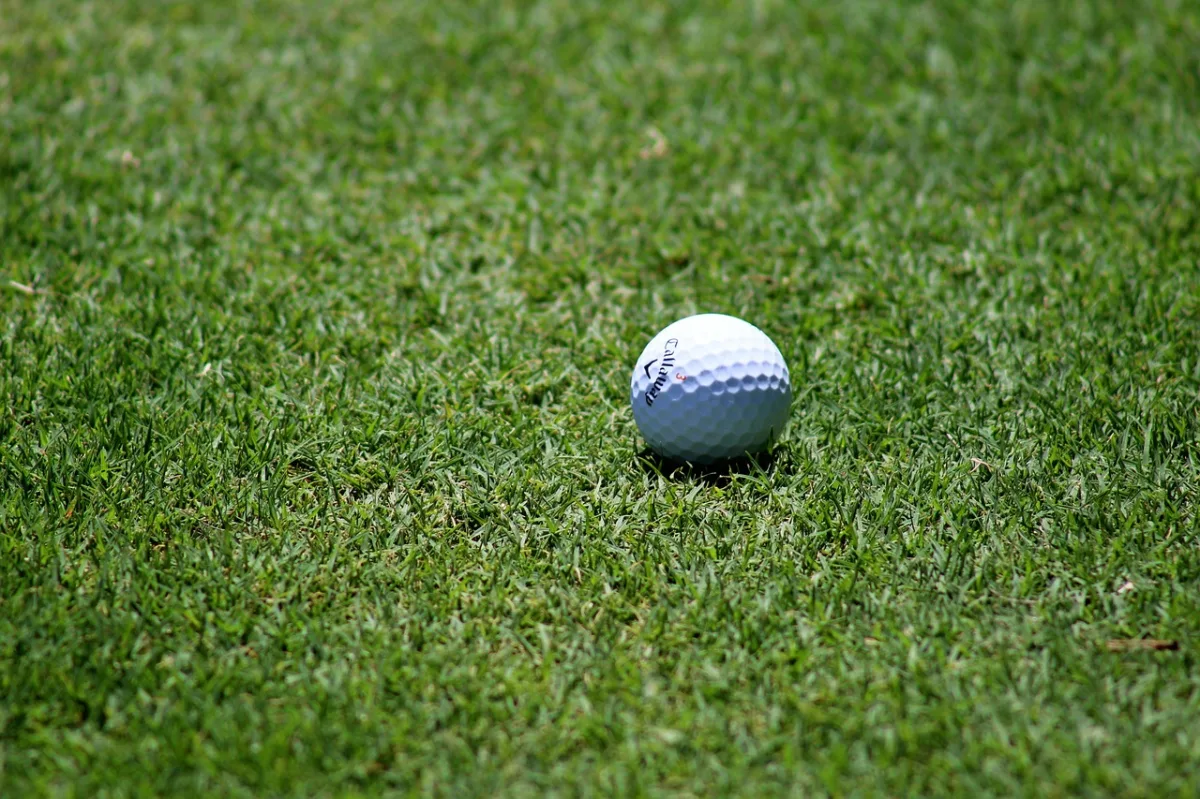
Photo: Pexels via Pixabay
The wet footprint around your ball
A ball that plugs in one section of fairway but releases fifteen yards farther on the next hole is often showing you a moisture-uniformity problem. The course may have received the same rain, but its soil, grass, drainage, and irrigation do not respond evenly.
Moisture uniformity is the single system behind much of what golfers call “course conditions.” It influences how deeply your ball lands, whether the fairway bounces, how easily a club enters the turf, and whether a putt arrives at the hole with the speed you expected.
On a green, uneven moisture can make one putt skid and another grab from almost the same distance. On fairways, it can mean soft turf around sprinkler heads, dry slopes that produce extra rollout, and inconsistent lies in areas that look identical.
That is why a course can appear lush from the cart path while still playing unevenly. Green color tells you something about turf health, but it does not tell you whether water is distributed evenly through the rootzone.
Water in the soil decides firmness
Golf turf needs water in the rootzone, the layer of soil where the grass develops roots and takes up moisture. Too little water causes wilt, weak growth, and thinning turf. Too much water limits air in the soil and leaves the surface soft.
The target is not one universal moisture percentage. No standardized volumetric-water-content number works for every green, tee, fairway, grass species, soil profile, and climate. A moisture reading belongs to the specific turf and soil system that produced it. [6]
A superintendent managing creeping bentgrass on a sand-based green faces a different situation from one managing bermudagrass on heavier soil. The same moisture level can be too dry for one surface and too wet for another.
Sand-based rootzones are common on constructed greens because sand drains rapidly. That drainage helps prevent standing water and supports firmer surfaces, but sand holds less water and can dry quickly between irrigation cycles.
A sand rootzone also has limited ability to hold nutrients. Water moving rapidly through it can carry nutrients downward, so staff must balance firmness with enough moisture and fertility to keep grass alive and rooted.
Clay-heavy soil creates the opposite problem. Clay retains water and nutrients well, but it can compact, drain slowly, and become waterlogged. A wet clay fairway can remain soft long after a sandier fairway has firmed up.
Organic matter changes the equation again. Some organic matter improves soil structure and pore space, but excessive organic material can reduce infiltration, hold too much water near the surface, and increase disease risk.
For you, that soil difference shows up in turf interaction. A wedge from a dry, sandy approach may nip cleanly and release. The same shot from a moist, organic-rich surface can take a deeper divot and spin differently.
Irrigation is about evenness, not simply adding water
Courses use irrigation to replace water lost from the turf and soil, especially during warm, dry weather. The goal is to maintain healthy grass while avoiding the soft, saturated conditions that reduce ball roll and leave footprints around greens.
Evapotranspiration, commonly shortened to ET, estimates water loss from evaporation and plant use. Irrigation programs can use ET data to replace water closer to the amount the turf has actually lost. [3]
Soil-moisture sensors add another layer. They help staff identify whether a green, fairway, or individual area is dry below the surface, instead of watering based only on how the turf looks from above. [3][4]
This is especially important on slopes, mounds, and elevated green sections. Water tends to move downward, so the top of a mound may dry quickly while the low section below receives runoff and becomes softer.
Deep, infrequent watering generally encourages deeper roots and more even moisture through the rootzone. Frequent shallow watering can keep roots near the surface, where they are more exposed to heat, traffic, and short dry spells.
Deep roots give turf a larger reservoir to draw from. They also help a green survive a hot afternoon without emergency watering that could soften a surface immediately before afternoon play.
Precision irrigation can conserve water because it targets areas that need it instead of applying the same amount everywhere. Research on fairway moisture variability identifies uneven water distribution as an opportunity for more efficient irrigation. [6]
There is a cost to chasing firmness too hard. A course that cuts irrigation aggressively can produce fast fairways and crisp greens for a short period, then lose turf quality if heat, wind, or traffic arrive before the grass can recover.
Temperature limits what the superintendent can ask of the grass
Cool-season grasses, including bentgrass, ryegrass, Poa annua, and fescue, grow best in roughly 60 to 75 degrees Fahrenheit. Growth slows below 50 degrees, while heat stress becomes a greater concern above the preferred range.
Warm-season grasses, including bermudagrass, zoysiagrass, and seashore paspalum, prefer roughly 80 to 90 degrees. They can go dormant in cool weather, leaving a brown or tan appearance even when the turf is not dead.
That seasonal behavior explains why the same course can play dramatically differently in April, July, and October. The grass is not operating under the same biological conditions, even if the scorecard and yardage have not changed.
Cool, low-humidity fall weather often produces firmer, faster greens because turf is under less heat stress and surfaces lose water more predictably. Hot, humid weather increases plant stress and can force staff to maintain more surface moisture.
A superintendent cannot treat green speed as an isolated target. Lower mowing, less water, rolling, and growth regulation can all influence speed, but every measure adds stress to the plant or changes how it recovers.
We would pay closer attention to firmness and consistency than to a claimed green-speed number. A green that rolls true at a moderate pace gives you a repeatable putting task, while a fast green with dry patches can turn routine putts into guesswork.
Mowing height is a speed control with a turf-health cost
Mowing height changes how the surface feels under a putter and how the ball sits before a shot. Greens are commonly maintained at about 0.08 to 0.15 inches, with daily or twice-daily mowing during peak growing periods. [7]
Lower mowing can increase green speed because less leaf tissue stands in the ball’s path. It also reduces the grass plant’s energy-producing leaf area, making turf less able to tolerate heat, traffic, disease, and drought.
Creeping bentgrass tolerates close mowing well, which is one reason it is widely used on putting surfaces. Bermudagrass generally prefers a higher mowing height, so grass selection affects the ceiling on sustainable green speed.
Tees are typically cut around 0.25 to 0.5 inches, fairways around 0.5 to 1 inch, and rough around 1.5 to 3 inches. [7] Those differences shape ball position, clubhead contact, and how severely an offline shot is punished.
Fairway height also affects rollout. Short, dry fairway turf can create the running conditions that make a 250-yard carry finish much farther down the hole. Wetter or taller turf absorbs more energy, so carry distance becomes a larger part of the result.
Do not read that as a reason to buy a different driver based on one firm afternoon. Launch-monitor carry and spin numbers still belong to your swing, while total distance on the course also belongs to temperature, wind, slope, and turf firmness.
Aeration and topdressing protect future playability
Aeration temporarily makes a green look worse because it creates holes or channels in the surface. The process relieves compaction, improves infiltration, and creates space for roots, water, and air in the soil.
Research cited in agronomy literature found aeration reduced soil bulk density by 5 to 9 percent and surface hardness by 5 to 19 percent. Those changes can improve rooting and water movement through the profile. [6]
The short-term cost is obvious to golfers. Freshly aerated greens can bump, slow down, and collect sand in the putter path. The longer-term payoff is a surface less likely to become sealed, soft, and inconsistent.
Topdressing adds sand to the surface, often repeatedly in light applications. Annual topdressing programs of roughly 1.25 to 2.5 centimeters of sand have been associated with improved drainage and turf quality, with finer sand incorporating more readily. [8]
Sand topdressing also helps dilute organic matter near the surface. That can preserve infiltration and firmness, but timing matters because heavy sand immediately before play can change putting speed and ball roll.
Fertilizer is another balancing act. Cool-season turf is commonly fertilized in early fall and spring, while warm-season turf is commonly fertilized in late spring and early summer. Excess fertilizer can increase disease risk. [2]
Rapid growth may make a course look green, but it can also make surfaces softer and require more mowing. Healthy turf and tournament-style visual polish are not always the same maintenance target.
Rain, drought, and wind change the course faster than the scorecard does
Heavy rain can overwhelm drainage systems, saturate fairways, soften bunkers, and force cart restrictions or closures. Golf Monthly reported that the 2023 RSM Classic required a Monday finish after a Saturday washout. [1]
A washed-out course is not only slower underfoot. Soft greens accept shots that would release in dry conditions, fairways provide little rollout, and bunkers can become compacted or contaminated with water and soil.
Drought creates the reverse problem. Turf may enter stress or dormancy, bare areas may appear, and courses can shift maintained turf into naturalized areas to reduce water use and preserve priority playing surfaces.
Naturalized areas are not abandoned ground. They require active management, even though they are often less intensively irrigated and mowed than fairway turf. [5] Their firmer, taller, or more variable vegetation can change recovery options after an errant shot.
Wind accelerates water loss and can dry exposed greens, tees, and fairway ridges quickly. It also affects the ball directly, so a firm, windy day combines two separate effects: altered carry through the air and greater rollout after landing.
Cold weather adds a different limitation. Dormant or slowly growing turf recovers slowly from divots, cart traffic, ball marks, and heavy play. Winter conditions may look untidy because the grass cannot repair damage at summer speed.
Read the surface before you plan the shot
Start with the turf around the green, not the flagstick. A dark, soft front section may stop a pitch quickly, while a pale, tight back section may release a low shot past the target.
On firm fairways, favor carry numbers that leave room for rollout and be cautious with trouble beyond the landing area. On wet fairways, expect less total distance and more resistance through the turf on fairway-wood and hybrid shots.
Around greens, watch for moisture changes from one side to another. A chip landing into a damp upslope can check sharply, while the same landing point on a dry downslope may run well beyond the hole.
We would skip the assumption that every fast green is a premium condition. The better playing surface is the one that rolls consistently, holds up under traffic, and gives you a fair chance to judge speed from the putt in front of you.
Frequently Asked Questions
What factors affect golf course conditions?
Golf course conditions are influenced by moisture uniformity, soil type, temperature, irrigation practices, and turfgrass species. Uneven moisture distribution can cause inconsistent ball behavior, while temperature affects grass growth and stress levels. Soil composition impacts drainage and nutrient availability, all of which combine to determine how the course plays.
How does soil type influence golf course playability?
Soil type affects drainage, moisture retention, and nutrient availability. Sand-based soils drain quickly and support firm, fast greens but require careful moisture and nutrient management to prevent drying out. Clay-heavy soils retain water and nutrients but can become compacted and waterlogged, leading to softer turf and slower play.
Why is moisture uniformity important for golf courses?
Moisture uniformity ensures consistent turf firmness and playability across the course. Uneven moisture causes variability in how the ball lands, rolls, and reacts on greens and fairways, leading to unpredictable putting and lies. Maintaining even moisture helps prevent dry spots and overly wet areas that disrupt play.
How does temperature impact golf course turf health?
Temperature determines whether turfgrass is actively growing, stressed, or dormant. Cool-season grasses thrive between 60 and 75 degrees Fahrenheit but slow growth below 50 degrees and suffer heat stress above their optimal range. Warm-season grasses prefer 80 to 90 degrees and go dormant in cooler temperatures, limiting how firm and fast the course can be maintained.
What role does irrigation play in golf course conditions?
Irrigation replaces water lost through evaporation and plant use, aiming to maintain healthy turf without overwatering. Precision irrigation using evapotranspiration data and soil moisture sensors helps apply water evenly and efficiently, preventing soft, saturated areas and promoting deep root growth for firmer, more resilient turf.
How we researched this
This article was assembled from 8 cited references.
Nothing here is based on hands-on testing. Where a figure or finding appears, it belongs to the source cited beside it, and the writing says so rather than implying otherwise. Every source is listed below so you can check it.
Sources
- RSM Classic Set For Monday Finish After Saturday Washout
- Fore the Golfer: Facts About Fertilization
- Golf Course Irrigation Optimization: ET Scheduling, Soil Sensors & Uniformity | Agronomy.Golf
- 7 Golf Course Irrigation Strategies to Maintain Consistent Turf Moisture Across Greens and Fairways
- 8 things people get wrong about golf courses - National Club Golfer | National Club Golfer
- Soil moisture variability on golf course fairways across the United States: An opportunity for water conservation with precision irrigation
- What type of grass do golf courses use explained - Food Stamps
- Short- and long-term casting dynamics of the anecic earthworm Aporrectodea longa in golf course turfgrass following sand topdressing
Related Articles

Best Time of Day to Play Golf
Discover the best time of day to play golf by comparing morning and afternoon conditions for optimal performance and course strategy.

Best Conditions for Golf: Ideal Weather and Wind Tips
Discover the best conditions for golf, including ideal temperature, wind effects, and how to adjust your play for optimal rounds.

Best Golf Courses for Winter Play: Top Destinations and Tips
Discover the best golf courses for winter play, including top destinations, turf conditions, and travel tips for a great winter golf experience.

Improve Golf Course Management
Learn how to improve golf course management with club selection, aiming strategies, and adapting to conditions for better scoring.